The Triathlete's Transition Bag: Quick-Access Leather for Race Day
Transition zones in triathlon racing present unique organizational challenges. Athletes must change equipment and mindset between swimming, cycling, and running while minimizing wasted seconds. A triathlete transition bag leather system that enables quick access to essentials while protecting valuables can mean the difference between achieving personal records and missing time goals. Every item's placement matters, and durability proves crucial when gear faces repeated setup, breakdown, and exposure to race conditions.
Experienced triathletes develop sophisticated multi sport organization systems through seasons of trial and error. They understand that transition time directly impacts overall performance - sometimes more dramatically than training improvements. The organized athlete who completes transitions 30 seconds faster than competitors gains significant advantage without additional fitness. This reality drives careful attention to transition bag setup and the accessories that enable rapid, confident movement between race segments.
Understanding Triathlon Transitions
T1: Swim to Bike Transition
The swim-to-bike transition challenges athletes in unique ways. Bodies are wet, often cold, and transitioning from horizontal to vertical positioning. Hands may lack dexterity from swimming effort and water temperature. In this state, athletes must locate their transition spot among hundreds of similar setups, remove wetsuits, don cycling shoes and helmets, and exit smoothly on bikes.
Multi sport organization in T1 requires accounting for wet conditions. Items must resist moisture exposure while remaining easily accessible with reduced fine motor control. Timing mats track every second, making efficient movement crucial. Elite athletes complete T1 in under two minutes. Age group competitors often take 4-8 minutes, with organization quality explaining much of this variance.
Common bottlenecks include wetsuit removal struggles, forgotten helmet straps, difficulty locating gear in crowded transition zones, and general disorientation after swim efforts. Systematic setup that accounts for these challenges dramatically improves performance. Visual markers help athletes spot their area quickly. Logical gear placement reduces fumbling. Quality organizing tools that survive wet conditions enable smooth transitions despite challenging conditions.
T2: Bike to Run Transition
Bike-to-run transitions typically proceed faster than T1 because athletes arrive dry and warm. However, leg muscle transition from cycling to running creates unique challenges. The body must shift from seated cycling posture to upright running while managing the neurological adjustment between movement patterns. This physiological transition occurs more smoothly when equipment changes happen efficiently.
Speed priorities dominate T2. Cycling shoes come off, running shoes go on. Helmets are racked. Race numbers switch from bike-mounted to body-worn. The fastest athletes complete these changes in under one minute. Every fumbled shoelace or dropped item costs precious seconds. Practiced movement patterns combined with smart organization eliminate wasted motion.
Mental game considerations in T2 affect organization needs. Athletes experiencing difficult bike segments need encouragement and smooth transitions to reset mindset for the run. Clear organization provides one less thing to think about, allowing focus on the mental shift from cycling to running rhythm. Confident movement through T2 sets positive tone for the final race segment.
Transition Area Rules and Regulations
Race officials enforce strict transition area rules affecting setup options. Space limitations typically restrict athletes to a few square feet around their designated bike rack position. This compact space must accommodate swim gear, cycling equipment, running shoes, nutrition, and personal items. Vertical organization using hooks and bags maximizes limited space while maintaining accessibility.
Prohibited items vary by race but generally include wheeled carts, large bags blocking neighboring spaces, and unsecured valuables creating theft temptation. Allowed items typically include small personal bags, wetsuit buckets or bags, and compact organizational tools. Understanding regulations before race day prevents last-minute adjustments that increase stress.
Security concerns in open transition areas require planning. Hundreds of athletes and spectators move through transition zones throughout race mornings. Valuables left visible invite theft. Smart storage solutions protect essentials while maintaining race-legal setup. Quality leather organizers provide discrete security for wallets, keys, and identification without advertising valuable contents.
Why Leather Works in Transition Zones
Durability Under Race Conditions
Transition bags and organizers face harsh conditions repeatedly. Wet wetsuits drip on everything. Bikes drip chain lube and road grime. Sand from beach swims infiltrates every crevice. Athletes handle gear with hands covered in sunscreen, sports drink residue, and sweat. Materials that survive this repeated exposure while maintaining functionality prove essential for serious competitors.
Triathlete transition bag leather items demonstrate exceptional durability in these conditions. Full-grain leather resists moisture damage when properly maintained. The natural material wipes clean easily after races. Leather organizers that survive dozens of races while cheap nylon alternatives fail justify their slightly higher initial cost through longevity. Multi-season reliability matters for athletes racing frequently.
Hardware quality determines whether organizers survive race demands. Cheap zippers fail from repeated sandy exposure. Low-quality snaps separate under stress. Stitching in inferior products unravels after minimal use. Lost Dutchman Leather uses solid brass hardware and heavy-duty stitching specifically to handle demanding applications. The construction quality that enables years of daily use excels in race environments requiring reliable performance.
Quick Visual Identification
Finding your specific transition spot among 500 identical bike racks tests visual processing skills when fatigued. Distinctive markers help athletes locate their area quickly. Bright towels serve this purpose traditionally, but unique leather bags and organizers also provide visual landmarks. The natural texture and color of quality leather stands out against generic synthetic bags dominating transition areas.
Recognition speed matters particularly after swim segments when athletes emerge disoriented from water efforts. Brain function during intense athletic effort relies more on pattern recognition than detailed analysis. Familiar leather items trigger instant recognition faster than searching for specific small markers. This split-second advantage prevents wrong-turn errors and wasted movement.
Weather Resistance Properties
Morning races often begin before sunrise when dew covers everything in transition zones. Setup happens in darkness with gear exposed to moisture for hours before race start. Leather's natural moisture resistance protects contents better than fabric bags. The material breathes naturally, allowing air circulation that prevents condensation buildup inside organizers.
Rain race scenarios stress equipment significantly. While athletes accept getting soaked, they need essential items protected. Leather provides better moisture resistance than many synthetic materials while maintaining accessibility - no fumbling with sealed bags when hands lack dexterity. Post-race, leather dries naturally through air exposure without developing the mildew that plagues some fabrics.
Heat and direct sunlight create different challenges. Synthetic materials can soften or warp in extreme heat. Leather maintains structural integrity across wide temperature ranges. For races in desert climates or tropical locations, this temperature stability prevents surprises from melting organizers or warping storage solutions.
Essential Items for Triathlon Transition Bags
Identification and Race Credentials
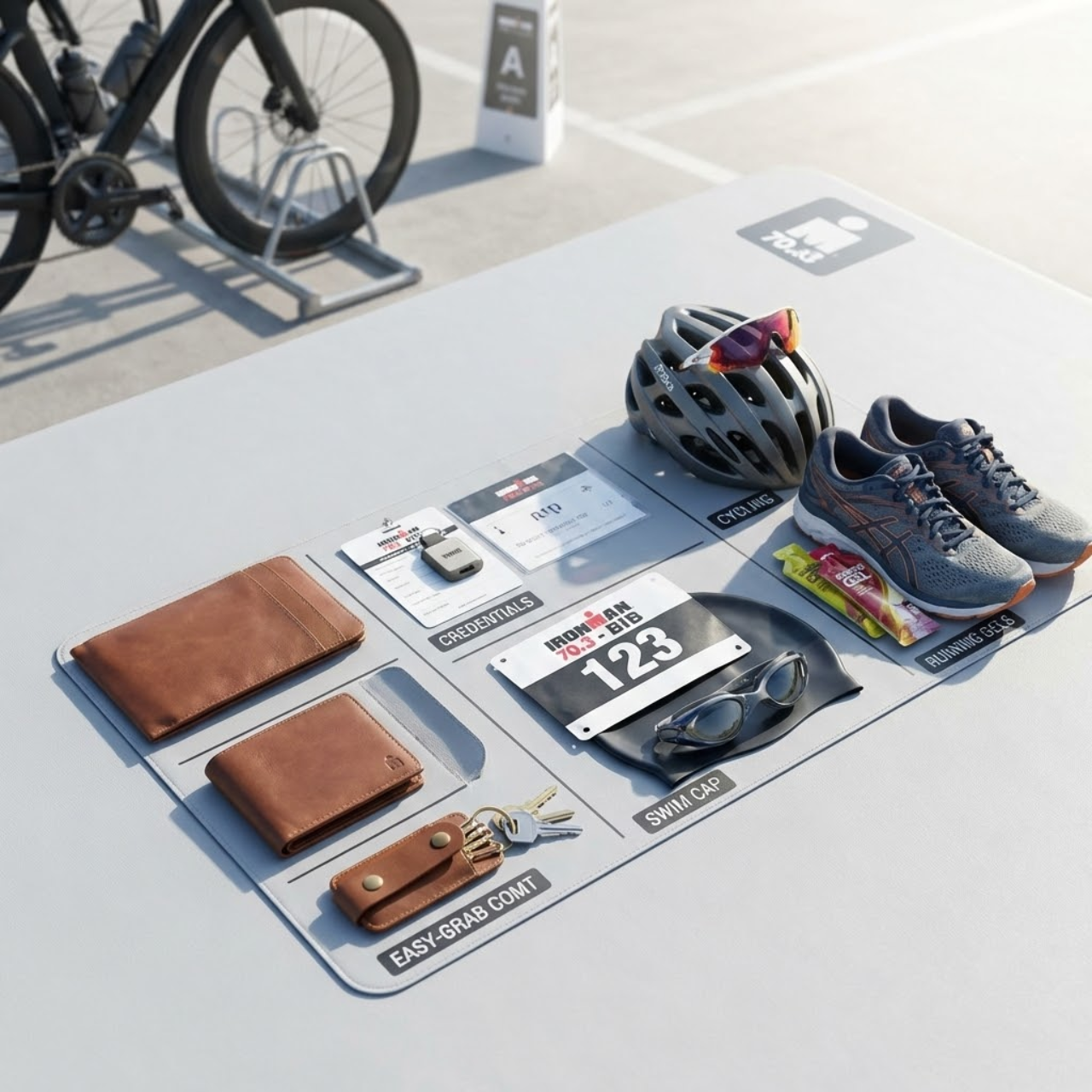
Race bibs with timing chips require secure attachment and protection before use. Some athletes attach bibs to race belts in advance. Others pin bibs to running singlets. Either approach requires keeping bibs flat and undamaged through transition setup. A flat leather document holder protects bibs from crumpling while allowing easy access when needed.
Timing chip management varies by race format. Ankle timing chips stay on throughout the race. Bike-mounted chips switch locations during transitions. Velcro timing straps need backup storage when not in use. Small leather pouches secure these items while preventing loss among other gear.
Backup identification proves crucial for race emergencies. If medical situations arise, having driver's license and health insurance information immediately accessible helps first responders. A compact card holder with emergency contacts and medical information should stay with other race credentials where staff can find it easily.
Wallet and Payment Solutions
Minimalist race day carry makes sense for multi sport organization. Most athletes need only one card and minimal cash for post-race food and emergency situations. Full wallets stay locked in vehicles while essentials travel in slim leather card holders that fit in small pockets or organizer compartments.
Post-race access needs include purchasing food, drinks, and race photos. Having payment methods immediately available avoids returning to distant parking areas before eating. The card holder that survives race conditions belongs in easy-access transition bag pockets rather than buried under gear. Smart placement enables smooth post-race routines.
Security in transition zones requires discrete storage. Expensive race bikes and equipment attract attention to transition areas. Wallets and cards visible in open bags invite theft. Leather organizers that close securely and fit in bag interiors provide better security than open fabric pockets. The goal: protect valuables without creating tempting targets for opportunistic theft.
Key Storage and Vehicle Access
Vehicle keys must remain accessible yet secure throughout races lasting several hours. Dedicated key pockets in transition bags help, but many athletes add leather key organizers that consolidate keys in compact, easy-to-find packages. Attaching organizers to bag interiors with carabiners prevents loss while maintaining quick access.
Post-race key access matters when exhausted athletes want nothing more than reaching their cars for recovery. Fumbling through bags searching for keys extends discomfort unnecessarily. Consistent key storage locations - always the same pocket, always clipped to the same attachment point - enables automatic retrieval even when mentally depleted after hard races.
Theft prevention strategies include using dummy keys for vehicles with keyless entry (hide the actual fob elsewhere), keeping only necessary keys in transition, or using lockboxes attached to vehicle frames for critical keys. For races involving travel, hotel room keys require similar secure, accessible storage separate from vehicle keys.
Organizing Your Transition Bag
Gear Separation Systems
Effective triathlete transition bag leather organization separates equipment by sport segment. Swim gear - goggles, cap, wetsuit - groups together. Cycling items - helmet, shoes, sunglasses, nutrition - occupy dedicated space. Running gear clusters similarly. This separation enables grabbing exactly what's needed for each transition without sorting through unrelated items.
Wet versus dry separation prevents soggy wetsuits from soaking everything else. Many athletes use dedicated wetsuit bags or plastic bags for this purpose. However, having dry areas clearly defined helps prevent accidentally placing wet items on dry gear. Some triathletes use different colored bags or pouches to distinguish wet-approved and keep-dry zones.
Nutrition and hydration storage requires accessibility with organization. Gels, bars, and drink mixes must be instantly accessible when needed yet not scattered loosely where they're hard to find. Small leather pouches consolidate nutrition items in grab-and-go packets. This approach works better than loose items that fall to bag bottoms or get crushed under heavier equipment.
Small Item Management
Safety pins for race bibs, extra hair ties, anti-chafe products, and emergency repair items constitute essential small items easily lost in transition chaos. Dedicated storage prevents frantic searching. Some athletes use clear plastic bags for visibility. Others prefer small leather pouches that organize items by category while protecting from moisture.
Nutrition packaging presents organizational challenges. Individual gel packets, salt tablets, and energy chews need protection from heat and crushing while remaining quickly accessible. Pre-organizing nutrition by planned consumption timing helps - T1 nutrition in one container, bike nutrition in another, run nutrition separately. This system prevents consuming wrong items at wrong times during race stress.
Emergency repair items include extra CO2 cartridges, tire levers, chain links, and duct tape. These rarely-used items deserve secure storage that doesn't interfere with frequently accessed gear. Small hard-sided cases work well, as do compact leather organizers with firm structure that protects contents from crushing.
Leather Organizers for Quick Access
Purpose-designed leather organizers excel in transition applications through combination of durability and accessibility. Unlike fabric pouches that collapse when empty, leather organizers maintain shape, making item location easier. The natural material provides tactile distinction from synthetic gear - athletes can identify leather pouches by feel when searching bags without looking.
Multi-pocket strategies within single organizers enable fine-grained organization without multiplying the number of separate bags. An organizer with 3-4 compartments keeps small items separated while consolidating them in one findable location. This approach balances organization detail with simplicity of having fewer total pieces to track.
Accessibility optimization considers hand positioning and movement patterns during transitions. Right-handed athletes might prefer organizers opening from the right side for natural hand access. Frequently accessed items belong in exterior pockets or easy-open compartments rather than nested inside multiple closures. Testing setup during practice transitions reveals optimal placement for individual preferences.
Pre-Race Setup Strategies
Night Before Preparation
Systematic preparation the night before races prevents morning chaos. Many triathletes use detailed checklists covering every item from wetsuit to post-race sandals. Laying out gear methodically, checking each item against the list, and packing the transition bag in planned order creates confidence and reveals missing items with time to address them.
Layout planning extends beyond the bag itself to visualizing transition area setup. Drawing simple diagrams showing where each item will be placed relative to the bike rack helps. Imagining movement through transitions identifies potential bottlenecks or awkward reaches. This mental practice combines with physical preparation for smoother race day execution.
Backup supplies prevent single-point failures from ruining races. Extra goggles in case primary pair breaks. Backup nutrition if planned items go missing. Additional safety pins for bib attachment. These redundancies add minimal weight while providing insurance against common problems. Quality organizing systems make carrying backup items practical without creating clutter.
Morning of Race Routine
Transition area timing determines how rushed setup feels. Arriving very early ensures rack choice and calm setup but means extended waiting. Arriving near transition closure creates time pressure that increases mistakes. Most experienced athletes aim for middle ground - early enough for good rack position and methodical setup without excessive waiting.
Setup sequence optimization reduces wasted motion. Many athletes work from one end of their transition space to the other, placing items in the order they'll be used. Others group by sport segment regardless of physical positioning. The best approach depends on individual mental models - consistency matters more than specific system choice.
Mental preparation integration happens during physical setup. Each placed item triggers mental rehearsal of its use. Placing cycling shoes reminds the athlete to visualize smooth T1 execution. Setting out running nutrition reinforces mental picture of strong run performance. This integration makes setup time productive preparation rather than mere logistics.
Practice Transitions
Training transition efficiency during practice sessions reveals improvement opportunities invisible during races. "Brick" workouts combining two sports provide transition practice opportunities. Setting up mock transition areas and timing changes shows exactly where seconds are lost. This objective feedback enables targeted improvement.
Muscle memory development through repeated practice makes race day transitions automatic rather than requiring conscious thought. The fingers remember wetsuit zipper location. Feet automatically find shoe positions. This automaticity frees mental bandwidth for race strategy rather than equipment management. Consistent practice builds this reliable muscle memory.
Speed improvement methods range from simple timing comparison to video analysis of movement patterns. Watching recordings reveals wasted motion invisible to athletes during actual execution. Comparing fastest and slowest transitions identifies variables affecting performance. This analytical approach systematically improves what many athletes leave to chance.
Race Day Leather Essentials
Compact Wallets for Athletes
The ideal race wallet contains one credit card, one ID, and $20 cash - nothing more. This minimalist approach fits perfectly in small organizer pockets without creating bulk. Slim bifold wallets serve this purpose excellently, providing organization for essentials while adding negligible weight to transition bags.
Cash considerations vary by venue. Races at commercial facilities with food vendors require payment methods. Remote races with limited services need less cash. Post-race massage, race photo purchases, and celebration meals all require access to money. Having adequate cash prevents post-race frustration when exhausted athletes want simple solutions rather than searching for ATMs.
RFID protection becomes valuable for destination races involving air travel. Hotels, rental cars, and race venues concentrate potential skimming opportunities. While the risk remains relatively low, RFID-blocking wallets provide peace of mind without added bulk or complexity. This protection simply makes sense for frequently traveling athletes.
Belts and Race Number Solutions
Race belts designed specifically for triathlon serve different purposes than traditional leather belts. Race belts hold numbers using toggles that allow quick rotation from back (cycling) to front (running). However, some athletes prefer more traditional belt approaches, either attaching numbers directly to clothing or using simple belts that also serve everyday purposes.
Leather belt functionality extends beyond race number carrying. A quality belt provides stable platform for attaching small nutrition pouches or emergency items. The durability ensures belts survive being stuffed in bags, pulled tight under race stress, and exposed to sweat repeatedly. Belts serving double duty for racing and daily use maximize value while reducing total equipment ownership.
Comfort under athletic gear matters significantly. Thin, flexible belts work better under race clothing than thick rigid alternatives. The belt should add no pressure points or chafing during hours of racing. Full-grain leather becomes more comfortable with use as it conforms to body shape - a benefit that synthetic alternatives cannot match.
Key Holders and Carabiners
Attachment point options for key holders include internal bag loops, external carabiner attachment points, or dedicated key pockets. The best choice depends on bag design and personal preference. Internal attachment provides better theft protection but requires opening bags for access. External attachment enables quick access but exposes keys to potential loss or theft.
Quick-release features prove valuable when post-race fatigue makes fine motor control difficult. Carabiners with smooth operation even when wet or sandy prevent frustration. Some athletes prefer magnetic attachment systems that release with simple pulling motion. The ideal system works reliably even when athletes lack full dexterity.
Durability requirements for race applications exceed normal use significantly. Repeated exposure to moisture, sand, sun, and stress tests every component. Hardware that survives years of daily use should handle race demands, but bargain-priced key holders with weak attachment points or poor construction fail quickly in this environment. Investing in quality prevents race day failures.
Multi-Sport Organization Beyond Race Day
Training Session Transitions
Brick workouts combining swimming and biking or biking and running require organized gear management similar to race day. Practicing with race-day organization systems during training makes race transitions automatic. Athletes who only practice organization during races waste valuable seconds relearning systems under pressure.
Pool to bike transitions present unique challenges. Wet swimmers must access cycling gear quickly without soaking everything. Having designated wet gear areas and dry gear areas becomes crucial. Small leather organizers excel here - they resist poolside moisture while keeping cycling essentials accessible and dry.
Efficient gear management during training preserves time and reduces stress. Athletes who quickly transition between sports compress overall training time, making workouts more sustainable within busy schedules. This efficiency compounds over seasons - saving 10 minutes per training session equals hours monthly.
Travel Race Logistics
Packing strategies for destination races require balancing preparation with luggage limits. Airlines restrict bag size and weight, forcing careful selection of essential items only. Organizational tools that consolidate multiple functions reduce total item counts while maintaining preparation thoroughness. Leather organizers that serve both race-day and travel purposes demonstrate this efficient approach.
Airport-friendly organization smooths security screening. Consolidated electronics, liquids in clear bags, and easily accessible identification speed checkpoint passage. Race equipment packed systematically in checked bags enables quick verification if bags require inspection. This attention to travel logistics reduces pre-race stress that degrades performance.
Multi-day race scenarios like Ironman events require expanded multi sport organization accounting for multiple transitions and longer race durations. Extra nutrition, backup equipment, and extended post-race recovery needs complicate organization. Systematic approaches using consistent organizational tools maintain order despite increased complexity.
Off-Season Storage and Maintenance
Gear preservation during off-season prevents deterioration that shortens equipment life. Proper cleaning removes salt, sweat, and grime that accelerates degradation. Leather items particularly benefit from conditioning before storage to maintain suppleness and prevent cracking. This maintenance investment extends gear life significantly.
Leather care between races follows simple protocols. Wipe items with damp cloth to remove surface dirt. Air dry completely before storage. Apply leather conditioner every few months or after particularly harsh race conditions. This minimal maintenance preserves leather indefinitely while neglected leather degrades rapidly.
Organization system upkeep ensures race readiness remains constant. Regularly verifying that all systems function properly prevents race morning surprises. Replacing worn items before failure occurs demonstrates proactive management. Athletes who maintain organizational systems year-round race more confidently than those who scramble before each event.
Comparing Material Options
Leather vs Nylon Organizers
Weight considerations favor nylon significantly - ultralight fabric organizers weigh ounces versus several ounces for leather equivalents. For weight-obsessed athletes, this difference matters. However, most triathletes find 2-3 ounces in organization tools negligible compared to body weight and bike weight variations. The question becomes whether superior durability justifies minimal weight penalty.
Durability comparison strongly favors leather for long-term use. Nylon organizers fail through zipper degradation, seam separation, and fabric tearing. These failures happen suddenly, often during races when replacement proves impossible. Leather organizers survive years of racing with minimal degradation. For athletes racing regularly, leather's longevity justifies initial cost through superior reliability.
Aesthetic differences appeal to some athletes more than others. Nylon pouches look generic and utilitarian. Leather organizers develop character through use, gaining patina that reflects racing history. While aesthetics don't affect performance, many athletes appreciate gear that looks distinguished rather than disposable. This psychological element shouldn't be dismissed entirely.
Synthetic vs Natural Materials
Weather resistance advantages synthetic materials through engineered waterproofing. However, truly waterproof synthetic bags trap moisture inside from condensation. Leather's natural breathability prevents this problem while providing adequate weather protection for race applications. The balanced approach serves athlete needs better than extreme waterproofing that creates other issues.
Odor development plagues synthetic materials significantly. Bacteria thrive in enclosed synthetic environments, producing persistent odors despite washing. Leather resists bacterial growth naturally through tannins present in quality vegetable-tanned materials. Race bags that don't develop offensive odors prove more pleasant to use across seasons.
Long-term value calculation favors leather decisively. Synthetic organizers costing $20-30 typically last 1-2 race seasons before failure. Leather organizers costing $60-100 easily survive 10+ seasons with basic maintenance. The total cost over an athletic career strongly favors leather despite higher initial investment. This long-term perspective aligns with sustainability values many athletes embrace.
When to Choose Leather
Use case analysis determines optimal material choices. For ultralight time trial events where every gram affects performance, synthetic minimalism makes sense. For standard triathlons where organization reliability matters more than minimal weight differences, leather provides better overall value. Long-course races benefit from leather durability handling extended exposure.
Budget considerations affect decisions realistically. Athletes just beginning triathlon might reasonably choose cheaper synthetic options while learning what they truly need. Experienced competitors racing regularly justify leather investment through superior performance and longevity. The transition from synthetic to leather often happens naturally as athletes gain experience.
Longevity expectations should drive material selection. Athletes planning to race for years benefit dramatically from durable leather goods. Those trying triathlon temporarily might prefer disposable synthetic options. Honest assessment of likely commitment level enables appropriate investment calibration.
Learning from Elite Triathletes
Professional Transition Strategies
Time-saving techniques used by professionals focus on minimizing unnecessary motion. Every item placement serves specific purpose in movement sequence. Nothing gets picked up and put down repeatedly. Equipment changes happen in single motions rather than multi-step processes. While professionals' speed comes partly from practice volume, their organizational approaches work for all competitors.
Organization methods professionals use emphasize consistency over complexity. The same setup works for every race, creating automatic execution rather than race-specific relearning. Muscle memory developed through repeated identical setups enables fastest possible transitions. Amateur athletes benefit from adopting this consistency principle even though absolute speed remains slower.
Equipment preferences among professionals lean toward reliable simplicity. Complex organizational systems with multiple components create failure points and decision fatigue. Simple, durable solutions that always work beat clever systems that occasionally fail. This preference for proven reliability over innovation applies universally regardless of competitive level.
Age Group Competitor Wisdom
Practical experience from thousands of age group triathletes reveals common patterns. Most discover that less is more in transition organization - simpler systems perform better than elaborate setups. The temptation to over-organize creates problems rather than solving them. Finding the minimum viable organization system that covers all bases proves optimal.
Common mistakes include over-packing transition bags with items never used, creating elaborate setups that take too long to arrange, and trying new organizational approaches on race day without practice. Avoiding these errors prevents predictable problems. The wisdom gained through others' mistakes proves valuable for newer competitors.
Incremental improvements accumulate significantly over time. Shaving five seconds here and ten seconds there eventually produces minute-plus improvements in transition times. Each small refinement might seem insignificant individually but compounds into substantial overall gains. This patient approach to improvement characterizes successful long-term athletes.
Race Series Veterans
System refinement over seasons produces highly personalized setups that work perfectly for specific individuals. Veterans understand their equipment intimately. They know exactly where everything belongs and can set up transitions nearly blindfolded. This deep familiarity comes from consistency and repetition rather than constantly changing approaches.
What works consistently matters more than what works optimally once. A setup that produces reliable five-minute transitions beats a theoretically perfect system that sometimes achieves four minutes but occasionally fails completely. Reliability trumps peak performance for consistent racing success.
Individual customization means no single "best" organization system exists. Body proportions, mental preferences, equipment choices, and racing styles all affect optimal setup. Learning from others provides starting points, but developing personalized systems through experimentation produces best results. The key: systematic testing rather than random changes.
Building Your Optimal Transition System
Starting with Essential Organization
Core items first establishes foundation without overwhelming beginners. Focus initially on organizing swim-bike-run gear separation, securing valuables, and enabling quick access to frequently needed items. Advanced organizational refinements can wait until basic systems work reliably.
Gradual refinement prevents the paralysis of trying to perfect everything immediately. Each race reveals small improvements worth implementing. Over seasons, these accumulated refinements produce sophisticated systems without requiring massive upfront planning. This evolutionary approach suits busy athletes lacking time for exhaustive pre-planning.
Testing before race day proves crucial for any organizational changes. Practice transitions using new systems during training. Identify problems when corrections are possible rather than during races. This conservative approach prevents race-day disasters from untested equipment or organization schemes.
Transition Time Improvement Goals
Measuring current performance establishes baseline for improvement tracking. Timing practice transitions objectively shows exactly where time is spent. Without measurement, perceived improvements may not reflect reality. Data-driven approaches enable focused effort on actual bottlenecks rather than assumed problems.
Setting realistic targets prevents frustration from unachievable goals. Beginners shouldn't expect elite-level transition speeds immediately. Reasonable initial goals might involve completing T1 under five minutes or T2 under three minutes. These targets stretch capabilities while remaining achievable through focused practice.
Progressive enhancement occurs through small, consistent improvements rather than dramatic breakthroughs. Improving transitions by 10% per season compounds into substantial total improvement over several years. This patient approach produces sustainable gains without requiring unsustainable effort increases.
Personalization and Comfort
Finding what works for you requires honest experimentation. Some athletes thrive with highly structured organization while others prefer looser approaches. Neither is wrong - individual psychology and preferences matter significantly. The goal isn't copying others' systems but developing personal systems that feel natural and reliable.
Respecting individual preferences prevents dogmatic thinking about "proper" organization methods. The athlete who needs visual color coding shouldn't feel inferior to the minimalist who uses unmarked bags. Different brains process information differently. Optimal systems match individual cognitive styles rather than following universal prescriptions.
Confidence building through successful race experiences reinforces organizational approaches. Each smooth transition proves the system works, building trust that enables even faster execution next time. This positive feedback loop gradually produces mastery that transforms transitions from potential weaknesses into competitive strengths.
Smooth Transitions Through Quality Organization
Success in triathlon demands more than fitness - it requires smooth execution under pressure. A triathlete transition bag leather system that provides reliable quick access to essentials while protecting valuables transforms transitions from chaos into controlled efficiency. Quality organizational tools built to withstand race demands enable confident movement through transition zones where every second affects overall performance.
The investment in durable leather organization solutions pays returns through seasons of reliable service in demanding conditions. While cheaper synthetic alternatives tempt budget-conscious athletes, the long-term value equation favors quality leather goods that survive years of racing without failures. For triathletes committed to the sport long-term, choosing equipment built for longevity makes both economic and practical sense.
Whether preparing for your first sprint triathlon or refining systems for your tenth Ironman, contact us to discuss multi sport organization options that balance functionality with durability. Every transition represents opportunity - to gain time through efficiency, to demonstrate preparation through smooth execution, and to race confidently knowing your equipment will perform reliably when it matters most. Make transitions your competitive advantage through systematic organization and quality equipment choices.