Trail Running Minimalism: What Thru-Hikers Actually Carry
The transition from traditional backpacking to ultralight thru-hiking philosophy represents one of outdoor recreation's most significant evolutions. Trail running minimalist carry principles have revolutionized long-distance hiking, proving that comfort and safety don't require 40-pound packs. Instead, experienced thru-hikers on the Appalachian Trail, Pacific Crest Trail, and Continental Divide Trail complete thousands of miles carrying base weights under 10 pounds - sometimes under 5 pounds for the truly committed.
This minimalist approach extends beyond just backpacks and tents. Every item carried must justify its weight through function, durability, and versatility. Lost Dutchman Leather understands this philosophy, creating hiking ultralight gear accessories that serve essential functions while adding minimal weight. From compact wallets to durable key organizers, properly designed leather goods align perfectly with ultralight principles when chosen thoughtfully.
The Philosophy Behind Ultralight Hiking
Weight Reduction Mathematics
The foundational principle of trail running minimalist carry states that ounces equal pounds, and pounds equal pain. A four-ounce weight reduction repeated across 20 items eliminates five pounds from base pack weight. Over a 2,500-mile thru-hike, this translates to dramatically reduced cumulative strain. The energy saved by carrying less weight compounds daily, allowing faster progress with less fatigue.
Consider the mathematics: hiking 20 miles daily while carrying an extra five pounds means lifting that weight with every step - roughly 20,000 steps per day. That's 100,000 pounds lifted unnecessarily over a single day's hiking. Multiplied across weeks or months on trail, the wasted energy becomes staggering. This calculation drives the relentless pursuit of weight reduction among serious long-distance hikers.
Trail runners understand these principles intuitively. Racing 50 or 100 miles means every unnecessary ounce multiplies fatigue exponentially. This mentality transfers directly to thru-hiking, where the goal isn't racing but rather sustainable daily mileage over months. The result: a careful evaluation of every item's weight-to-utility ratio.
Distinguishing Needs from Wants
Ultralight hikers distinguish rigorously between safety essentials and comfort luxuries. Safety items include shelter, warmth layers, water purification, navigation tools, and emergency supplies. Everything else faces scrutiny: does it provide sufficient value to justify its weight? A camp chair might add comfort but weighs two pounds. A hammock provides alternative sleeping options but adds bulk and weight beyond a simple tarp shelter.
Hiking ultralight gear decisions require honest risk assessment. Eliminating a first aid kit saves weight but increases vulnerability to injuries. Carrying minimal food between resupply points reduces pack weight but increases vulnerability to unexpected delays. Experienced hikers calibrate these decisions based on conditions, experience level, and personal comfort with risk.
The refinement process happens through actual trail experience rather than theoretical planning. Many thru-hikers mail home pounds of "essential" gear after the first few hundred miles, discovering what they truly need versus what seemed important during planning. This empirical approach produces reliable minimalist systems that work for individual hiking styles.
Trail Running Influence on Thru-Hiking
Modern thru-hiking equipment owes tremendous debt to trail running innovation. Running vest-style packs, minimalist footwear, and emphasis on breathable materials all migrated from trail running to long-distance hiking. The speed-hiking movement, where hikers cover 30-40 miles daily, directly adopts trail running techniques and equipment for extended trips.
Fastpacking represents the convergence of these philosophies - covering trail distances at trail running pace while carrying minimal overnight gear. Fastpackers demonstrate that properly planned trail running minimalist carry systems work reliably for multi-day trips. Their experiences inform more traditional thru-hikers about weight reduction possibilities without sacrificing safety or reasonable comfort.
Essential Personal Items Thru-Hikers Actually Carry
Wallet and Identification Solutions
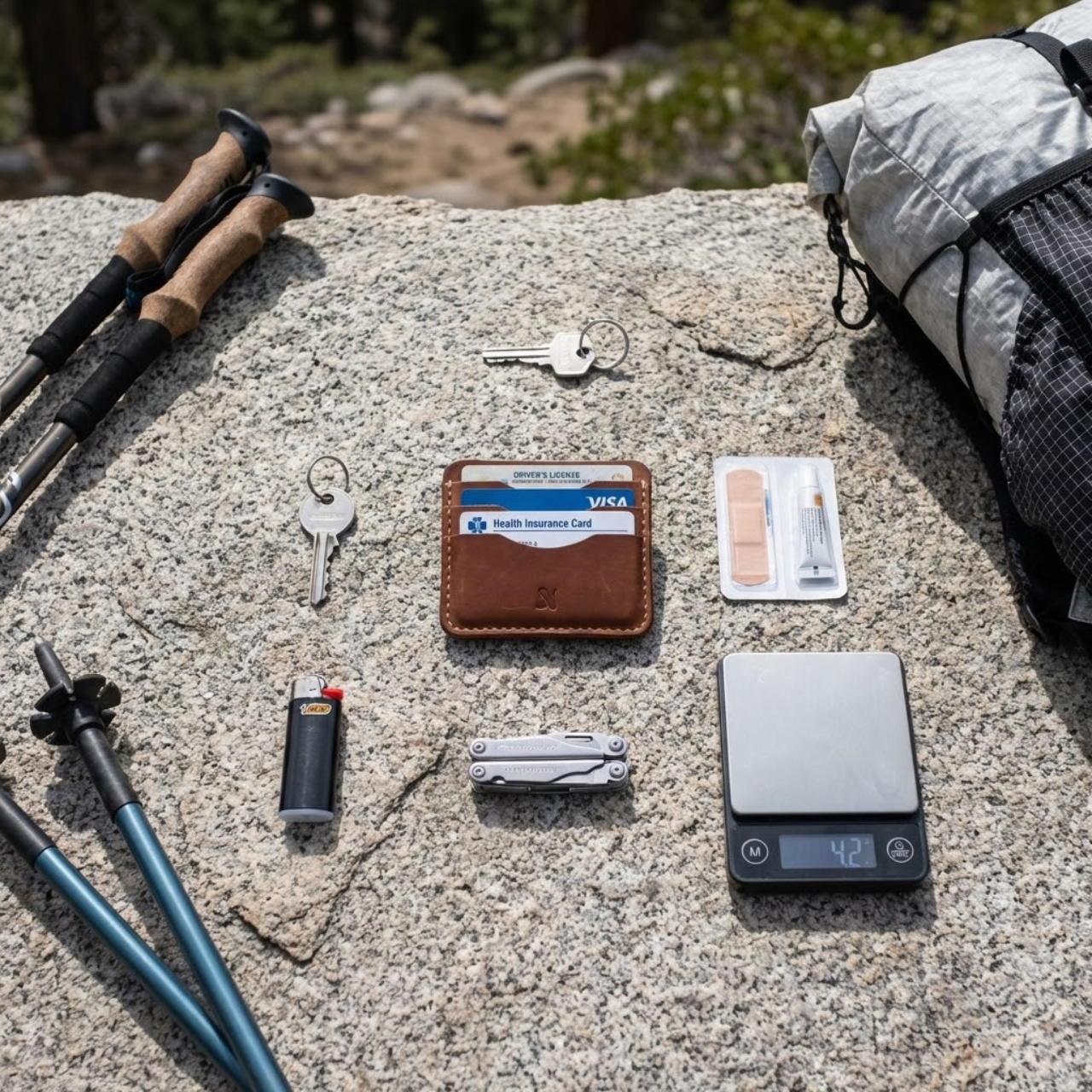
The traditional thick wallet has no place in hiking ultralight gear systems. Thru-hikers entering towns for resupply need identification, one credit card, and minimal cash - nothing more. A compact leather card holder weighing under an ounce provides sufficient capacity for these essentials while adding negligible pack weight.
Document necessity varies by trail and planning. Most hikers carry only driver's license and health insurance card for emergencies. Passport stays home unless international borders factor into the route. Extra credit cards represent unnecessary redundancy since most trail towns accept major cards universally. This ruthless reduction applies to everything in an ultralight system - carry only what proves absolutely necessary.
Waterproof considerations matter significantly for personal items. A small plastic bag provides simple protection, but many hikers appreciate quality leather's natural moisture resistance. Vegetable tanned leather handles brief rain exposure without damage while maintaining structural integrity through thousands of trail miles. The durability justifies the minimal weight for items that must survive months of daily use.
Money and Payment Systems
Cash requirements on trail vary regionally. Some rural trail towns operate cash-only businesses. Most resupply points accept cards, but having $40-60 cash provides backup. Some thru-hikers hide emergency cash in pack's hidden compartments - insurance against lost wallets or card failures far from help.
Card-only strategies work increasingly well with smartphone payment options. However, phone battery life and signal limitations make carrying at least one physical card prudent. The ultralight approach: one primary credit card, one backup card stored separately, and minimal cash. This system provides redundancy while keeping wallet weight minimal.
Key Management for Ultralight Travel
Vehicle keys at trailheads present interesting challenges for thru-hikers. Through-hikers completing entire trails don't need keys until finish, so many mail keys ahead to their endpoint or entrust them to family. Section hikers need secure key storage while hiking, then reliable access for vehicle return.
Compact key organizers eliminate the bulk and noise of traditional key rings while protecting keys from the elements. Some hikers bury vehicle keys near trailheads in marked containers - risky but eliminates carrying them. Others attach keys to pack exteriors using carabiners - convenient but risks loss during bushwhacking or river crossings.
Mail drops and resupply points sometimes require key access for lockboxes or storage units where hikers send supplies ahead. Minimizing key quantity while ensuring access to necessary locks represents the optimal balance. The trail running minimalist carry philosophy suggests evaluating whether each key truly needs to accompany the hike or could be retrieved later.
Clothing and Wearables in Minimalist Systems
Layering for Variable Conditions
Ultralight hikers typically carry one base layer, one insulation layer, and one rain shell. This three-layer system handles conditions from summer heat to surprise snow through strategic layering. Each garment must serve multiple functions - rain jacket doubles as windbreaker, warm layer serves as camp jacket, base layer functions as sleepwear.
Material selection prioritizes quick-drying synthetic fabrics or merino wool that performs when damp. Cotton has no place in hiking ultralight gear due to poor drying characteristics and hypothermia risk when wet. Each layer gets worn repeatedly between town stops, so odor resistance and durability become crucial selection factors.
Multi-use strategies extend clothing functionality. Hikers wear their rain jacket daily during cool mornings, then pack it as temperatures rise. Insulation layers serve as pillows when not worn. This approach maximizes each item's utility while minimizing redundancy.
Footwear and Sock Systems
Trail runners have largely replaced traditional boots in ultralight systems. The weight savings (often 2-3 pounds versus heavy boots) reduces leg fatigue dramatically. Modern trail runners provide adequate support for most conditions while offering superior breathability and faster drying times after water crossings.
Sock rotation typically involves two pairs maximum - one worn, one drying attached to pack. Some minimalists hike in a single pair, washing nightly and wearing damp if necessary. This extreme approach works in dry climates but proves less practical in consistently wet conditions. The balance: enough socks for hygiene without excess weight from redundancy.
Accessories That Earn Their Weight
Few accessories survive the ultralight scrutiny. A quality leather belt serves multiple purposes beyond holding up pants - gear repair, securing items to pack exterior, or even emergency equipment repairs. The durability and versatility justify the 3-4 ounce weight for some hikers, though others skip belts entirely.
Bandanas and buffs provide sun protection, insulation, water filtration, and first aid applications while weighing under an ounce. This versatility exemplifies the multi-function requirements for hiking ultralight gear. Minimal jewelry rarely makes sense on trail - wedding rings risk loss, watches add weight when phones provide time, and decorative items serve no function.
Food and Water Carry Systems
Resupply Strategy Impact on Carry Weight
Town intervals determine food carry requirements. Popular trails with frequent resupply points (every 3-5 days) allow carrying just 5-7 pounds of food. Remote sections requiring 7-10 days between resupply force carrying 15+ pounds of food - dramatically impacting overall pack weight. Strategic planning accounts for these variations, sometimes choosing longer trail sections to reach better resupply towns.
Food bag size varies accordingly. Some ultralight hikers eliminate traditional food bags entirely, storing meals loosely in pack or using their pack liner as the food bag. This approach saves the ounces of a dedicated food bag while simplifying organization. Others prefer the organization that separate food storage provides, accepting the minimal weight penalty.
Water Storage Minimalism
Water source frequency determines carry capacity needs. Desert sections with 20+ miles between sources require carrying 6-8 liters (12-16 pounds). Wet regions with abundant streams allow carrying just 1-2 liters maximum. Experienced hikers study water source reports obsessively, calibrating carry amounts precisely to minimize weight.
Container selection balances weight against durability. Disposable plastic bottles (SmartWater bottles) weigh mere ounces but require careful handling to prevent punctures. Flexible water bladders integrate smoothly with pack systems but add weight and risk of failures. Hard-sided bottles provide durability but weigh more. Most ultralight hikers settle on disposable bottles, replacing them as they wear.
Purification system weight varies dramatically. Chemical treatments weigh almost nothing but require waiting periods. Squeeze filters provide instant clean water but weigh several ounces. UV purifiers need battery power. The trail running minimalist carry approach favors the lightest system that provides reliable water safety for expected conditions.
Shelter and Sleep Systems
Tarp vs Tent Philosophy
Tarps represent the ultimate ultralight shelter - a simple rectangular tarp weighing 6-10 ounces compared to tents starting at 1-2 pounds. The weight savings prove significant, but tarps require more skill to pitch properly and provide less weather protection. Most ultralight hikers eventually try tarps, with some committing permanently while others return to lightweight tents for the weather protection.
The decision factors include expected weather conditions, campsite availability, and personal comfort with exposure. Forested trails with abundant trees for tarp attachment points work better than exposed alpine environments. Summer hiking tolerates minimal shelter better than shoulder seasons with unpredictable weather. Individual tolerance for bugs, rain splash, and psychological exposure varies significantly.
Sleep System Essentials
Quilts revolutionized ultralight sleeping by eliminating redundant insulation underneath the sleeper. Since sleeping pads provide ground insulation, the sleeping bag's bottom section compresses and provides minimal warmth. Quilts remove this section, saving 8-12 ounces compared to equivalent sleeping bags. The savings come with tradeoffs - less versatility in severe cold and steeper learning curve for staying warm.
Pad weight and R-value represent critical balance. Lighter pads save pack weight but provide less insulation and comfort. Heavier pads improve sleep quality but contradict ultralight philosophy. Most hiking ultralight gear enthusiasts choose pads in the 8-12 ounce range, accepting slightly less comfort for significant weight savings compared to traditional 1-2 pound pads.
Pillow alternatives range from using wadded clothing to tiny inflatable pillows weighing an ounce. Many ultralight hikers skip dedicated pillows entirely, stuffing extra clothing into a stuff sack or jacket. The question becomes: does better sleep quality from a real pillow justify 2-3 ounces of pack weight? Individual answers vary.
Navigation and Communication
Digital vs Analog Navigation
Smartphones provide GPS navigation, communication, photography, entertainment, and countless other functions in a single device weighing 6-8 ounces. This consolidation epitomizes ultralight philosophy - one multi-function device replacing many single-purpose items. Most modern thru-hikers navigate primarily via phone, treating paper maps as emergency backup.
Battery life limits digital navigation reliability. Power banks add weight but extend capability. Solar chargers work inconsistently and add bulk. The practical solution: a modest power bank (4-6 ounces) providing 2-3 full phone charges between resupply points. This provides navigation security without excessive weight from larger battery systems.
Paper maps and compass serve as backup navigation, weighing just ounces. Some ultralight purists skip these entirely, trusting phone navigation completely. Others carry maps for sections with poor cell coverage or complex route finding. The conservative approach carries minimal backup while the aggressive approach saves every possible ounce.
Communication Devices
Cell phones handle most communication needs in modern thru-hiking. Social media updates from towns, coordinating mail drops, and emergency communication all flow through smartphones. Dedicated satellite communicators add capability for remote areas but cost extra weight and subscription fees. Most hikers skip these unless tackling truly remote routes where cell service proves nonexistent for extended periods.
Photography and Documentation
Phone cameras now rival dedicated camera quality for most purposes. The weight savings from skipping a real camera plus lenses typically exceeds a pound. For hikers documenting journeys for personal memory rather than professional photography, phones suffice completely. This represents another example of consolidation reducing overall pack weight.
Hygiene and Health Minimalism
Personal Care Essentials
Multi-use products minimize toiletry weight dramatically. Dr. Bronner's soap washes body, hair, dishes, and clothing in one bottle weighing just ounces. Toothpaste tablets replace traditional tubes, saving packaging weight. Dental floss serves both oral hygiene and gear repair. This approach - finding items serving 2-3 functions - epitomizes trail running minimalist carry thinking.
Toilet paper alternatives divide ultralight hikers sharply. Some carry minimal TP, others use natural materials, still others adopt bidet systems weighing under an ounce. Personal comfort and environmental ethics drive these choices more than weight considerations, since even carrying TP adds negligible pack weight.
First Aid Kit Reality
Analysis of actual first aid kit usage on long trails reveals most items go unused. Blister treatment supplies, basic pain relievers, and minor wound care account for 90% of actual medical interventions. Extensive first aid kits with emergency supplies for major trauma rarely prove necessary on well-traveled trails within day's reach of help.
The minimalist approach carries essentials for common issues (blisters, headaches, minor cuts) while eliminating preparation for unlikely scenarios. Shared group gear allows distributing specialized items among multiple hikers. Solo hikers must calibrate risk tolerance, but many discover that 2-3 ounce first aid kits handle reality better than pound-plus comprehensive kits that mostly provide false security.
Organization and Accessibility
Pack Organization Philosophy
Stuff sacks add weight while organizing gear. Ultralight hikers debate their value endlessly. Some use multiple small stuff sacks creating precise organization. Others eliminate them entirely, using pack liner for waterproofing and stuffing everything loosely inside. The latter approach saves several ounces while potentially increasing access time when searching for specific items.
The compromise position: minimal stuff sacks only for critical items needing protection or quick access. Food bags prevent attracting animals. Repair kits stay contained. Everything else packs loosely. This balanced approach maintains some organization while saving weight compared to extensive stuff sack systems.
Leather Organizers and Small Pouches
For small essential items requiring protection and organization, leather pouches and organizers provide excellent durability across thousands of trail miles. While adding slight weight compared to ultralight fabric alternatives, the longevity justifies the tradeoff for items used daily. A small leather pouch for headlamp, phone cord, and small essentials weighs 1-2 ounces but lasts entire trails without failures.
Multi-season reliability matters for hikers planning multiple long trails. Replacing cheap organizers between trips adds up financially while creating waste. Quality leather survives trail after trail, developing character while maintaining function. This long-term perspective aligns with true minimalism - owning fewer, better items rather than constantly replacing cheap gear.
Daily Access Pattern Optimization
Frequently accessed items belong in pack top pockets or exterior locations. Phone, snacks, water purification, and rain jacket need immediate availability without unpacking. Everything else can stay buried in the pack's main compartment. This organization reduces wasted time searching through packs while maintaining efficient weight distribution.
Camp versus hiking configurations differ significantly. Hiking mode optimizes for movement efficiency. Camp mode spreads gear for sleeping, cooking, and organization. Understanding this transition and optimizing for both uses improves overall system efficiency. Hiking ultralight gear systems that work for both modes provide best overall performance.
Learning from Experienced Thru-Hikers
AT, PCT, and CDT Veterans
Appalachian Trail veterans frequently carry slightly heavier packs than western trail hikers due to higher humidity, more abundant water, and frequent town stops. Pacific Crest Trail hikers optimize for desert water carries and long resupply intervals. Continental Divide Trail hikers prepare for weather variability and route ambiguity. Each trail teaches specific lessons about optimal trail running minimalist carry approaches.
Common patterns emerge despite regional differences. Nearly all successful thru-hikers converge on lightweight footwear, minimal clothing, and thoughtful food planning. Individual variations occur in shelter choices, sleep systems, and comfort items, but the core system remains remarkably consistent across thousands of successful hikers.
Seasonal adaptations prove necessary for long trails. Spring AT hikers face cold rain and potential snow. Summer PCT desert sections demand heat management. Fall CDT hiking risks early winter storms. Equipment that works for one season or region may fail in another. Experienced hikers build flexible systems allowing easy modification for changing conditions.
Shake-Down Hike Lessons
Most commonly discarded items include extra clothing (second shirts, extra socks, backup pants), excessive first aid supplies, camp comfort items (chairs, extra ground sheets, decorative items), and oversized food portions. Many hikers ship home 5-10 pounds after first weeks on trail, discovering the gap between planning assumptions and trail reality.
Unexpected essentials prove harder to predict. Some hikers discover they need specific foot care items not anticipated during planning. Others find certain food types become crucial for maintaining motivation. Individual body chemistry and psychological needs vary dramatically, making universal prescriptions impossible. The trial process reveals personal requirements better than any expert advice.
Budget versus performance realities hit hikers hard. Expensive ultralight gear sometimes proves fragile, requiring replacement mid-trail. Cheap alternatives occasionally exceed expectations while premium items fail. The learning: price doesn't perfectly correlate with trail performance. Research, user reviews, and personal testing matter more than simply buying expensive equipment.
Building Your Minimalist Carry System
Starting Conservative
New ultralight hikers should resist immediately adopting extreme minimalism. Start with lighter versions of traditional gear rather than eliminating categories entirely. Use a lightweight tent before trying a tarp. Carry slightly extra clothing before committing to minimal wardrobes. This graduated approach builds confidence while reducing risk of dangerous mistakes.
Planned reduction strategy works better than immediately cutting to minimum weight. Set weight targets for each trip, gradually approaching ultralight goals. Track what gets used versus what stays packed. Eliminate items that prove unnecessary while retaining gear that earns its weight. This empirical approach produces reliable systems customized to individual needs.
Safety margins matter more for beginners than experienced hikers. Extra food, additional warm layers, comprehensive first aid kits provide security while learning what truly proves necessary. As experience grows, margins can tighten. Rushing this process risks dangerous situations from inadequate preparation.
Iterative Refinement Process
Weekend trips provide low-risk testing grounds for equipment decisions. Try the new tarp on a weekend before committing to a month-long trail. Test minimal clothing selections during short trips when returning home early remains possible. This testing approach identifies problems before they become trail-ending issues.
Weight tracking methods range from simple to obsessive. Weighing each item individually and tracking in spreadsheets provides complete visibility into pack weight distribution. Less formal approaches simply weigh the full pack and make changes based on feel. Both methods work - choose the approach matching personal inclination and analytical needs.
Honest assessment requires admitting failures. That ultralight tarp that seemed perfect during testing may prove inadequate during actual use. The minimalist first aid kit may miss critical items. Hiking ultralight gear systems evolve through acknowledging what doesn't work rather than defending initial choices. Flexibility beats stubbornness.
Personal Style Development
Finding personal comfort levels requires honest self-assessment. Some hikers thrive with extreme minimalism. Others need specific comfort items for psychological well-being. Neither approach is wrong - hiking should be enjoyed, not endured. The goal isn't minimum possible weight but rather optimal weight for individual hiking happiness and safety.
Respecting individual differences prevents dogmatic thinking about "proper" ultralight approaches. The hiker comfortable in a tarp shouldn't judge the tent user. The person carrying a camp chair shouldn't feel inferior to the minimalist sitting on ground. Different priorities and comfort requirements create valid alternative approaches all falling under ultralight philosophy.
Confidence building progression happens naturally through successful trail experiences. Each completed hike with lighter weight reinforces capability and builds trust in minimal systems. This growing confidence enables further refinement and eventual comfort with truly minimalist approaches. Patience with the process produces better outcomes than rushing to extremes.
Embrace Smart Minimalism with Quality Essentials
The trail running minimalist carry philosophy transforms thru-hiking from gear-hauling drudgery into efficient, enjoyable movement through wilderness. By carefully evaluating every item's function, weight, and durability, hikers create systems that support safe, comfortable journeys without unnecessary burden. This approach demands honest assessment of needs versus wants, willingness to test assumptions through actual experience, and commitment to continuous refinement.
Quality matters more in ultralight systems than traditional approaches because each item must perform flawlessly across demanding conditions. A failed zipper or broken strap becomes serious when no backup exists. Handcrafted leather goods exemplify this quality-focused philosophy - items designed and built to survive years of hard use while maintaining functionality. From slim wallets to compact organizers, properly designed leather accessories serve essential functions while respecting weight constraints.
For hikers beginning their ultralight journey or experienced thru-hikers refining their systems, contact us to discuss hiking ultralight gear options that balance minimalism with durability. The transition to ultralight hiking rewards careful planning and quality equipment selection. Your feet will thank you for every ounce eliminated, and your appreciation for well-designed, reliable gear deepens with every mile traveled.