Winter Sports: Does Leather Survive Ski Season at -20°F?
The question arrives every winter season from skiers, snowboarders, and cold-weather athletes: will quality leather goods survive extended exposure to freezing temperatures? Winter sports leather survival concerns stem from legitimate observations - cheap leather cracks in cold, stiffens uncomfortably, and loses functionality. However, these failures reflect material and construction quality rather than leather's inherent limitations. Understanding how premium full-grain leather performs at -20°F reveals why experienced mountaineers and arctic explorers have trusted leather goods for centuries.
The misconception that all leather fails in extreme cold creates unnecessary anxiety for winter athletes who value quality accessories. Synthetic alternatives marketed as "cold-resistant" often perform worse than properly made leather goods. The truth about winter sports leather survival lies not in avoiding leather but in understanding which types excel in cold conditions and how to maintain them properly.
Understanding Leather's Cold Weather Performance
Material Science of Leather in Freezing Temperatures
Leather's performance in extreme cold depends entirely on its structure and preparation. Full-grain vegetable tanned leather contains natural oils and fibers that maintain flexibility well below freezing. The fiber structure allows limited contraction and expansion without cracking - a property synthetic materials struggle to replicate. At -20°F, quality leather stiffens slightly but remains functional and returns to normal flexibility once warmed.
The key distinction separates properly tanned, quality leather from cheap alternatives. Bonded leather (leather scraps glued together) fails catastrophically in cold, cracking along glue lines. Split leather lacks the fiber density to resist cold-induced brittleness. Corrected grain leather with heavy coatings loses flexibility as the surface treatment becomes rigid. These inferior products create the myth that all leather fails in cold.
Cold weather gear made from full-grain leather maintains structural integrity across temperature ranges that destroy synthetic wallets and accessories. The natural material doesn't develop the brittleness characteristic of vinyl or PU leather in freezing conditions. This temperature stability explains why serious mountaineers still choose leather boots despite available synthetic alternatives - reliability matters more than marketing claims.
Historical Context: Leather in Arctic Exploration
Before modern synthetics existed, arctic explorers relied entirely on leather for critical gear. Their survival depended on equipment performance in conditions far harsher than typical ski resorts. These expeditions extensively documented leather's reliability at temperatures reaching -40°F and below. The absence of suitable alternatives forced thorough testing and refinement of leather preparation methods.
Indigenous peoples in arctic regions developed sophisticated leather processing techniques specifically for extreme cold. Their methods produced supple, durable materials that remained functional in conditions where modern poorly made leather fails instantly. Traditional oil-tanning and smoke-tanning processes created leather that resisted cold-induced stiffening while repelling moisture naturally.
Modern quality leather goods benefit from this accumulated knowledge. Proper tanning and finishing processes produce winter sports leather survival characteristics matching or exceeding traditional materials. The difference lies in manufacturing commitment - mass-produced cheap leather skips the time-intensive processes that create cold-resistant properties.
Types of Leather and Their Cold Tolerance
Full-Grain vs Corrected Grain Performance
Full-grain leather preserves the hide's complete fiber structure, providing maximum cold tolerance. The dense, intact fibers flex rather than fracture when temperatures drop. This leather develops a protective patina over time that enhances weather resistance while maintaining flexibility. A quality full-grain leather wallet functions identically at -20°F as at room temperature after brief warmth from body heat.
Corrected grain leather sands away surface imperfections and applies synthetic coatings to create uniform appearance. These surface treatments become rigid in cold, cracking with flexing. The underlying fiber structure may perform adequately, but the coating fails. Corrected grain represents a fundamental compromise - appearance over performance. Winter athletes should avoid corrected grain entirely for cold weather gear applications.
The visual difference between full-grain and corrected grain becomes obvious with experience. Full-grain shows natural grain patterns and subtle texture variations. Corrected grain appears suspiciously uniform with stamped texture patterns. For winter sports applications, natural imperfections in full-grain indicate the intact fiber structure that delivers cold weather reliability.
Vegetable Tanned vs Chrome Tanned
Vegetable tanning uses natural tannins from bark and plants, creating leather with inherent flexibility and breathability. This traditional process takes months but produces material that maintains consistent performance across temperature extremes. Vegetable tanned leather accepts conditioning oils deeply, enhancing cold weather protection. The natural tannins also provide antimicrobial properties that resist odor development in sweaty cold weather gear.
Chrome tanning completes in hours using chemical salts, producing leather that varies widely in cold performance depending on finishing processes. Some chrome-tanned leather performs adequately in cold while other formulations become unacceptably stiff. The rapid industrial process lacks the thoroughness of vegetable tanning, sometimes leaving residual chemicals that affect cold weather behavior.
For winter sports leather survival, vegetable tanned leather provides more predictable results. The natural process creates leather that responds well to conditioning treatments and maintains flexibility through repeated freeze-thaw cycles. Chrome-tanned leather can work but requires careful testing before trusting it in critical applications.
Oil-Tanned and Waxed Leather Options
Oil-tanned leather undergoes additional treatment with natural oils during tanning, creating exceptional cold weather resistance. The saturated fibers repel moisture while maintaining supreme flexibility even at extreme temperatures. This leather feels slightly oily to touch and darkens with age, developing rich patina that indicates the protective oil content.
Waxed leather receives surface wax treatments that enhance water resistance without the deep oil saturation of oil-tanned varieties. The wax coating sheds snow and slush effectively while providing moderate cold protection. However, wax can become brittle in extreme cold if applied too heavily. Proper waxing requires thin, even coats that enhance rather than coat the leather.
Both treatments excel for winter applications but serve different priorities. Oil-tanned leather prioritizes flexibility and deep weather protection. Waxed leather emphasizes surface water resistance with easier maintenance. Many quality leather goods combine both approaches - oil-tanned base leather with light wax finishing for comprehensive cold weather protection.
Ski Season Challenges for Leather Goods
Wallet and Card Holder Concerns
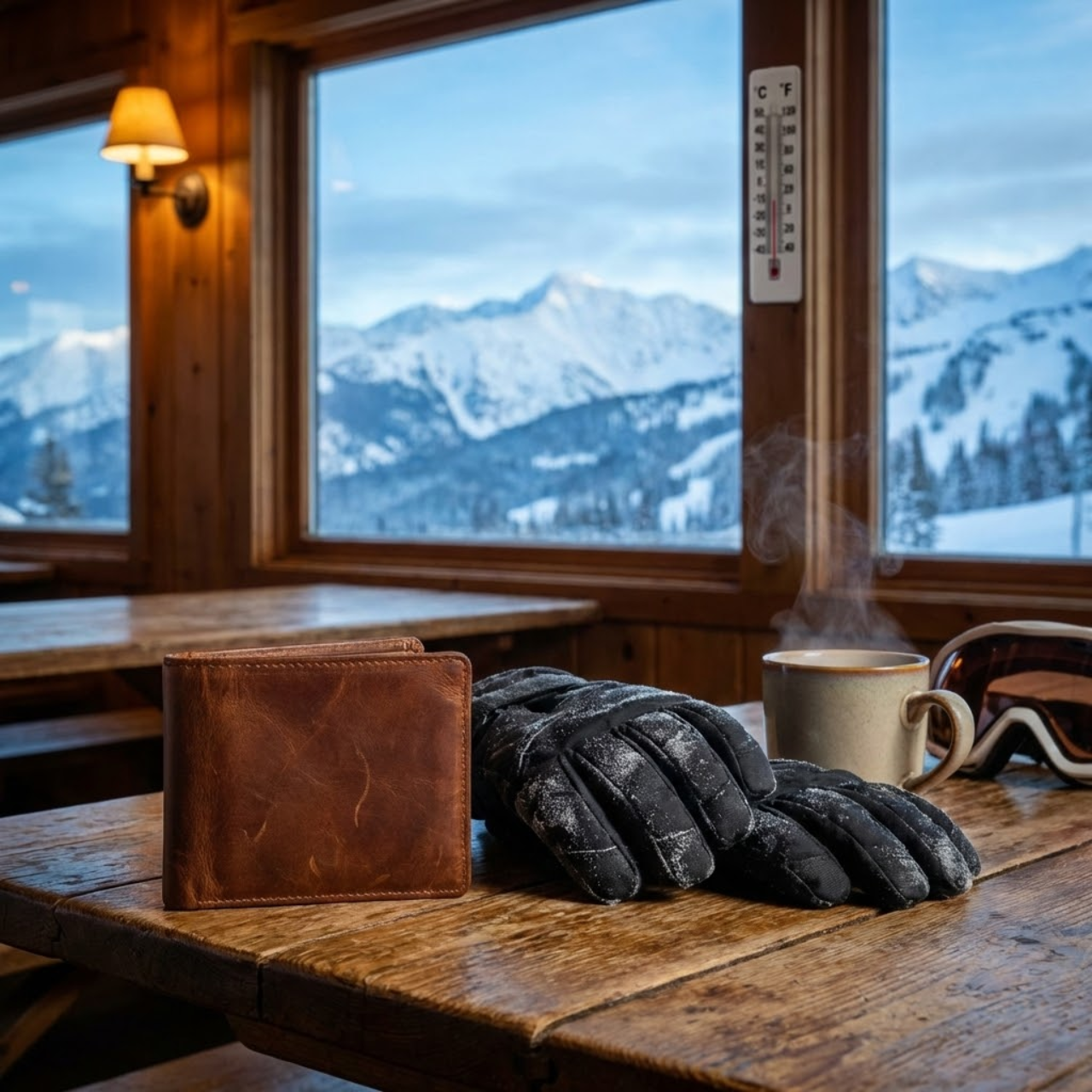
Ski jacket pockets present mixed conditions for leather wallets. Interior pockets benefit from body heat, maintaining leather at comfortable temperatures even when external conditions reach -20°F. This natural warming prevents the stiffening that occurs with prolonged cold exposure. However, the same body heat creates moisture through condensation, requiring moisture management considerations.
Minimalist card holders excel in ski applications because their compact size allows deep insertion into warm interior pockets. The reduced bulk prevents discomfort under ski jacket layers while providing quick access when needed. A thin profile also dries faster after moisture exposure compared to bulky traditional wallets.
The key consideration for winter sports leather survival involves avoiding external pocket storage during extended cold exposure. While quality leather survives brief external exposure, hours of direct -20°F contact causes temporary stiffening that makes card access difficult. Interior pockets solve this problem completely while adding zero inconvenience.
Glove and Accessory Durability
Leather gloves face the harshest winter conditions - direct snow contact, constant flexing, and zero body heat protection when worn. Quality glove leather must resist repeated wet-dry cycles while maintaining grip and flexibility. Heavy oil-tanning or specialized treatments become essential for glove applications where compromise fails.
Smaller leather accessories like key holders and organizational pouches typically stay protected in bags or interior pockets, avoiding direct exposure. However, they still experience temperature cycling during transport and storage. Leather accessories designed for everyday carry naturally possess the durability for winter sports if maintained properly.
Salt exposure from roads and parking lots poses additional challenges. Road salt accelerates leather deterioration if left on surfaces. Wiping down leather items after exposure to salt-contaminated snow prevents long-term damage. This simple maintenance step matters more than cold exposure itself for preserving cold weather gear through multiple seasons.
Belt Performance Under Layers
Standard leather belts worn under ski pants benefit from insulation that prevents cold exposure. The belt stays warm from body heat and multiple clothing layers, essentially operating at room temperature despite external conditions. This protection means belts require no special cold-weather considerations beyond normal leather care.
The compression from tight base layers and ski pants does affect belts. Constant pressure over extended periods can create permanent compression marks if the belt lacks quality construction. Full-grain leather resists this compression better than inferior alternatives, returning to original shape after pressure release. This resilience represents another benefit of quality materials for demanding applications.
Accessibility becomes the primary belt concern in winter sports. Multiple clothing layers make belt adjustment inconvenient. Many skiers choose slightly looser belt settings before heading out, accepting minor compromise to avoid mid-slope adjustments. This practical consideration affects all belt types equally regardless of material choice.
Real-World Testing: Leather at -20°F
Laboratory vs Field Performance
Laboratory cold testing provides controlled data but misses real-world variables. A wallet placed in a -20°F freezer for hours experiences uniform cold exposure without the body heat, movement, and moisture dynamics of actual use. Field testing reveals that properly carried leather goods rarely experience pure cold exposure - body heat, pocket insulation, and brief exposure periods create much milder conditions than raw temperature readings suggest.
The testing that matters involves extended ski days where items cycle through various temperature zones. Morning storage in cold cars, movement to warm lodges, hours on slopes with body heat proximity, then return to cold storage. This cycling stresses materials differently than steady-state cold. Quality leather handles these transitions smoothly while inferior materials crack along stress lines during temperature changes.
User reports from serious winter athletes provide the most reliable performance data. Skiers and snowboarders who spend 50+ days per season on mountains see long-term winter sports leather survival results that laboratory testing cannot replicate. Their experiences consistently show that full-grain vegetable tanned leather maintains functionality through entire seasons without failure when properly maintained.
Long-Term Exposure Effects
Single-day cold exposure causes temporary stiffening in any leather that warms and recovers quickly. Season-long exposure reveals cumulative effects. Leather that sees repeated freeze-thaw cycles without proper conditioning gradually loses flexibility as natural oils deplete. This degradation appears preventable through appropriate maintenance rather than being inherent to the material.
The recovery phase matters as much as cold exposure itself. Leather allowed to warm gradually and air dry naturally experiences minimal stress. Leather subjected to rapid temperature shocks (cold to hot) or forced drying (direct heat sources) develops problems. Proper recovery protocols preserve cold weather gear through many seasons of hard use.
Cumulative damage appears first at fold points and high-stress areas - wallet corners, card slot edges, belt holes. Regular inspection of these areas indicates overall condition. Addressing small issues immediately - spot conditioning, reinforcing stitching, treating developing cracks - prevents major failures. Quality leather rewards this attention with decades of reliable service.
User Reports from Cold Climates
Colorado ski resort employees who use leather wallets daily report years of reliable service with basic maintenance. These individuals experience the full range of resort conditions - parking lot cold, warm lodges, outdoor lift operations. Their unanimous recommendation emphasizes proper material selection over special cold-weather models. Quality full-grain leather simply works.
Canadian backcountry skiers face even harsher conditions during multi-day trips. Temperatures regularly reach -30°F with no access to heated buildings for extended periods. Even in these extremes, properly maintained leather goods function reliably. The key difference in backcountry applications involves storing leather items inside sleeping bags overnight to prevent complete cold-soaking.
Scandinavian winter sports participants report similar experiences. Despite months of sustained freezing temperatures and limited sunlight, leather goods perform consistently. The common theme across all cold climates emphasizes material quality and basic maintenance over specialized products. Standard full-grain vegetable tanned leather works everywhere when chosen carefully.
Proper Care for Cold Weather Leather
Pre-Season Preparation
Before winter sports season begins, conditioning leather goods prepares them for cold exposure. Apply quality leather conditioner liberally, allowing deep penetration overnight. This treatment saturates fibers with oils that maintain flexibility in cold. Focus extra attention on fold areas and stress points most vulnerable to cold stiffening.
Testing flexibility after conditioning reveals readiness for winter use. Bend the leather firmly - it should flex smoothly without resistance or cracking sounds. Any stiffness indicates need for additional conditioning. Don't rush this preparation; properly conditioned leather makes the difference between reliable performance and mid-season failures.
Water resistance treatments complement conditioning for winter sports leather survival. Beeswax-based products provide excellent protection without over-sealing the leather. Apply thin coats, working thoroughly into the surface. Allow drying between coats if applying multiple treatments. The goal creates water-beading surface protection while maintaining breathability.
During-Season Maintenance
After each ski day, remove moisture from leather items before storage. Wipe with a dry cloth to remove surface moisture, then allow air drying at room temperature. Never use direct heat sources like radiators or heaters - this rapid drying can cause cracking. Patient air drying preserves leather integrity through repeated wet-dry cycles.
Spot conditioning addresses areas that see the most stress. If corners or edges show dryness or stiffness, apply small amounts of conditioner specifically to those areas. This targeted approach maintains overall flexibility without over-conditioning areas that remain supple. Regular attention prevents problems from developing beyond easy correction.
Salt removal after exposure to road salt or treated snow deserves immediate attention. Wipe affected areas with a slightly damp cloth to remove salt crystals before they can penetrate and damage leather. Follow with light conditioning to restore natural oils. This simple protocol prevents the accelerated deterioration that salt exposure causes.
Post-Season Recovery
At season's end, thorough cleaning removes accumulated dirt and salt residue. Use saddle soap or leather-specific cleaners according to product directions, working methodically over all surfaces. This deep cleaning prepares leather for conditioning by removing buildup that blocks penetration.
Deep conditioning after cleaning restores oils depleted during season use. Apply conditioning treatments more heavily than during-season maintenance, allowing extended penetration time. Some users condition repeatedly over several days, adding layers as previous applications absorb. This intensive treatment reverses season wear and prepares leather for storage or continued use.
Storage conditions impact off-season leather preservation. Store in cool, dry locations away from direct sunlight and heat sources. Avoid plastic bags that trap moisture - use cloth bags or open storage that allows air circulation. Proper storage between seasons extends cold weather gear lifespan dramatically.
Cold Weather Gear Selection
Choosing Winter-Appropriate Wallets
The ideal winter wallet combines compact size with full-grain leather construction and sufficient capacity for essential cards and cash. Thickness matters - wallets under 0.4 inches when loaded fit interior jacket pockets comfortably without creating bulk. Thicker wallets may work but increase discomfort under layers.
Closure mechanisms face additional scrutiny in winter applications. Zippers can freeze if moisture penetrates, though this rarely affects interior-pocket wallets. Button closures work reliably but require exposed fingers to operate - frustrating in cold conditions. Many winter athletes prefer simple fold designs without external closures, relying on pocket security alone.
Card holder designs often prove optimal for winter sports. The minimal profile disappears into jacket pockets while providing essential functionality. For day trips requiring only lift ticket, ID, and credit card, this minimalism eliminates bulk while ensuring reliable cold weather performance.
Accessories That Complement Winter Sports
Key organization matters especially in winter when thick gloves make fumbling with loose keys frustrating. Compact key organizers that consolidate keys into flat profiles work smoothly even with gloved hands. Attachment points for jacket loops or carabiners ensure keys stay accessible without creating pocket bulk.
Minimalist carry strategies suit winter sports perfectly. Identifying absolute essentials and leaving everything else secured in vehicles or lodges reduces bulk and loss risk. A single compact leather wallet, organized key holder, and lift ticket represent sufficient carry for most ski days. This minimalism aligns perfectly with quality leather goods that pack maximum functionality into minimal space.
Backup storage solutions in vehicles provide security for items that don't need mountain access. Passports, extra cash, and non-essential cards stay safely secured while maintaining easy access before and after skiing. This strategic approach combines convenience with security while keeping pocket contents manageable.
When to Leave Leather Behind
Extreme exposure scenarios warrant alternative approaches. Multi-day backcountry trips where gear stays outside in tents face harsher conditions than day skiing. While quality leather survives these conditions, synthetic alternatives may offer practical advantages in weight, bulk, or cold-soaking prevention.
Waterproof requirements sometimes exceed leather's capabilities. Whitewater kayaking or activities involving complete submersion call for fully waterproof materials. Leather handles snow and rain excellently but isn't designed for sustained underwater use. Recognizing leather's strengths and limitations enables appropriate gear selection for specific applications.
Strategic choices allow using preferred leather goods while acknowledging limitations. A primary synthetic wallet for extreme conditions paired with quality leather accessories for normal use provides flexibility. However, for typical ski resort skiing, properly maintained leather goods face no conditions requiring substitution.
Protecting Leather During Winter Activities
Layering and Insulation Strategies
Interior jacket pockets provide natural insulation for leather goods through body heat and fabric layers. Understanding jacket design helps optimize wallet placement. Chest pockets stay warmest but risk loss during falls. Hip pockets offer good protection with convenient access. Arm pockets work but typically run colder than torso options.
Multiple clothing layers create microenvironments much warmer than external temperatures. A wallet in an interior jacket pocket under a shell layer experiences temperatures 30-40°F warmer than ambient conditions. This natural heating prevents the cold-exposure concerns that affect external storage. Simply keeping leather goods properly pocketed solves most winter concerns.
Body heat effectiveness depends on proper clothing fit. Loose-fitting jackets with minimal body contact don't transfer heat efficiently. Fitted base layers and well-designed jackets maximize heat transfer, keeping pocketed items comfortably warm. This consideration affects overall winter sports comfort beyond just leather goods protection.
Water Resistance and Weatherproofing
Treating leather with beeswax or specialized water resistance products creates protective barriers against snow and moisture. These treatments should be reapplied several times per season depending on exposure levels. Properly treated leather sheds light snow and moisture rather than absorbing it, maintaining dry conditions for contents while protecting the leather itself.
Application techniques affect treatment effectiveness. Warm leather (room temperature or slightly heated) accepts treatments better than cold leather. Work treatments thoroughly into surface texture and seams where water most easily penetrates. Allow adequate drying time - rushing this step reduces protection and may create sticky surfaces.
Performance expectations should remain realistic. Water resistance treatments dramatically improve protection but don't create waterproof seals. Extended exposure to wet snow or rain eventually penetrates despite treatment. The goal involves buying time and reducing absorbed moisture rather than achieving complete water immunity.
Emergency Care in the Field
If leather goods become unexpectedly wet during skiing, blotting with dry cloth removes surface moisture immediately. Avoid the temptation to "dry" items near heaters or hot air vents - this rapid drying causes more damage than the moisture itself. Patient air drying at lodge room temperature or in warm pockets produces better results.
Temperature shock prevention matters when moving between extreme temperature zones. Allowing gradual temperature transitions - keeping items pocketed when moving from heated lodges to cold outdoors - prevents the stress that sudden changes cause. This simple practice extends winter sports leather survival without requiring special equipment.
Quick-fix solutions for minor issues encountered on mountain include basic tools many skiers carry. A small amount of beeswax (often present in skiers' kits for board maintenance) can be worked into dry spots showing stress. Duct tape temporarily secures separated stitching until proper repair. These field repairs keep equipment functional when immediate replacement isn't possible.
Embracing Leather for Winter Adventures
The question isn't whether leather survives ski season at -20°F but rather why anyone would choose inferior alternatives. Quality full-grain vegetable tanned leather excels in cold weather applications when properly selected and maintained. Centuries of proven performance in arctic conditions demonstrate reliability that modern synthetic marketing cannot match.
Winter sports leather survival depends on material quality, appropriate care, and realistic expectations rather than specialized products or complex maintenance regimens. A well-made wallet carried in interior jacket pockets faces no conditions that challenge proper leather's capabilities. The investment in quality leather goods pays returns through seasons of reliable service that cheap alternatives never achieve.
For winter athletes ready to experience the durability and performance of properly made leather accessories, Lost Dutchman Leather offers handcrafted options designed to withstand demanding conditions. Whether you're preparing for your first ski season or replacing worn-out gear after years on the slopes, choosing quality leather means investing in accessories that improve with age rather than degrading with use. Contact us to discuss which designs best suit your winter sports needs, and discover why experienced mountain athletes trust leather goods season after season.