The Franklin Wallet Review: 5-Year Long-Term Durability Test
Many minimalist wallets prioritize thinness over longevity. When leather is thinned excessively or relies on stitching, durability often suffers.
The Franklin takes a different approach. We cut it from one piece of full-grain leather with zero stitching. It's built to last decades, not months. But does this hold up in the real world?
After five years of daily carry, we tracked exactly what happens. This franklin wallet review documents the true minimalist leather wallet durability you can expect. We put it through a rigorous stitchless wallet test.
What Makes The Franklin Different
Lost Dutchman Leather constructs The Franklin unlike traditional store-bought items. You won't find any thread here. You won't find glue. There aren't any artificial weak points.
A single piece of vegetable-tanned leather is folded into a functional pocket. The design relies entirely on the natural structural strength of full-grain leather.
This distinction matters because stitching creates failure points. Thread sits on the surface, fully exposed to daily friction. Over time, seams can wear through and split. Without stitching, those risks don't exist. The single-piece leather construction does all the work.
The Stitchless Advantage
Think of a traditional wallet seam like a sheet of perforated paper. Every needle hole punches a tiny tear in the material. Under stress, the paper always tears along that dotted line.
Stitching does the exact same thing to leather. It creates a dedicated line of weakness. Our design removes the perforation entirely. The integrity of the hide remains completely intact.
This stitchless mechanical advantage means there is nothing to unravel. The uncompromised hide absorbs stress naturally.
Year One: Breaking In the Leather
New full-grain leather feels stiff. The material starts its life rigid. That's a sign of quality, not a defect. During the first month, the leather softens where your body hits it most.
The fold points become incredibly pliable. This break-in period is common for any slim front pocket card holder. The leather actively molds to your specific use.
By month three, the surface develops signs of patina. Brown leather darkens faster than black. This shift happens as natural oils interact with the vegetable tannins. The single-piece leather construction prevents tearing as you add cards.
Years Two and Three: Real-World Stress
This is when mass-produced wallets begin to show serious wear. Stitching frays from pocket friction. Cheap materials start showing bonded leather peeling.
The franklin wallet faced daily front-pocket carry. It lived with keys in the exact same pocket. It saw regular exposure to moisture from rain and sweat.
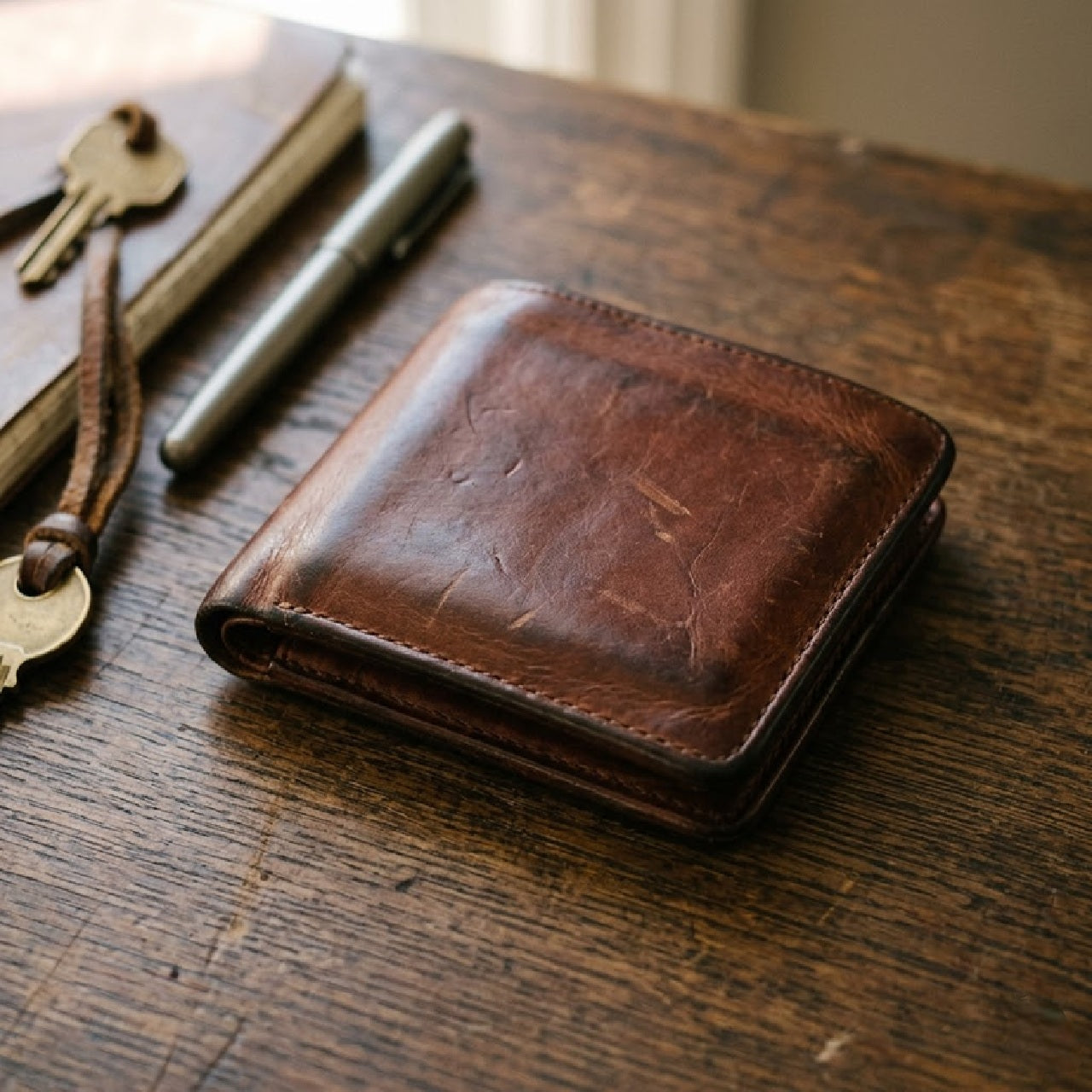
The results were telling. Edges developed a rounded, glass-like finish. The leather compressed slightly, making the profile even thinner. The color deepened to a rich mahogany. Small scratches appeared but blended perfectly.
Year Four: The Patina Plateau
Patina development slows after year three. The leather reaches a stable color that shifts minimally with use. By year four, the material developed a truly distinctive character.
The patina was not uniform. It was darker along the edges and lighter in protected areas. This uneven aging separates real hides from synthetic alternatives.
Plastic stays the same until it breaks. Leather constantly evolves. Full-grain leather compresses as fibers settle over time. This minimalist leather wallet durability proves the material conforms to use without failing.
Year Five: Durability Assessment
Five years of daily carry reveals whether gear is built to last. Our long-term franklin wallet review showed true quality. The leather remained completely structurally sound.
We found no cracks. We found no tears. There was absolutely no separation anywhere. The piece is fully broken in. It holds cards securely without being tight.
It shows honest wear, but it doesn't show damage. This stitchless wallet test proves that simple designs outlast complex ones.
Wear vs. Damage
The difference between wear and damage matters. Wear is a natural aging process that adds beautiful character. Damage is a structural failure that reduces function.
The item showed extensive wear. It had scratches, color changes, and fiber compression. But it had zero damage. It still functioned exactly as designed.
Compare this to mass-produced accessories. Those materials often don't age gracefully. Coatings crack easily, and backing layers separate. You won't ever see bonded leather peeling on full-grain hides.
Real-World Stress Testing
We didn't baby this piece. It faced harsh conditions daily. A customer once dropped his keys in a parking lot during a heavy rainstorm.
His gear fell directly into a puddle of motor oil and muddy water. He wiped it off and let it dry naturally on his desk. Wallets relying on water-soluble adhesives often delaminate in these conditions.
Our leather simply absorbed the oils and darkened. It looked rugged rather than ruined. That's the resilience of honest materials.
How the Stitchless Design Holds Up
Traditional wallet construction uses thread to join leather pieces. This creates intentional weak points. Thread creates a raised profile. It takes the brunt of friction against your fabric.
Even strong thread eventually frays under this continuous abrasion. We eliminate this problem entirely. The stitchless mechanical advantage means there's nothing to break except the leather itself.
We heavily monitored the card slot openings and fold lines. None of these specific areas showed any failure.
Understanding Patina Development
Vegetable-tanned leather changes color as it ages. This isn't fading. It's a natural chemical process. Natural tannins react beautifully with oils, sunlight, and the environment.
The result is a deepening, enriching color shift called patina. Brown leather develops a richer patina than black. Black leather shows patina through subtle tone shifts and a gentle sheen.
Synthetic leather doesn't develop patina. It simply wears out. The surface degrades without the self-healing properties of full-grain hides.
Capacity and Function
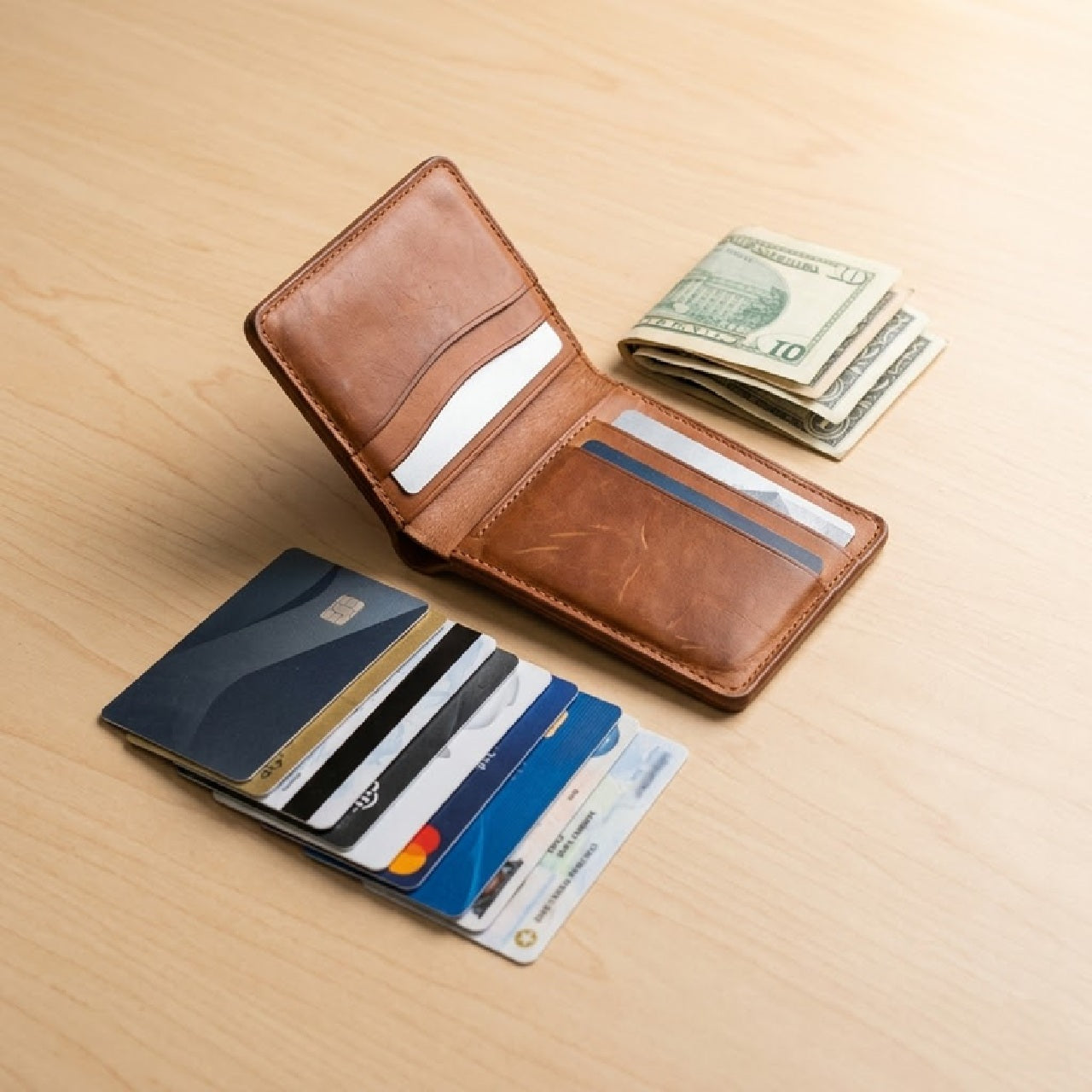
A daily carry item needs to work, not just survive. The pocket held six to eight cards comfortably when new. After five years, capacity remained the exact same.
The leather stretched slightly during break-in, then fully stabilized. Cards slid in easily without ever being loose. It maintained its tight tension perfectly.
Cash storage worked very well. The design created a natural pocket that held folded bills flat. No money clip was needed. It's one of our most capable full grain leather wallets.
Comparing to Traditional Bifolds
Traditional bifolds use multiple leather pieces stitched together. This method has been standard for many decades. It also has very predictable failure points.
Stitching wears through. Leather pieces separate. The item eventually needs repair. The single-piece leather construction eliminates these issues completely. After five years, it showed no signs of the problems plaguing traditional bifolds.
It serves as the perfect front pocket bifold alternative. For maximum capacity, a handmade leather wallet like our traditional bifold makes sense. But for longevity, stitchless wins.
Care and Maintenance
Full-grain leather doesn't need much maintenance. It isn't delicate. An occasional wipe down with a dry cloth works perfectly. We used no conditioners during the entire stitchless wallet test.
No special storage was required. The leather handled it all naturally. Vegetable-tanned full-grain leather contains natural oils that keep it supple.
If it feels dry after several years, a simple leather balm works. Apply it sparingly. Wipe off the excess immediately. Let it absorb completely overnight.
The Real Cost of Durability
Entry-level wallets often require replacement multiple times a decade. The upfront cost is lower, but the long-term cost adds up quickly. A quality leather good is a true investment.
It effectively lowers the cost per day by lasting significantly longer. This calculation ignores the daily hassle of replacement. You avoid transferring cards constantly.
You avoid breaking in new leather. You avoid dealing with failure. It outperforms any classic bifold wallet stitched with cheap thread. Durability isn't about spending more. It's about spending once.
Who Should Choose The Franklin
This design works perfectly for specific users. It's ideal for minimalists who carry six to eight cards and cash. It suits those who strongly prefer front-pocket carry.
It's a fantastic front pocket bifold alternative. It's designed for people who value true durability over gimmicky features. If you need maximum capacity, consider a traditional bifold.
But if you prioritize lifespan, the stitchless mechanical advantage is a highly functional choice. It eliminates the most common failure point completely.
Conclusion
It survived five years of daily carry without failure. This franklin wallet review proves the simple design works. Single-piece construction eliminates weak points.
Full-grain leather develops character without deteriorating. Capacity remains incredibly consistent over years of use. This wasn't a gentle minimalist leather wallet durability test.
The gear faced front-pocket carry, moisture, and heavy impacts. It handled absolutely everything effortlessly. Many mass-produced wallets fail to reach the five-year mark. Our gear is just getting started.
Have a question about leather? Ask our team anytime. Your gear should last decades, not months.