The Longevity Factor: Quality Leather Goods as an Antidote to Waste
The average person replaces their wallet every 18 months. Multiply that across millions of consumers, and the waste becomes staggering. Worn-out synthetic materials, degraded bonded leather, and broken stitching send countless accessories to landfills each year. Yet a solution exists in an unexpected place: embracing leather goods sustainability through products built to last decades rather than months.
The conversation around sustainable consumption often focuses on eliminating leather entirely, but this overlooks a crucial factor. When comparing slow fashion vs fast fashion approaches, longevity emerges as the most significant environmental metric. A handcrafted leather wallet used for 20 years creates far less waste than five synthetic wallets replaced every four years. Quality construction transforms accessories from disposable commodities into lasting investments.
Lost Dutchman Leather builds products with this longevity principle at their core. Each piece represents an antidote to waste culture - crafted to endure, repair, and improve with age rather than deteriorate and demand replacement.
The Hidden Cost of Disposable Culture
Fast Fashion's Impact on Leather Goods
The fast fashion model has infiltrated leather accessories markets with devastating efficiency. Manufacturers prioritize speed and low prices over durability, creating products engineered for obsolescence rather than longevity. Wallets priced at $15-25 might seem economical, but their 12-18 month lifespan reveals the true cost.
These mass-produced accessories rely on corrected grain or bonded leather - materials that look acceptable initially but lack structural integrity. Thin synthetic linings tear within months. Stitching uses weak thread prone to unraveling. Hardware oxidizes and breaks under normal use. The result? A continuous replacement cycle that generates waste while draining wallets.
The True Price of "Affordable" Accessories
Consider the mathematics of disposable leather goods. A person purchasing $20 wallets every 18 months spends $200 over 15 years while contributing five wallets to landfills. Meanwhile, a $150 full-grain bifold wallet lasting 20+ years costs less long-term while creating zero waste.
Synthetic materials and chemically-treated leather introduce additional environmental costs. Polyurethane coatings prevent natural biodegradation. Chrome tanning processes use toxic chemicals requiring careful disposal. These products don't age gracefully or decompose naturally - they simply break down into microplastics or persist in landfills for decades.
Understanding Leather Goods Sustainability
What Makes Leather Goods Truly Sustainable
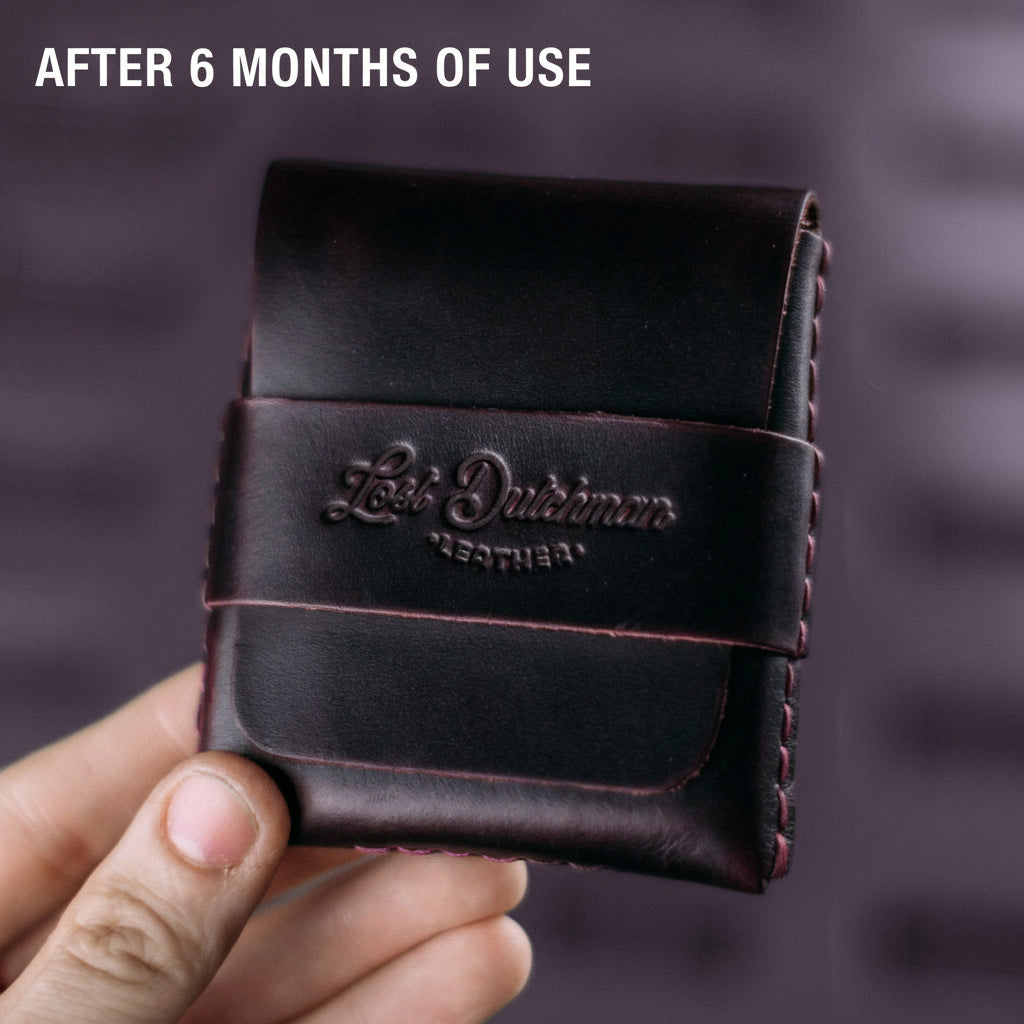
Genuine leather goods sustainability centers on three principles: natural materials, minimal processing, and exceptional longevity. Full-grain leather - the highest quality grade - maintains the complete grain structure, providing unmatched durability. When properly cared for, these products develop character through decades of use rather than deteriorating.
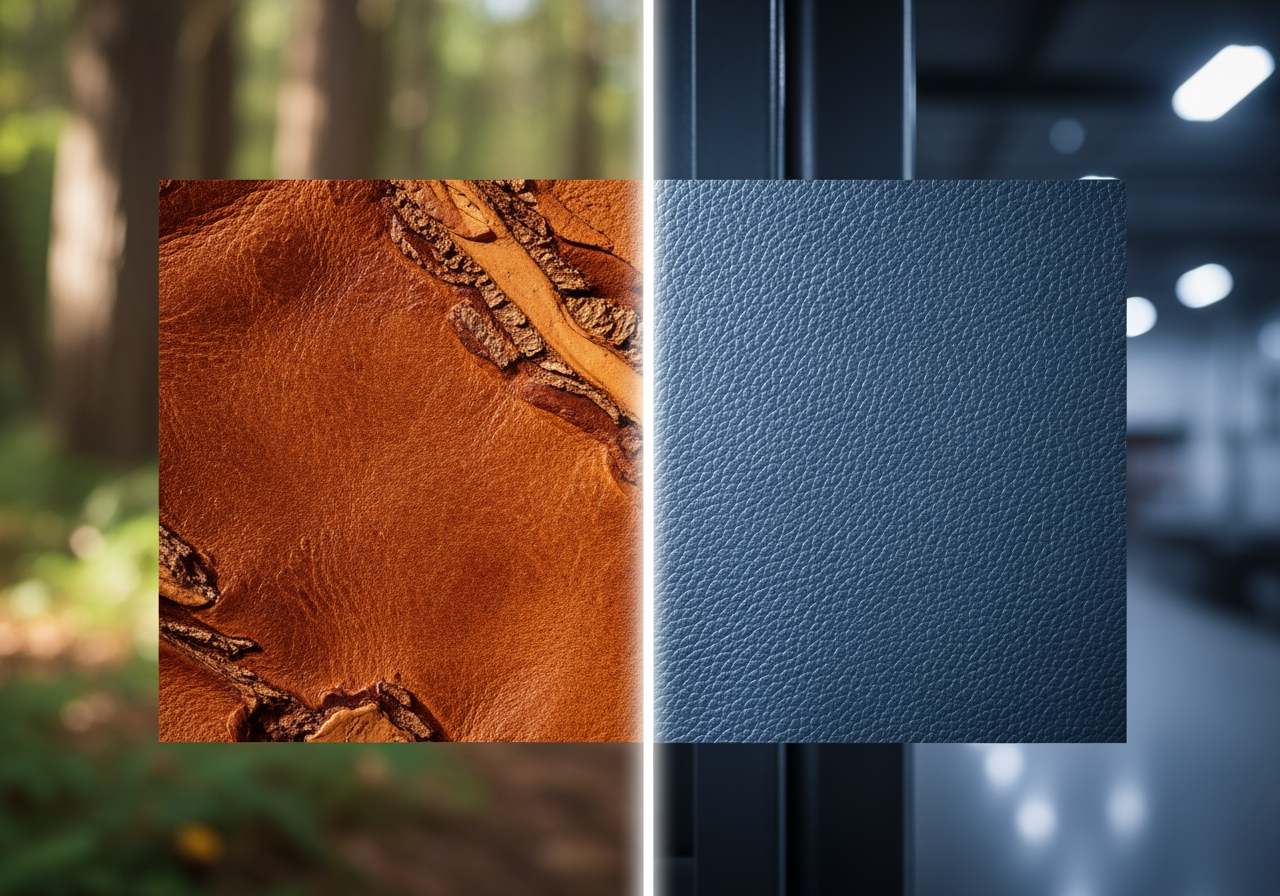
Vegetable tanning offers the most sustainable leather processing method. This traditional technique uses natural tannins from tree bark rather than harsh chemicals, creating leather that biodegrades naturally at end-of-life. The process takes longer and costs more, but produces material that actually improves with age.
The longevity factor outweighs all other sustainability metrics. A product used for 20 years avoids 19 years of manufacturing impact, packaging waste, and transportation emissions that replacement cycles generate. This makes durable leather goods more sustainable than many alternatives marketed as eco-friendly.
The Slow Fashion Alternative
The slow fashion vs fast fashion debate extends beyond clothing into accessories and everyday carry items. Slow fashion rejects planned obsolescence, instead embracing quality construction, timeless design, and repair culture. Rather than chasing trends, this approach values pieces that transcend seasonal changes.
Quality leather belts, wallets, and accessories embody slow fashion principles. They're designed for decades of daily use rather than months. Their classic aesthetics remain relevant regardless of changing trends. Most importantly, they can be repaired rather than replaced when maintenance becomes necessary.
This shift requires different consumer thinking - investing $150-300 in a product meant to last 20 years rather than spending $30 on something lasting 18 months. The mathematics favor quality, but the cultural mindset around consumption must evolve to prioritize longevity over initial cost.
How Quality Construction Extends Product Life
Full-Grain Leather vs Corrected Grain
Full-grain leather represents the entire grain layer of the hide with no surface alterations. This complete structure provides superior tensile strength, fiber density, and natural water resistance. As it ages, full-grain develops a rich patina - a desirable characteristic that enhances appearance rather than degrading it.
Corrected grain leather undergoes sanding to remove imperfections, then receives embossing and coating to simulate natural grain. This process weakens the fiber structure while creating an artificial surface prone to cracking and peeling. Similarly, bonded leather - made from leather scraps bound with adhesive - lacks durability entirely, typically failing within 1-2 years.
The quality difference manifests clearly over time. Full-grain leather becomes more supple and characterful with use. Corrected grain begins peeling within a year. Bonded leather simply disintegrates. Choosing full-grain construction ensures accessories that improve rather than deteriorate with age.
Hand-Stitched vs Machine-Stitched Durability
Saddle stitching - the traditional hand-sewing technique - creates seams significantly stronger than machine stitching. This method uses two needles and a single thread, passing through each hole from both directions. If one section breaks, the rest remains intact. Machine stitching uses a continuous thread; one break can unravel an entire seam.
Hand-stitched construction also enables future repairs. Damaged sections can be carefully restitched without compromising surrounding areas. Machine-stitched products often require complete reconstruction or prove impossible to repair economically, leading to premature disposal.
Quality hardware matters equally. Solid brass or stainless steel components resist corrosion and maintain function through decades of use. Cheap zinc alloy hardware oxidizes, breaks, and fails - often rendering otherwise functional products unusable. Investing in quality hardware construction prevents waste from component failure.
The Economics of Buying Quality Once
Cost Per Wear Analysis
True value assessment requires calculating cost per use rather than initial price. A $150 wallet used daily for 20 years (7,300 days) costs approximately 2 cents per use. A $30 wallet lasting 18 months (548 days) costs 5.5 cents per use. Over 20 years, purchasing replacement cheap wallets totals $400 - nearly triple the quality investment.
This analysis excludes hidden costs: time spent shopping for replacements, frustration with premature failure, and environmental impact of multiple products. Card holders and minimalist wallets following this quality-first approach deliver similar long-term economics.
The initial investment feels significant, but breaks down to mere dollars per year over the product's lifespan. This perspective shifts consumption patterns from frequent small purchases to occasional substantial investments - a fundamental principle of leather goods sustainability.
Generational Products and Heirloom Value
Some leather goods outlast their original owners. Properly constructed and maintained wallets, belts, and bags can serve multiple generations, transforming from mere accessories into family heirlooms with stories and character.
This longevity challenges modern disposable culture fundamentally. Products become companions rather than commodities - developing memories, patina, and sentimental value alongside functionality. A grandfather's wallet passed to a grandson carries more than practical utility; it embodies craftsmanship values and connects generations.
Repairable construction preserves this value. Unlike disposable goods engineered for landfills, quality leather products can be restored, refinished, and returned to service repeatedly. This repair culture opposes waste culture, extending product life indefinitely through periodic maintenance rather than replacement.
Caring for Leather to Maximize Longevity
Basic Maintenance Practices
Proper care dramatically extends leather goods lifespan. Conditioning full-grain leather every 3-6 months replaces natural oils, maintaining suppleness and preventing cracking. A quality leather conditioner takes minutes to apply but adds years to product life.
Protection matters equally. Avoid prolonged water exposure, extreme temperatures, and direct sunlight - conditions that dry out leather and accelerate deterioration. Store leather goods in breathable containers rather than plastic, allowing moisture regulation that prevents mold while avoiding excessive drying.
Regular cleaning removes dirt and oils that can degrade leather over time. A damp cloth suffices for routine maintenance; harsh chemicals aren't necessary and can damage protective finishes. This simple care routine requires minimal effort but delivers maximum longevity benefits.
When and How to Repair Quality Leather
Quality construction enables cost-effective repairs that restore products to like-new condition. Minor edge damage can be burnished smooth. Scratches often buff out or blend into patina. Loose stitching can be reinforced before complete failure occurs.
Professional leather restoration services handle more significant repairs: replacing damaged panels, reconstructing seams, refinishing surfaces, or upgrading hardware. These services cost a fraction of replacement while maintaining the product's broken-in comfort and character.
This repair possibility distinguishes quality goods from disposable alternatives. A $150 wallet accepting a $30 repair after 15 years still outperforms five $30 wallets over the same period - financially, environmentally, and practically. The ability to repair rather than replace exemplifies true sustainability.
Choosing Longevity-Focused Brands
What to Look for in Quality Leather Goods
Several indicators distinguish durability-focused products from disposable alternatives. Full-grain leather specification comes first - any other grade compromises longevity. Hand-stitching with heavy-duty thread suggests serious construction. Solid brass or stainless steel hardware indicates quality commitment.
Edge finishing reveals manufacturing care. Hand-burnished edges create smooth, sealed surfaces that resist moisture and wear. Raw or painted edges indicate shortcuts that compromise durability. The finishing quality visible on edges often reflects the attention to detail throughout the entire product.
Thickness matters too. Quality wallets use 3-4 ounce leather providing structure and longevity. Thin 1-2 ounce leather saves material costs but sacrifices durability. Adequate leather thickness ensures the product withstands years of daily use without stretching, tearing, or losing shape.
American Craftsmanship and Sustainable Production
Domestic production offers sustainability advantages beyond product quality. Shorter supply chains reduce transportation emissions. Higher labor standards ensure ethical manufacturing. Small-batch production minimizes waste compared to mass manufacturing's overproduction and excess inventory.
American craftsmen often embrace traditional techniques emphasizing durability over production speed. This approach creates leather accessories built to last generations rather than seasons. The slower production pace allows quality control impossible in mass manufacturing environments.
Businesses offering lifetime guarantees demonstrate confidence in their construction quality. These policies aren't marketing gimmicks - they're commitments to stand behind products indefinitely. Companies honoring lifetime guarantees build products to survive decades of daily use because warranty claims would otherwise prove financially unsustainable.
Conclusion
The longevity factor offers the most powerful antidote to waste culture. While conversations around sustainability often focus on eliminating materials, genuine leather goods sustainability emerges from choosing products built to last 20+ years rather than 18 months. This shift from fast fashion's disposable mentality to slow fashion's quality-first approach reduces waste, saves money, and creates products with genuine character.
Quality leather goods represent practical sustainability - investment pieces that deliver superior long-term value while minimizing environmental impact through exceptional longevity. Each quality purchase prevents years of replacement cycles, packaging waste, and manufacturing emissions that disposable alternatives generate.
Ready to embrace the longevity factor? Explore products built to last generations and discover how one quality investment can replace decades of disposable purchases. Have questions about quality construction, care, or finding the right leather goods for your needs? Contact us - our craftsmen are happy to help you choose accessories that will serve you for decades to come.