Crafted to Last: Environmental Benefits of Heirloom-Quality Gear
Americans discard approximately 11 million tons of textile and leather waste annually. Wallets replaced every 18 months, belts discarded after two years, bags abandoned when stitching fails - this replacement cycle generates staggering waste while consuming resources unnecessarily. Yet an alternative exists that previous generations understood instinctively: investing in quality gear built to last generations rather than seasons.
Heirloom quality leather goods represent more than nostalgia for craftsmanship traditions. They embody practical environmental strategy, where exceptional durability translates directly into resource conservation, waste prevention, and reduced manufacturing impact. A single wallet serving 30 years prevents 15 replacement cycles, eliminating the manufacturing emissions, raw materials, and landfill burden those replacements would generate.
The environmental benefits of heirloom-quality gear extend beyond the products themselves to fundamentally different consumer relationships with possessions. Rather than disposable commodities, these items become companions - maintained, repaired, and eventually passed to the next generation. This shift from replacement culture to stewardship culture offers tangible environmental benefits at scale.
The Environmental Case for Heirloom Quality
Defining Heirloom-Quality Goods
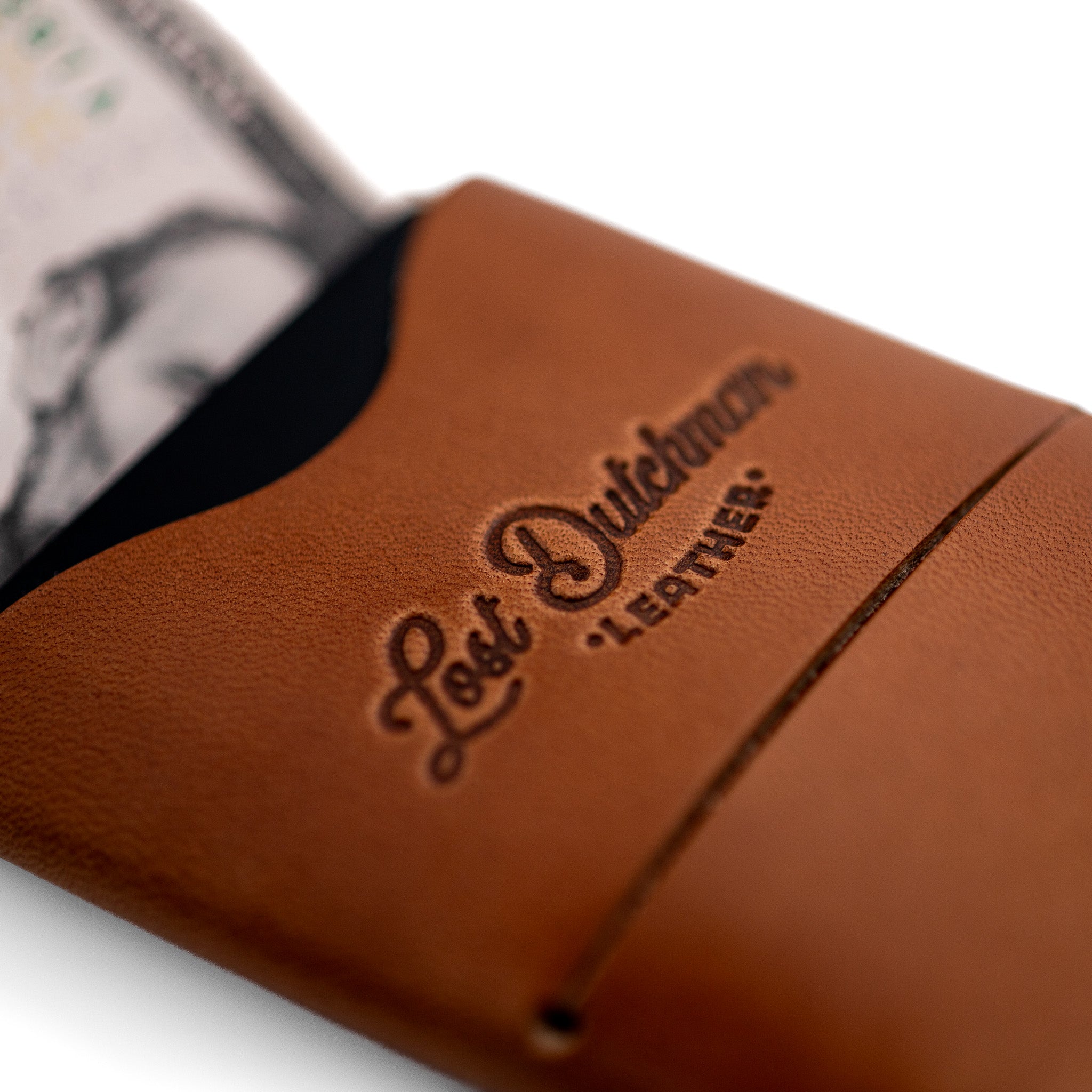
Heirloom quality leather goods share specific construction characteristics enabling multi-generational use. Full-grain leather provides the foundation - material retaining complete fiber structure for maximum durability. Hand-stitched seams using saddle stitch techniques create joins that strengthen rather than weaken over time. Solid brass or stainless steel hardware resists corrosion through decades of daily use.
These construction standards cost more initially but deliver exponentially greater longevity. Where mass-produced alternatives fail within 1-3 years, properly crafted pieces function reliably for 20-50 years or longer. This durability gap represents the difference between products and heirlooms - between waste and sustainability.
Material selection matters equally. Premium leather tanned using traditional methods develops protective patina enhancing durability over time. Quality thread resists UV degradation and maintains tensile strength through decades of stress. Even seemingly minor components like edge finishing affect longevity dramatically - hand-burnished edges seal leather against moisture and wear far more effectively than painted edges.
Manufacturing Impact Multiplication
Every product manufactured carries environmental burden: raw material extraction, processing energy, transportation emissions, water consumption, and waste generation. Mass production of disposable goods multiplies this burden through repeated manufacturing cycles serving the same consumer need.
Consider a simple comparison. Manufacturing one quality leather wallet generates specific environmental impact - perhaps 10 kg of CO2 equivalent when accounting for materials, processing, and transportation. If that wallet serves its owner for 25 years, the annual environmental cost equals 0.4 kg CO2.
Now contrast with five cheap wallets over the same period. Each carries similar manufacturing impact - approximately 8 kg CO2 despite lower quality. Multiplied across five replacements, the total reaches 40 kg CO2 - four times the environmental burden for inferior total service. This multiplication effect scales across millions of consumers and product categories.
Resource Extraction Avoided Through Longevity
Raw material extraction represents significant environmental impact often overlooked in consumer discussions. Leather production requires raising livestock (with associated feed, water, and land use), hide processing, and tanning. Metal hardware demands mining, smelting, and manufacturing. Thread production consumes energy and water.
Investing in quality gear that lasts 20-30 years avoids repeated raw material extraction for replacement products. A single cowhide providing leather for one quality belt serves the same function as multiple hides used across several cheap belts over equivalent time. This resource efficiency compounds across product categories.
The mathematics of avoided extraction scale dramatically. If 10 million consumers choose quality leather belts lasting 25 years instead of cheap alternatives requiring replacement every 3 years, approximately 63 million fewer belts need manufacturing over that period. The raw material savings - hides, metal, thread, and packaging - represent substantial environmental benefit.
Resource Conservation Through Durability
Raw Material Preservation
Hide utilization efficiency favors heirloom-quality production significantly. Premium full-grain leather uses the best portions of hides, but the superior longevity means fewer total hides needed to serve equivalent consumer demand. While individual products consume more material (thicker, higher-quality leather), the decades-long service life reduces net resource consumption dramatically.
Forestry impact for hardware components follows similar patterns. Solid brass hardware production requires energy-intensive mining and smelting, but the resulting components outlast cheap zinc alloy alternatives by 10-20x. The total resource extraction per year of service favors quality construction overwhelmingly, despite higher initial material demands.
Water consumption in manufacturing represents critical environmental metric often ignored in product comparisons. Leather tanning consumes substantial water regardless of quality level. However, products lasting 25 years amortize water consumption across far longer service periods than replacements lasting 18 months. The per-year water footprint drops proportionally with increased longevity.
Energy Footprint Over Product Lifetime
Manufacturing energy constitutes the largest single environmental impact for most leather goods. Tanning processes, cutting operations, stitching, and finishing all consume electricity or fuel. Transportation from raw materials through manufacturing to final retail adds energy consumption throughout supply chains.
Heirloom quality products justify higher manufacturing energy through exceptional longevity. A wallet consuming 50 kWh to manufacture but serving 30 years equals 1.67 kWh per year of service. A cheap wallet using 30 kWh in production but lasting 2 years equals 15 kWh per year - nearly 10x higher annual energy footprint despite lower initial consumption.
Long-term carbon accounting reveals the environmental advantage clearly. Organizations conducting life cycle assessments consistently find durability represents the single most significant variable affecting total environmental impact. Products lasting 3-5x longer than alternatives deliver proportionally lower lifetime carbon footprints, regardless of slightly higher initial manufacturing emissions.
Waste Prevention at Scale
The Landfill Mathematics
Volume calculations for replacement cycles over decades illustrate waste prevention benefits starkly. A person purchasing cheap wallets every 18 months contributes 20 wallets to landfills over 30 years. Multiply across 100 million adult Americans and the numbers become staggering - 2 billion discarded wallets generating millions of tons of waste.
Heirloom quality leather goods eliminate this waste stream almost entirely. Products built to last 30+ years simply don't enter landfills during their owners' lifetimes. Even when eventually discarded, full-grain vegetable-tanned leather biodegrades naturally unlike synthetic materials or chrome-tanned alternatives requiring decades to centuries for decomposition.
Synthetic alternatives generate additional waste concerns through microplastic pollution. Polyurethane "leather" products shed microplastic particles throughout their use and particularly during decomposition. These particles persist in ecosystems indefinitely, contaminating water supplies and entering food chains. Natural leather products avoid this pollution pathway entirely.
Packaging Waste Multiplication
Product packaging creates substantial waste often overlooked in environmental assessments. Each wallet, belt, or bag purchased arrives with packaging - cardboard boxes, plastic sleeves, tissue paper, hang tags, and shopping bags. E-commerce adds shipping boxes, void fill, and protective materials.
A single quality purchase generates one set of packaging waste. Replacement cycles multiply packaging proportionally - five wallet purchases over 30 years generate five times the packaging waste compared to one purchase serving the entire period. This multiplication extends to shipping when purchasing online, with repeated deliveries consuming fuel and generating emissions.
The scale of packaging waste from replacement culture reaches shocking proportions. If half of American adults purchase replacement wallets every two years (versus quality alternatives lasting 25 years), the difference equals approximately 750 million unnecessary packaging sets over that period. Each set represents trees harvested for cardboard, petroleum for plastics, and transportation emissions.
Repair Culture vs Replacement Culture
Designing for Repairability
Heirloom quality construction inherently supports repair culture through design choices enabling restoration. Saddle-stitched seams allow selective repair of damaged sections without compromising surrounding areas. Modular construction permits component replacement - swapping worn lining while preserving the exterior leather body.
This contrasts sharply with disposable goods engineered for planned obsolescence. Machine stitching using continuous thread means one break compromises entire seams. Glued construction prevents disassembly for component replacement. Thin materials lack substance for effective repair. These design choices ensure products cannot be economically repaired, forcing replacement.
Professional repair infrastructure depends on products worth repairing. Quality handcrafted leather goods justify repair investment - a $50 restoration on a $200 wallet serving another decade makes economic sense. Cheap $30 wallets don't merit repair costs, creating self-reinforcing replacement culture that eliminates repair skills and businesses from communities.
The Economics of Repair
Repair costs versus replacement costs reveal investment wisdom over product lifetimes. A quality wallet purchased for $150 might require $40 in maintenance over 25 years - conditioning products, minor stitching repairs, edge refinishing. Total investment equals $190 for 25 years of service, or $7.60 annually.
Compare with replacement cycles: $30 wallets purchased every 18 months equal $600 over 25 years, or $24 annually - more than triple the annual cost of quality investment. Even accounting for potential repairs, investing in quality gear delivers superior economics while preventing waste and supporting repair industries.
Local economy support through repair services represents additional benefit. Repair culture sustains skilled craftspeople, maintains traditional techniques, and circulates money within communities. Replacement culture funnels money to distant manufacturers while eliminating local repair businesses and associated skills from communities.
Investment Thinking and Consumer Behavior
Shifting from Cost to Value
Investing in quality gear requires shifting perspective from initial cost to lifetime value. This mental transition challenges cultural conditioning emphasizing lowest prices regardless of longevity. Breaking free from disposable mentality demands recognizing that $150 for 25 years vastly outperforms $30 for 18 months.
Quality assessment skills develop through education and experience. Learning to identify full-grain leather versus corrected grain, recognize quality stitching, evaluate hardware construction, and understand finishing techniques empowers consumers to distinguish genuine quality from marketing claims. These skills protect against predatory pricing while ensuring investment dollars purchase actual longevity.
The shift from replacement culture to investment culture generates cascading environmental benefits. Consumers purchasing one quality bifold wallet instead of multiple cheap alternatives reduce manufacturing demand, decrease waste generation, and support businesses prioritizing durability over disposability. Individual choices aggregate into market signals rewarding sustainable business models.
The Psychology of Ownership
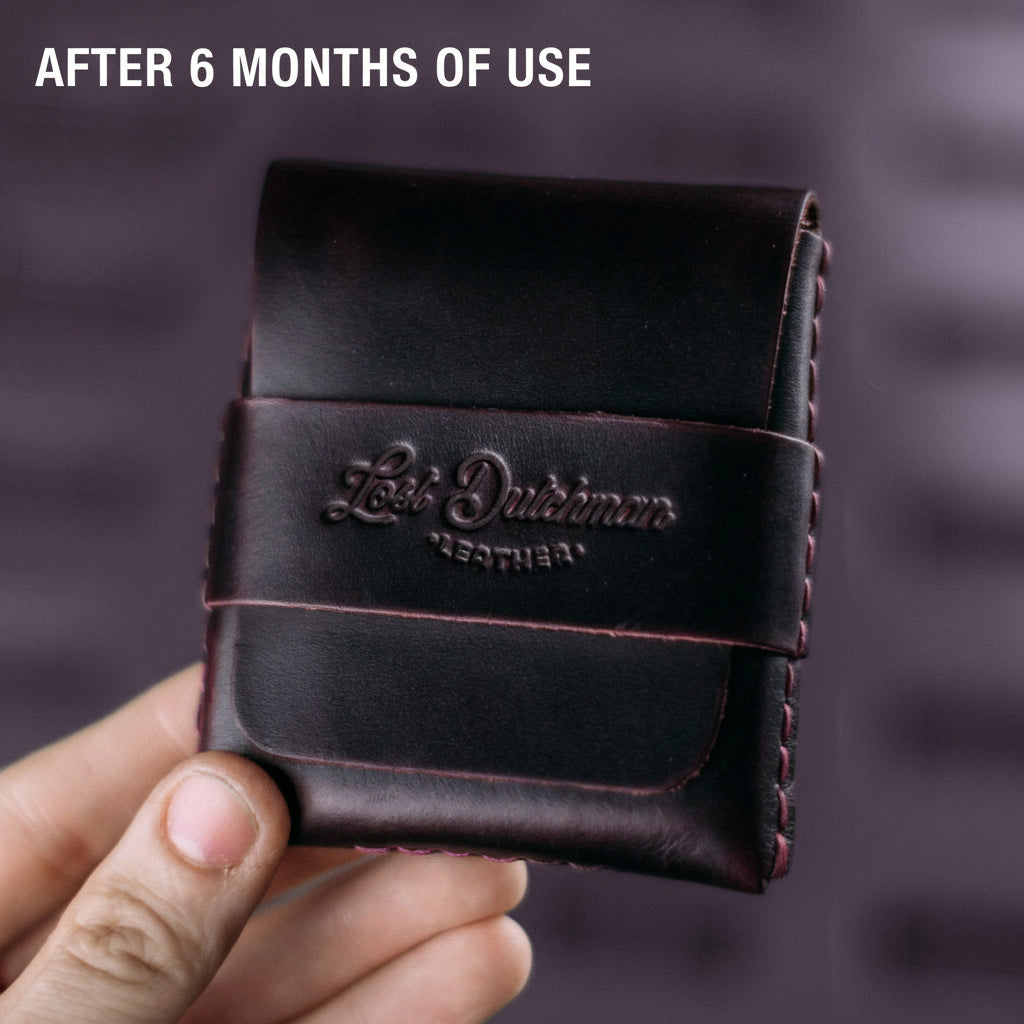
Emotional attachment to lasting goods fundamentally differs from relationships with disposable products. Heirloom quality leather goods develop character through use - patina formation, shape molding to owners, and accumulation of memories associated with the product. This evolution creates genuine attachment impossible with products failing before relationships develop.
Care and maintenance motivation increases with product quality and attachment. Owners invest time conditioning leather, addressing minor wear promptly, and storing items properly because the products justify that care. Disposable goods receive no maintenance because replacement costs less than care investment - reinforcing the replacement cycle.
Passing products to the next generation represents the ultimate sustainability metric. A wallet serving its original owner for 30 years then passing to a child for another 20 years provides 50 years of service from single manufacturing event. This generational use pattern characterized previous eras before disposable culture normalized constant replacement.
Material Quality and Environmental Impact
Full-Grain Leather and Natural Materials
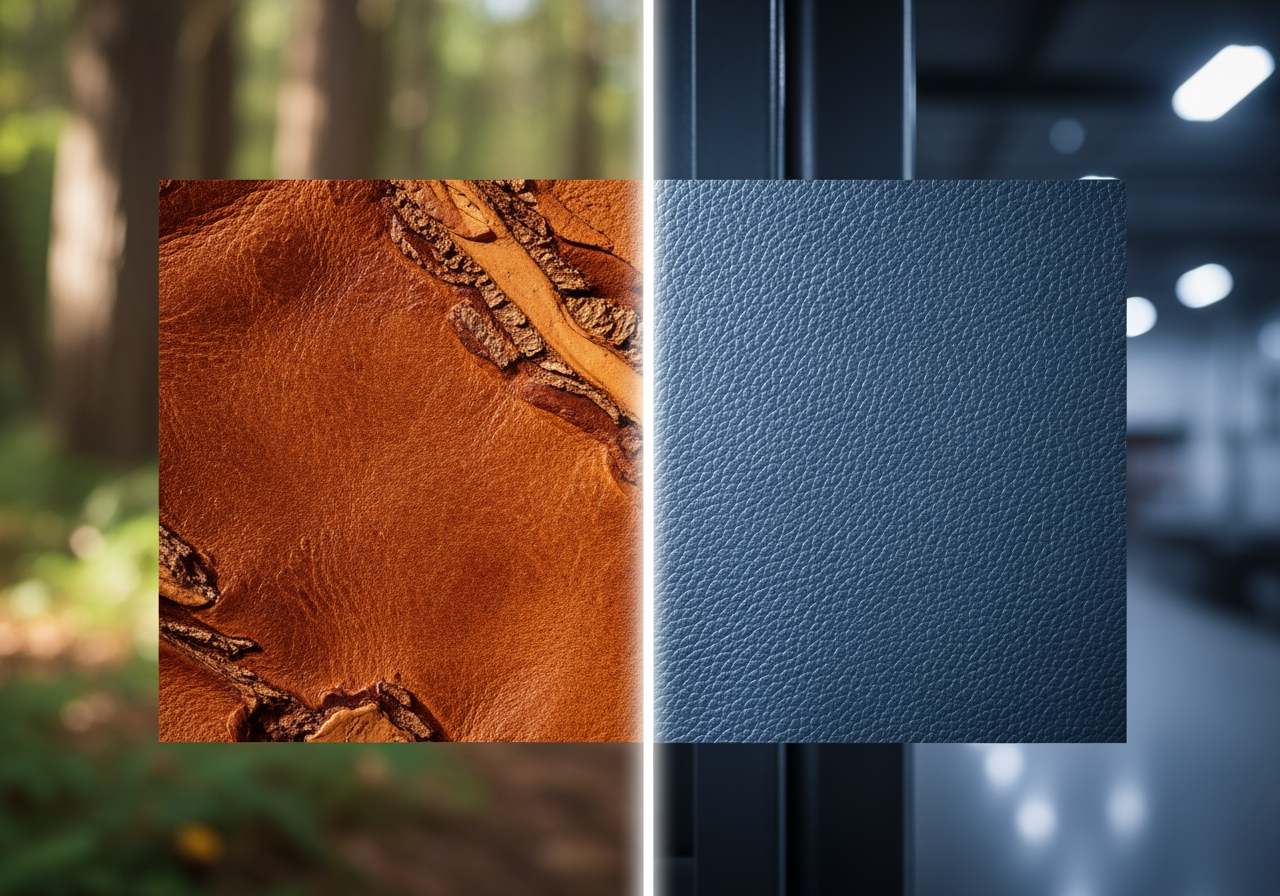
Full-grain leather's biodegradability advantage distinguishes it environmentally from synthetic alternatives and lower leather grades. At end-of-life, vegetable-tanned full-grain leather decomposes naturally, returning nutrients to soil ecosystems. This contrasts sharply with synthetic "leather" products persisting as microplastic pollution for centuries.
Chemical processing differences affect environmental profiles significantly. Traditional vegetable tanning uses natural plant-derived tannins creating minimal toxic waste. Chrome tanning relies on heavy metals requiring careful disposal. Lower-grade leathers often receive extensive chemical treatments - sanding, embossing, coating - adding environmental burden without improving longevity.
Aging characteristics distinguish quality materials functionally. Full-grain leather develops protective patina through oxidation and oil absorption, actually strengthening over time. Synthetic materials and corrected grain leather degrade progressively from first use, with surface coatings cracking and peeling. This fundamental difference determines whether products improve or deteriorate with age.
Hardware and Component Longevity
Hardware selection dramatically affects product longevity and environmental impact. Solid brass hardware resists corrosion through decades of exposure to body oils, moisture, and environmental conditions. The material develops attractive patina rather than oxidizing destructively. Initial manufacturing energy proves justified by 30+ year service life.
Cheap zinc alloy hardware corrodes within 1-3 years, often rendering otherwise functional products unusable. While manufacturing energy is lower initially, the shortened lifespan means higher per-year energy consumption. Additionally, the corrosion products potentially leach toxic compounds during decomposition - an environmental cost absent from quality brass or stainless steel components.
Natural fiber threads and stitching materials offer similar advantages. Cotton or linen threads treated for rot resistance last decades while remaining biodegradable at end-of-life. Synthetic polyester threads persist indefinitely in landfills while potentially shedding microplastic particles. Even these seemingly minor component choices accumulate environmental impact across millions of products.
The American Craftsmanship Advantage
Domestic Production Benefits
Domestic production reduces transportation emissions substantially compared to imported goods. A wallet crafted in America and sold to American consumers travels hundreds of miles rather than thousands. This shortened supply chain eliminates oceanic shipping emissions - among the most carbon-intensive transportation methods.
Environmental regulation compliance distinguishes American production significantly. Domestic manufacturers face strict waste treatment, chemical handling, and workplace safety requirements. These regulations increase costs but ensure responsible practices. Imported goods often originate from regions with minimal environmental enforcement, externalizing environmental costs.
Quality control benefits environmental sustainability by reducing defect rates and product failures. American craftspeople producing small batches maintain exceptional attention to detail impossible in mass manufacturing. Lower defect rates mean fewer products discarded due to manufacturing flaws, less warranty replacement waste, and higher customer satisfaction supporting long-term product relationships.
Supporting Sustainable Business Models
Small-batch production minimizes waste compared to mass manufacturing's overproduction and excess inventory. Craftspeople create products to order or in limited quantities matching demand closely. This approach eliminates the waste of unsold inventory eventually discarded or destroyed - a massive problem in fast fashion industries.
Businesses offering lifetime guarantees demonstrate ultimate confidence in construction quality. These commitments aren't marketing gimmicks - they represent genuine warranties to stand behind products indefinitely. Companies honoring lifetime guarantees must build products surviving decades of use, as warranty claims would otherwise prove financially unsustainable.
Transparent material sourcing allows consumers to verify environmental claims. Brands sharing information about leather sources, tanning methods, and component origins demonstrate confidence in their supply chains. This transparency contrasts with companies making vague sustainability claims while obscuring actual practices - enabling informed consumer decisions supporting genuinely responsible businesses.
Calculating True Environmental Impact
Life Cycle Assessment Basics
Life cycle assessment (LCA) methodology evaluates environmental impact from raw material extraction through product disposal - the complete "cradle-to-grave" cycle. Comprehensive LCA accounts for manufacturing energy, transportation emissions, use-phase impacts, maintenance requirements, and end-of-life disposal or decomposition.
For leather goods, key LCA metrics include: livestock-related emissions (feed, land use, methane), hide processing energy and water, tanning chemical impacts, manufacturing energy, transportation throughout supply chain, product longevity, maintenance requirements, and disposal or biodegradation. Longevity dominates total impact calculations because extending service life distributes manufacturing burden across more years.
Durability represents the critical variable determining leather goods environmental performance. Products lasting 5x longer than alternatives deliver roughly 5x lower annual environmental footprint, even accounting for slightly higher initial manufacturing impact. This mathematical reality explains why heirloom quality construction represents practical environmentalism despite higher resource consumption per unit manufactured.
Real-World Comparison Examples
Wallet comparison illustrates the principle clearly. A $150 heirloom quality wallet lasting 30 years carries perhaps 12 kg CO2 equivalent manufacturing impact - distributed across 30 years equals 0.4 kg annually. Five $30 replacement wallets over the same period total 40 kg CO2 equivalent (8 kg each), or 1.33 kg annually - more than triple the annual footprint.
Belt comparisons show even starker differences. A quality leather belt serving 25+ years prevents 8-12 replacement synthetic belts over equivalent time. Beyond direct manufacturing impact, natural leather belts biodegrade while synthetic alternatives persist as microplastic pollution indefinitely. The environmental gap between these alternatives grows when accounting for end-of-life decomposition differences.
Bag comparisons reveal replacement culture's true cost. A generational-quality leather bag serving 40-50 years replaces perhaps 15-20 fast-fashion bags. Manufacturing impact multiplication alone favors quality construction 15-20x. Add packaging waste, transportation emissions from repeated purchases, and disposal burden, and the environmental advantage of investing in quality gear becomes overwhelming.
Conclusion
The environmental benefits of heirloom-quality gear extend far beyond nostalgic craftsmanship appreciation. Exceptional durability translates directly into resource conservation, waste prevention, and reduced manufacturing impact at scale. Products built to last generations rather than seasons fundamentally challenge disposable culture's environmental devastation.
Heirloom quality leather goods represent practical environmentalism accessible to every consumer. The decision to invest in one quality wallet serving 30 years instead of 15 cheap replacements delivers measurable environmental benefit while providing superior functionality and value. These individual choices aggregate into market forces rewarding sustainable business models and penalizing planned obsolescence.
The path forward requires embracing investment thinking over cost-focused purchasing. Quality gear costs more initially but delivers dramatically superior lifetime value while preventing waste and conserving resources. This shift from replacement culture to stewardship culture offers tangible environmental benefits every consumer can implement immediately.
Ready to choose gear built to outlast you and significantly reduce your environmental footprint? Lost Dutchman Leather crafts products designed for generational service rather than seasonal replacement. Discover how investing in quality gear delivers both environmental benefits and exceptional lifetime value. Questions about construction quality, material selection, or finding products matching your needs? Contact us - our craftsmen are happy to discuss how heirloom quality leather goods can serve you and future generations.