The Hidden Cost of RFID Blocking: How Metal Linings Affect Leather Quality
The minimalist wallet revolution promised something simple: fewer cards, slimmer pockets, and protection from digital theft. RFID-blocking technology became the default selling point - a thin metallic shield embedded between layers of leather, supposedly safeguarding credit card data from electronic pickpockets.
But here's what most manufacturers won't tell you: that protective metal layer fundamentally changes how leather ages, feels, and performs over time.
The trade-off isn't theoretical. When metal meets leather, the natural characteristics that make full-grain leather worth owning - its ability to breathe, flex, and develop a rich patina - get compromised. The wallet in your pocket becomes stiffer, less responsive to your body's contours, and more prone to premature wear along stress points.
Understanding this compromise matters because it affects a purchase decision that many people make without full information. RFID blocking sounds like pure upside. The reality involves material science, aging patterns, and a question worth asking: Does the protection justify the cost to leather quality?
What RFID Blocking Actually Does to Leather Construction
RFID-blocking wallets contain a thin metallic layer - typically aluminum, copper, or a metal-infused fabric - positioned between the leather exterior and interior lining. This barrier disrupts radio frequency signals at 13.56 MHz, the frequency used by contactless credit cards and identification badges.
The physics work. Radio waves can't penetrate certain metals, making the technology effective at its stated purpose.
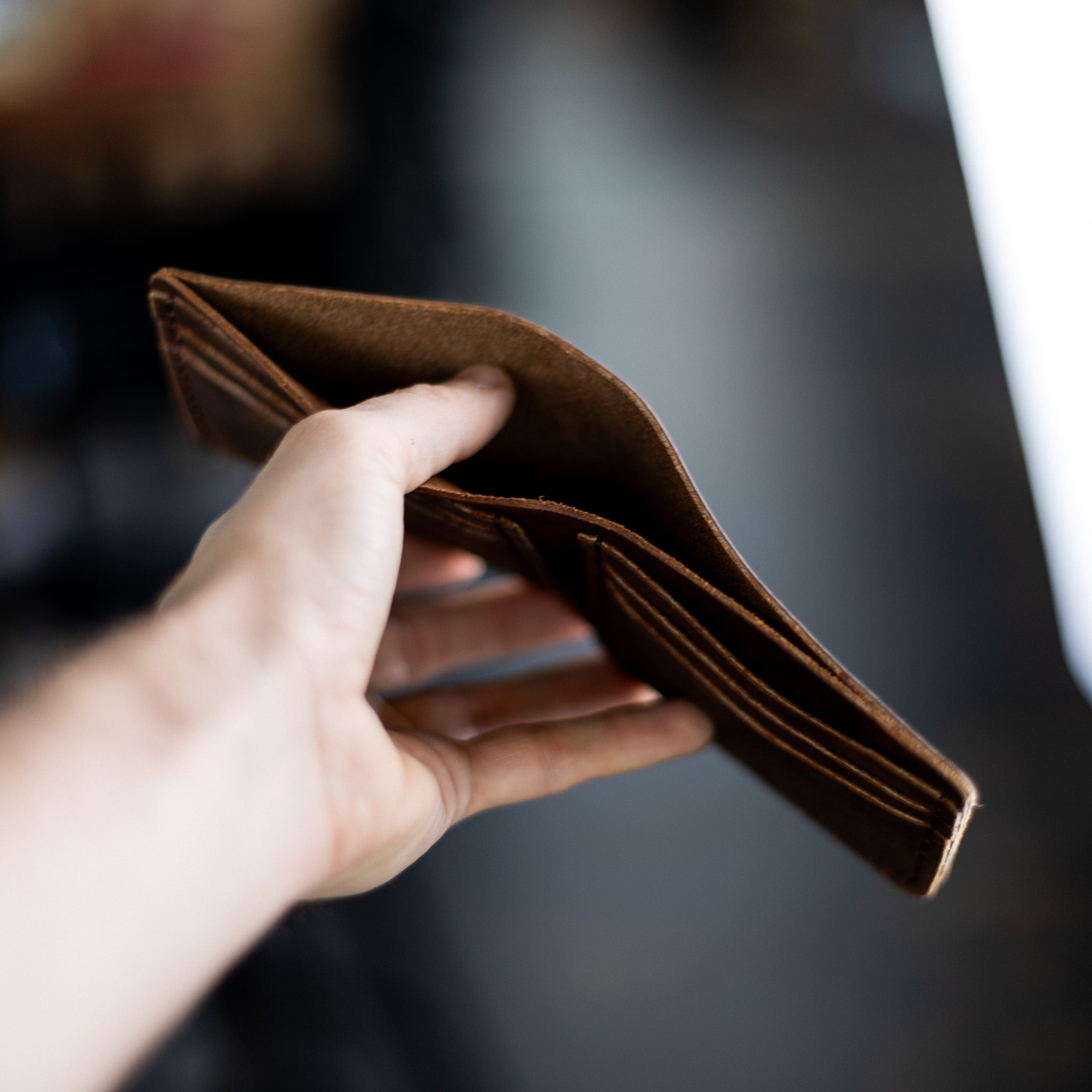
But leather isn't designed to work with metal barriers. Full-grain leather functions as a semi-permeable material. It absorbs moisture from your pocket, releases it through the surface, and gradually molds to the shape of its contents. This dynamic interaction creates the characteristic break-in period that transforms a stiff new wallet into something that feels custom-made.
Metal linings interrupt this process in three specific ways:
Moisture gets trapped. The metallic barrier prevents moisture from escaping through both sides of the leather. Sweat and humidity accumulate between the metal and leather layers, creating conditions that accelerate the breakdown of the leather's natural oils.
Flexibility decreases. Leather fibers naturally compress and expand. A metal layer adds rigidity, forcing the leather to bend around an inflexible core rather than flexing as a unified material. This creates stress concentration at fold points.
Heat distribution changes. Body heat normally dissipates through leather gradually. Metal conducts heat differently, creating hot spots that dry out specific areas while leaving others untouched. This uneven aging produces premature cracking along wallet edges and corners.
The result? RFID blocking wallets that look fine initially but age poorly compared to unlined alternatives.
The Break-In Period: How Metal Changes Leather's Natural Adaptation
A quality leather wallet without RFID blocking typically requires 2-4 weeks to break in properly. The leather softens, corners round naturally, and the wallet begins conforming to the specific cards and cash carried. This adaptation happens because leather fibers compress and rearrange under consistent pressure.
Metal-lined wallets never complete this break-in period fully.
The metallic barrier maintains its shape regardless of external pressure. Instead of the entire wallet molding to pocket contours, only the outer leather layer attempts to flex. This creates a permanent tension between what the leather wants to do (conform) and what the metal allows (rigid structure).
Practical effects show up quickly:
Cards feel tighter longer. Without full compression of the leather, card slots maintain their original dimensions rather than expanding slightly to accommodate daily use.
Pocket bulge stays consistent. The wallet doesn't slim down as dramatically because the metal layer prevents the collapse and consolidation that happens with pure leather construction.
Corner stress appears earlier. Flex points at wallet corners experience concentrated stress because the leather bends sharply around the rigid metal rather than curving gradually across the full thickness.
This isn't about whether RFID blocking wallets can break in - they do, partially. It's about the quality of that break-in. The wallet becomes worn rather than seasoned. There's a difference.
Patina Development: Why Metal Linings Create Uneven Aging
One of full-grain leather's defining characteristics is its patina - the rich, varied coloring that develops as oils, sunlight, and handling gradually alter the leather's surface. This aging process separates mass-produced goods from items that improve with time.
Metal linings disrupt patina formation by creating moisture barriers that prevent even oil distribution.
Natural leather oils (and oils from hands) typically migrate through leather fibers, creating gradual color deepening across the entire surface. When metal blocks this migration, oils concentrate on the exterior surface while the interior remains relatively untouched. The result: uneven color development that looks splotchy rather than naturally varied.
Temperature fluctuations compound the problem. Metal conducts heat rapidly, creating micro-zones of warmth that accelerate oil breakdown in some areas while leaving adjacent sections unchanged. A wallet carried in a back pocket - where body heat and pressure combine - develops distinctly different wear patterns than pure leather would.
The aesthetic difference becomes obvious after 6-12 months of daily carry. RFID blocking wallets show:
-
Darker edges with lighter centers, where metal prevented oil penetration
-
Abrupt color transitions rather than gradual shading
-
Dry patches at high-flex points, where metal-induced stress dried out natural oils
-
Inconsistent sheen as some areas develop patina while metal-blocked sections remain matte
For anyone who appreciates how leather ages - who sees a worn wallet as something earned rather than damaged - these patterns represent a fundamental compromise. The wallet still functions, but it doesn't develop the character that makes full-grain leather worth the investment.
Flexibility and Longevity: The Structural Trade-Off
Leather durability depends on fiber flexibility. Full-grain leather contains intact collagen fibers that can bend, compress, and return to shape thousands of times without breaking. This resilience comes from the leather's ability to distribute stress across its full thickness.
Metal linings concentrate stress instead of distributing it.
When sitting on a wallet or stuffing it into a tight pocket, pure leather compresses uniformly. Each fiber shares the load. But a metal-lined wallet can't compress uniformly - the metal layer resists deformation, forcing the leather to absorb all the stress. Over time, this creates predictable failure points.
Delamination at edges. The glue or stitching holding metal to leather experiences constant shearing force as the leather tries to flex and the metal resists. Eventually, the layers separate, usually starting at the corners where stress concentrates most.
Cracking along fold lines. Bifold wallets with RFID blocking show accelerated cracking at the center fold because the leather must bend sharply around an inflexible core with each opening. Pure leather bends in a smooth curve; metal-lined leather creates a stress point.
Stiffness that never resolves. Even after months of use, metal-lined wallets maintain a rigidity that fights against pocket contours. This constant resistance wears both the leather and the pocket fabric faster than a flexible wallet would.
The longevity question isn't straightforward. RFID blocking wallets don't necessarily fail faster - they fail differently. The metal layer itself remains intact while the leather around it deteriorates in specific patterns. This raises an interesting question: what exactly is being preserved?
Breathability and Moisture Management: The Hidden Damage
Leather's natural moisture management system evolved over centuries of use in clothing, footwear, and carried goods. The material absorbs ambient moisture, allows it to pass through the fiber structure, and releases it on the opposite side. This breathability prevents mold growth, reduces odor, and maintains the leather's natural oils in proper balance.
Metal linings eliminate this system entirely.
The metallic barrier creates a one-way moisture trap. Sweat and humidity from the body enter the leather from the pocket-facing side, but can't escape through the interior because metal doesn't breathe. Moisture accumulates in the space between leather and metal, creating conditions that accelerate several degradation processes:
Mildew risk increases substantially. Trapped moisture in warm, dark environments (like a back pocket) creates ideal conditions for mold and mildew growth. The musty smell that develops in some RFID blocking wallets after heavy use comes from microbial growth between the layers.
Salt deposits form from dried sweat. When moisture finally evaporates (usually when the wallet sits unused), it leaves behind salt crystals from body sweat. These deposits act as abrasives, gradually wearing away the leather's finish from the inside out.
Natural oils break down faster. Leather contains oils that keep fibers supple. Constant moisture exposure emulsifies these oils, washing them out of the fiber structure prematurely. The result: leather that feels dry and brittle despite regular conditioning attempts.
Adhesive failure accelerates. The glues holding metal linings to leather aren't designed for constant moisture exposure. Humidity cycles (wet during wear, dry overnight) stress these bonds, leading to the delamination issues mentioned earlier.
This moisture problem explains why RFID blocking wallets often feel "off" after a year of daily carry. The leather hasn't just aged - it's been subjected to environmental conditions that natural leather construction would have mitigated.
The Minimal Actual Risk of RFID Theft
The engineering compromises make sense only if RFID theft represents a genuine, common threat. The data suggests otherwise.
RFID skimming - the theft of credit card data via radio frequency readers - requires specific conditions that rarely align in real-world scenarios:
-
Proximity of 1-4 inches. The thief's reader must be extremely close to the wallet, not just near in a crowd.
-
Correct frequency and protocol. Different cards use different RFID implementations; readers must match the specific card type.
-
Processing time of 2-5 seconds. The reader needs sustained contact, not a momentary brush.
-
Limited data capture. RFID chips don't transmit CVV codes, so stolen data can't be used for most online purchases.
Major credit card companies report RFID-related fraud as statistically insignificant compared to other theft methods. Data breaches, phishing, and physical card theft account for virtually all credit fraud. The FBI doesn't maintain specific statistics on RFID skimming because incidents occur too rarely to track as a separate category.
This doesn't mean RFID skimming is impossible - demonstrations prove the technology works. But "possible" and "probable" represent different risk assessments. Statistically, wallets are more likely to be physically stolen or card numbers compromised through a data breach than to have data skimmed via RFID.
The question becomes: does protecting against a rare threat justify compromising the material qualities that make leather goods valuable in the first place?
What Quality Leather Loses With Metal Integration
The core appeal of full-grain leather lies in its dynamic properties - characteristics that cheap leather and synthetic materials can't replicate. These properties exist because of how the material is structured at a microscopic level. Metal linings don't just modify these characteristics; they fundamentally alter how the material functions.
Tactile response changes immediately. Quality leather has a specific hand-feel: slightly warm, subtly textured, responsive to pressure. Metal adds a coolness and rigidity that registers subconsciously every time the wallet is handled. The sensory experience shifts from natural material to composite product.
Weight distribution becomes uneven. Pure leather wallets balance weight across their entire structure. Metal linings concentrate weight in specific areas (wherever the blocking material sits), creating a lopsided feel that's particularly noticeable in minimalist wallets where every gram matters.
Repair options narrow significantly. Leather craftspeople can repair, recondition, and restore pure leather goods. Metal-lined wallets resist these interventions because the layers can't be separated without destroying the adhesive bonds. When these wallets wear out, they're typically discarded rather than repaired.
The break-in reward disappears. Perhaps most significantly, metal-lined wallets never deliver the satisfaction of a perfectly broken-in leather good. That moment when a wallet finally feels personalized - when it's molded to a specific carry style - doesn't arrive in the same way because the metal prevents full adaptation.
These losses matter most to people who understand why they're paying premium prices for leather goods in the first place. If a wallet is purely functional - a temporary card holder - these compromises might be acceptable. But for anyone who views leather goods as long-term investments that improve with age, metal linings undermine the entire value proposition.
Alternative Approaches to Card Security
Rejecting RFID blocking doesn't mean ignoring card security. Several approaches address the (minimal) risk without compromising leather quality:
Single-card blocking sleeves. Thin sleeves that wrap individual cards provide RFID protection without building barriers into the wallet structure. They're removable, replaceable, and don't affect how the leather ages.
Strategic card positioning. RFID signals can't penetrate other credit cards effectively. Carrying RFID-enabled cards between non-RFID cards or cash creates natural shielding without metal linings.
Bank-provided card controls. Most major banks now offer app-based controls that let users disable contactless payments when not in use. This addresses the security concern at its source rather than through physical blocking.
Minimal card carry. The minimalist wallet movement reduces risk by reducing exposure. Carrying only essential cards means fewer RFID chips to protect and less concern about potential skimming.
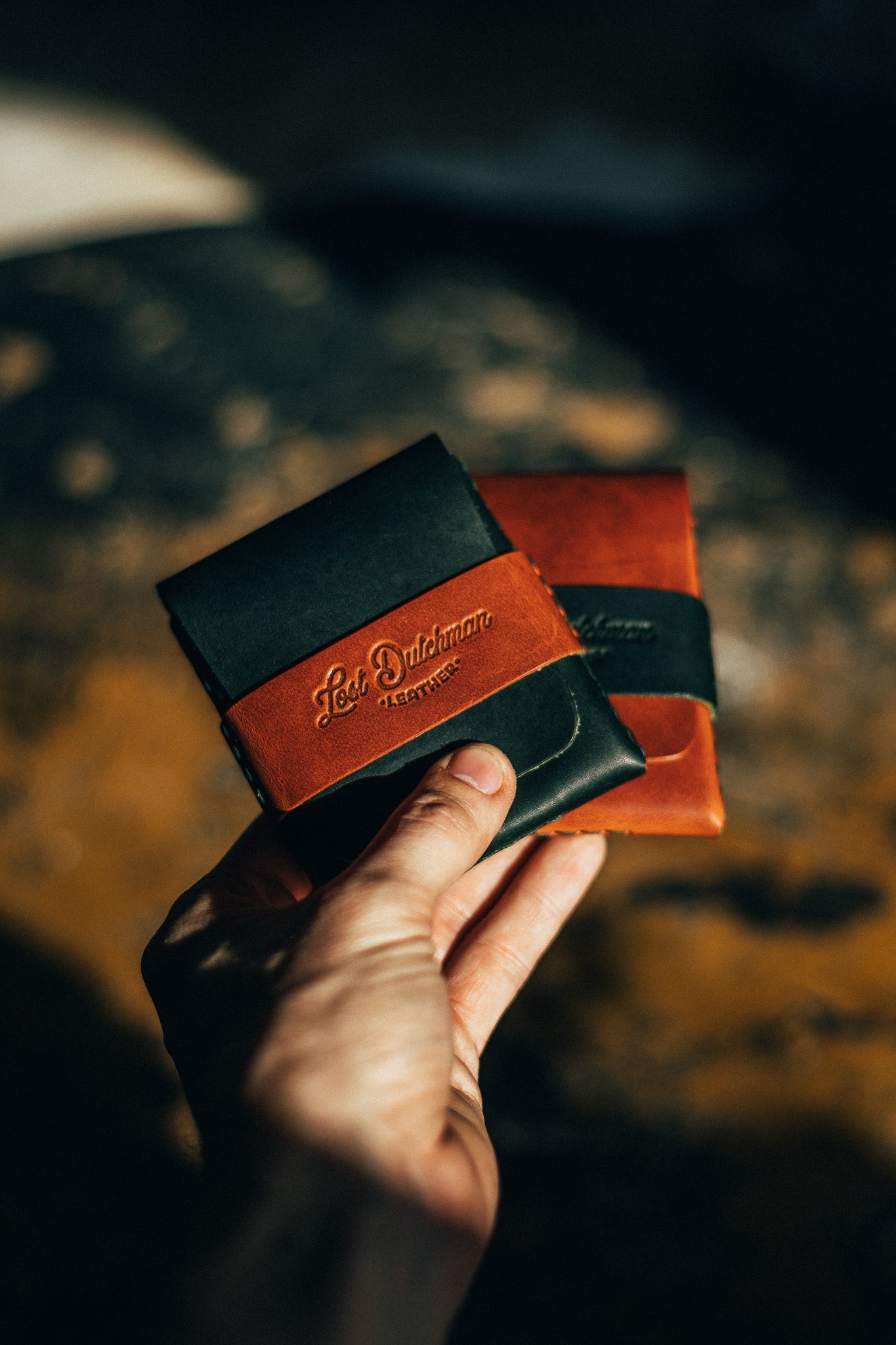
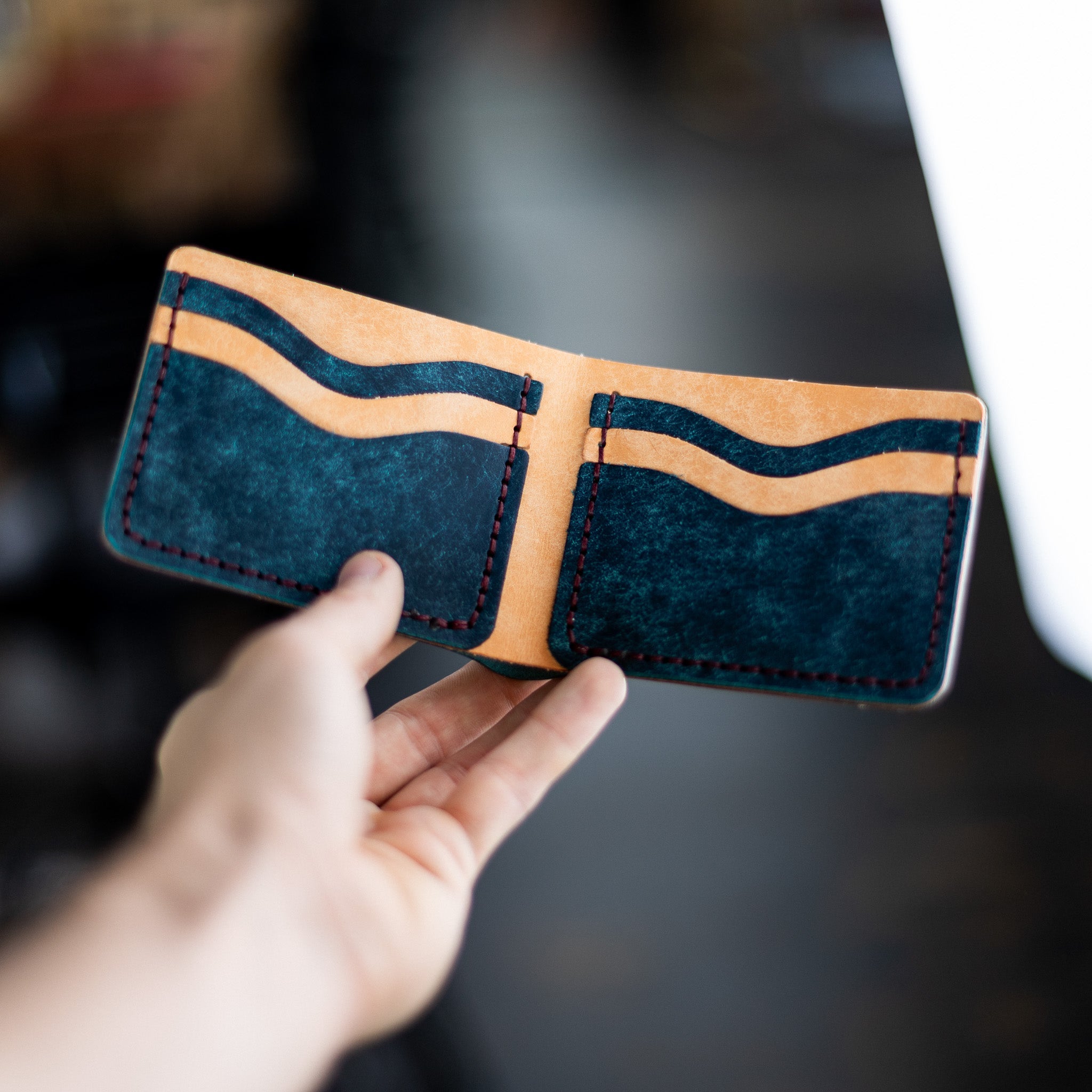
Pure leather from makers who prioritize material integrity. Some manufacturers recognize that leather quality matters more than security theater. Lost Dutchman Leather builds wallets from full-grain leather without RFID blocking, focusing instead on construction methods that maximize the material's natural properties. Their approach demonstrates that minimalist design and material quality can coexist without compromising either for marginal security features.
The most effective approach combines awareness (understanding that RFID theft is rare) with simple precautions (card sleeves if genuinely concerned) rather than building permanent compromises into every leather good carried.
Making Informed Decisions About Wallet Construction
The RFID blocking question ultimately comes down to priority assessment. What matters more: protection against a statistically minimal threat, or preserving the material qualities that justify buying leather in the first place?
There's no universal answer, but the decision should be informed rather than default. Too many people buy RFID blocking wallets because it's marketed as a feature rather than presented as a trade-off. Understanding what metal linings actually do - how they change break-in periods, aging, flexibility, and longevity - allows for genuine choice rather than accepting whatever manufacturers decide to include.
For EDC enthusiasts and anyone who appreciates how quality materials age, the compromise often isn't worth it. The things that make leather valuable - its ability to adapt, develop character, and last decades with proper care - all get diminished by metal integration. The result is a wallet that's technically more secure but fundamentally less satisfying to own and use.
Consider what's actually needed from a wallet. Card storage, cash carry, durability, and aesthetic aging probably rank higher than protection against a theft method that rarely occurs outside security conference demonstrations. If that assessment holds true, pure leather construction makes more sense than composite materials designed to address overblown fears.
The market offers both options. Choose based on what's valued, not what marketing departments emphasize.
Conclusion
RFID blocking represents a solution searching for a problem - a security feature that addresses a threat so uncommon that major financial institutions don't track it as a significant fraud category. The cost of this protection isn't measured in dollars but in the fundamental properties that make full-grain leather worth owning.
Metal linings interrupt how leather breathes, flexes, and ages. They prevent the natural break-in period that transforms a stiff new wallet into something that feels custom-made for a specific carry style. They create moisture traps that accelerate degradation and produce uneven patina development. They concentrate stress at flex points, leading to premature cracking and delamination. They eliminate the tactile satisfaction of handling pure leather.
These aren't minor compromises. They affect the daily experience of carrying a wallet and determine whether it becomes a long-term possession or a disposable accessory that wears out prematurely.
The alternative isn't ignoring security - it's addressing genuine threats through methods that don't compromise material quality. Individual card sleeves, bank app controls, and strategic card positioning all provide protection without building permanent barriers into wallet construction. For the vast majority of users, these approaches offer sufficient security without the trade-offs.
Quality leather goods should improve with age, developing character that reflects how they're used and carried. Metal linings prevent this evolution, creating products that wear out rather than wear in for anyone who understands why full-grain leather costs more than synthetic alternatives; that distinction matters.
The choice ultimately reflects what's valued: security theater that addresses minimal risk, or material integrity that delivers decades of use. One approach treats wallets as disposable accessories. The other recognizes them as long-term investments that reward quality construction.
Choose accordingly. The wallet carried daily will reflect that decision. For questions about leather quality, craftsmanship, or selecting the right wallet construction, contact us for personalized guidance.