Smart Wallets vs Traditional Craft: Where Technology Meets Leatherwork
The wallet market has split into two distinct camps: tech-forward smart wallets promising digital integration and tracking features, and traditionally crafted leather goods built on centuries-old techniques. Each approach serves different priorities, but the choice isn't as simple as "old versus new."
Understanding what each type delivers - and what it sacrifices - reveals which investment makes sense for your daily carry needs.
What Defines a Smart Wallet
Smart wallets integrate technology directly into their construction. Most models include Bluetooth tracking chips that connect to smartphone apps, allowing owners to locate misplaced wallets through GPS coordinates. Some versions incorporate RFID-blocking materials, biometric locks, or even built-in power banks for charging devices.
The technology varies by manufacturer, but common features include:
Bluetooth tracking through dedicated apps, RFID-blocking layers to prevent card skimming, rechargeable batteries requiring regular charging, synthetic materials housing electronic components, and alarm systems that trigger when the wallet moves beyond a set distance.
These features address modern concerns about theft, loss, and digital security. The question becomes whether these solutions justify the trade-offs in construction, longevity, and maintenance requirements.
The Traditional Leather Approach
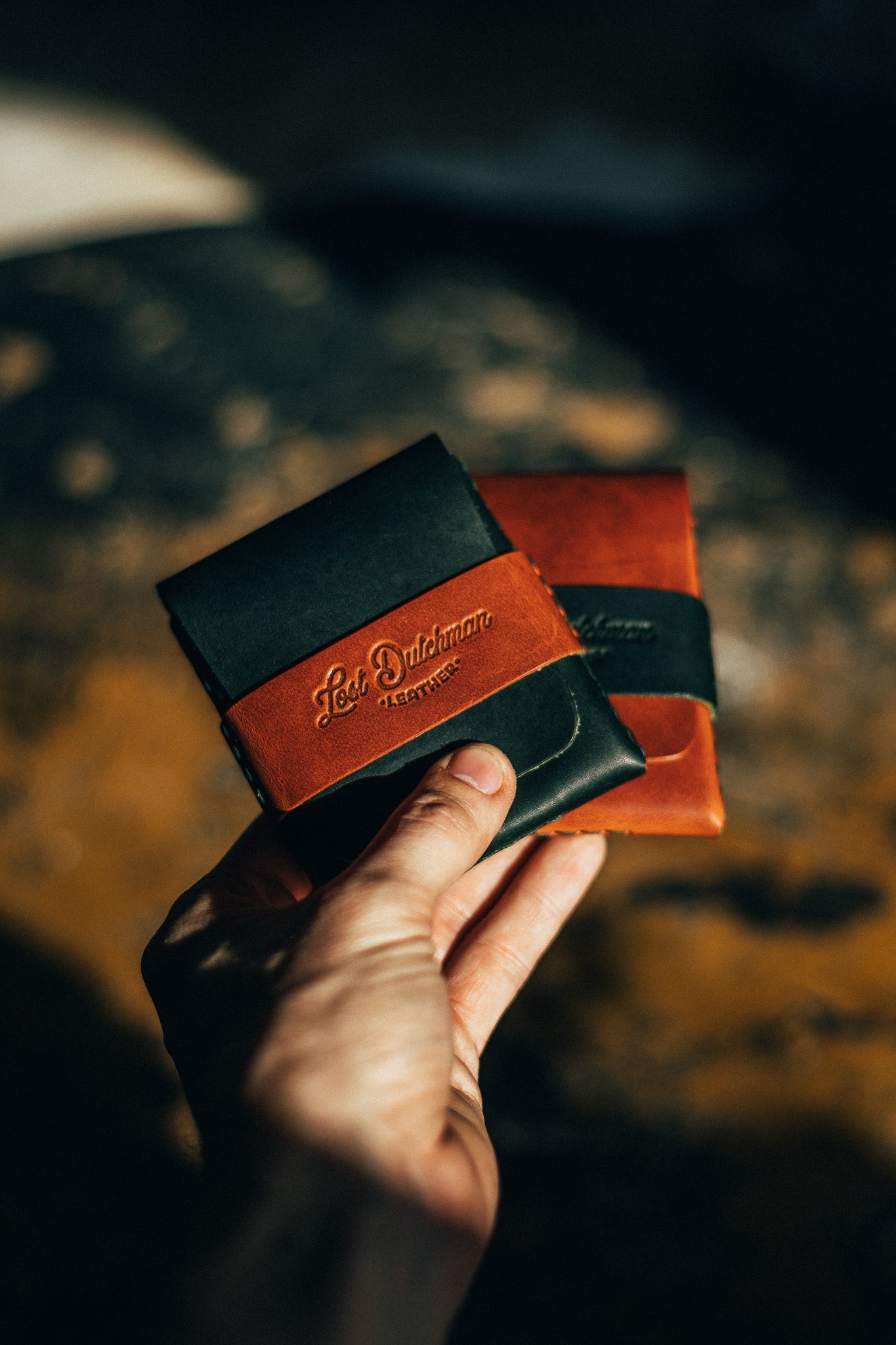
Traditionally crafted leather wallets focus on material quality and construction methods that prioritize durability over decades. Lost Dutchman Leather exemplifies this approach - full-grain leather cut from premium hides, hand-stitched with techniques that date back generations, and designed to develop character through years of use.
Full-grain leather represents the top layer of the hide, retaining the natural grain pattern and fiber density that gives leather its strength. Unlike corrected or bonded leather used in many smart wallets, full-grain material actually improves with age as natural oils from your hands condition the surface.
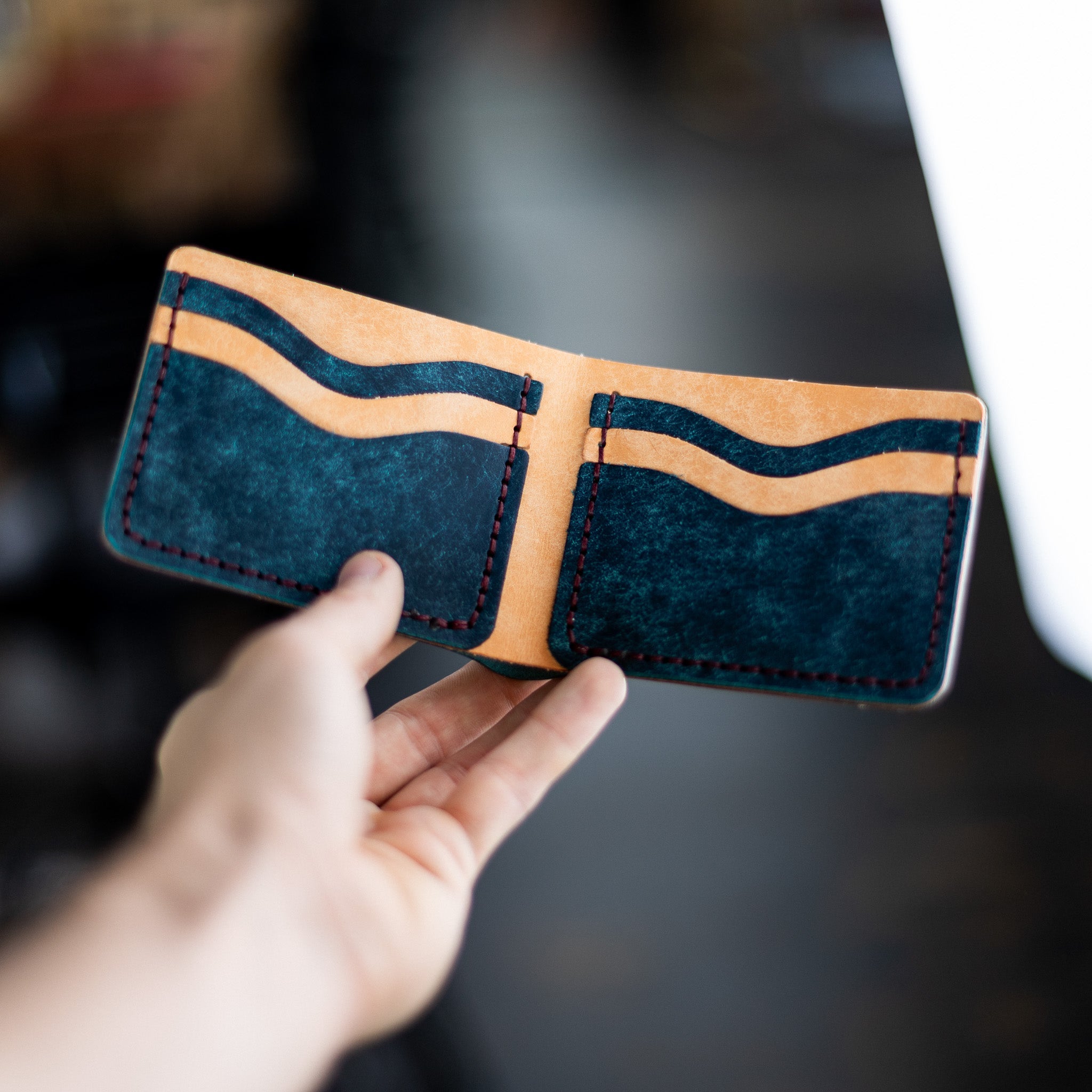
The construction method matters equally. Saddle stitching - where two needles work from opposite directions through pre-punched holes - creates seams stronger than the leather itself. If one stitch breaks, the rest hold firm. Machine stitching, common in mass-produced items, uses a single continuous thread that unravels once compromised.
Traditional wallets require no charging, no app updates, and no battery replacements. They work identically on day one and day 3,650.
Durability Comparison: Five Years Forward
Smart wallet longevity depends entirely on electronic component lifespan. Rechargeable batteries typically last 300-500 charge cycles before capacity degrades significantly. For a wallet requiring weekly charging, that's roughly 6-10 years before the battery fails - assuming the manufacturer still supports the device and replacement batteries remain available.
Technology obsolescence presents another challenge. Bluetooth standards evolve, operating systems update, and manufacturers discontinue product lines. A smart wallet purchased today might lose app support within five years, rendering its primary features useless even if the hardware still functions.
Traditional leather wallets face different aging factors. Quality full-grain leather doesn't deteriorate - it develops patina. The surface darkens where hands touch it most, oils from skin condition the fibers, and the wallet conforms to the exact contents carried daily. Properly maintained leather goods routinely last 20-30 years, often improving aesthetically as they age.
The stitching on traditionally crafted pieces determines structural longevity. Hand-sewn saddle stitching using waxed thread creates joints that outlast the leather. Machine stitching fails first, typically within 5-10 years of daily use, as the continuous thread breaks under stress.
Cost Analysis: Initial Investment vs Lifetime Value
Smart wallets typically retail between $50 and $150, depending on feature sets. This seems reasonable until you factor in replacement cycles. If electronic components fail within 7-10 years, you'll purchase 3-4 smart wallets over a 30-year period, totaling $150-600.
Quality traditional leather wallets cost $80-200 initially. Bifold Wallet, for example, represent a single purchase that serves for decades. The cost per year of ownership drops dramatically over time - a $150 wallet used for 25 years costs $6 annually.
Maintenance expenses differ substantially. Smart wallets require replacement batteries or a complete replacement when electronics fail. Traditional leather needs occasional conditioning with leather cream (roughly $10 per bottle, lasting years) and potentially professional refurbishment if stitching eventually loosens.
The true cost comparison reveals itself in the 10-15 year timeframe, where smart wallet owners have already replaced their carry at least once, while traditional leather owners are just breaking in their piece.
Security Features: Digital vs Physical
Smart wallet manufacturers emphasize RFID-blocking technology as a primary security feature. RFID skimming - where thieves use scanners to capture credit card data wirelessly - represents a real but statistically minor threat. Most modern credit cards already include encryption that makes skimmed data unusable.
GPS tracking offers genuine value if you frequently misplace items. The ability to ping your wallet's location through an app provides peace of mind, particularly when traveling. However, this assumes the battery remains charged and the wallet stays within Bluetooth range of your phone or other users' devices running the same tracking network.
Traditional wallets offer physical security through material quality and design. Full-grain leather resists tearing and cutting far better than synthetic material that houses electronics. A well-designed traditional wallet positions cards deep within folded leather layers, making them physically difficult to access without the owner noticing.
Slim Card Holders demonstrate how minimalist design enhances security - fewer pockets mean fewer opportunities for items to slip out unnoticed, and the slim profile makes pickpocketing significantly harder.
Environmental Impact: Materials and Lifecycle
Smart wallet production involves mining rare earth elements for electronics, petroleum-based plastics for casings, and complex manufacturing processes for circuit boards. The electronic waste generated when these wallets reach end-of-life presents disposal challenges - lithium batteries require special recycling, and many components end up in landfills.
Traditional leather production carries its own environmental considerations. Vegetable tanning - the method used for quality full-grain leather - uses natural tannins from tree bark rather than heavy metals. The process takes longer but produces biodegradable material that returns to earth at the end of life.
The longevity factor dramatically affects environmental impact. A product used for 25 years requires one production cycle. A product replaced every 7 years requires four production cycles to cover the same timespan, multiplying resource extraction, manufacturing emissions, and waste generation.
Leather's biodegradability means a worn-out wallet eventually decomposes. Electronics don't - they persist in landfills for centuries unless properly recycled, and recycling rates for small electronics remain disappointingly low.
Daily Carry Experience: Practical Differences
Smart wallets are typically thicker than traditional designs due to electronic components and battery housings. This bulk becomes noticeable in front pockets, and the rigid structure prevents the wallet from conforming to your body or contents over time.
The charging requirement introduces a maintenance task most people don't associate with wallets. Forgetting to charge your wallet means losing tracking functionality exactly when you might need it most. Some users report this creates low-level anxiety about battery status.
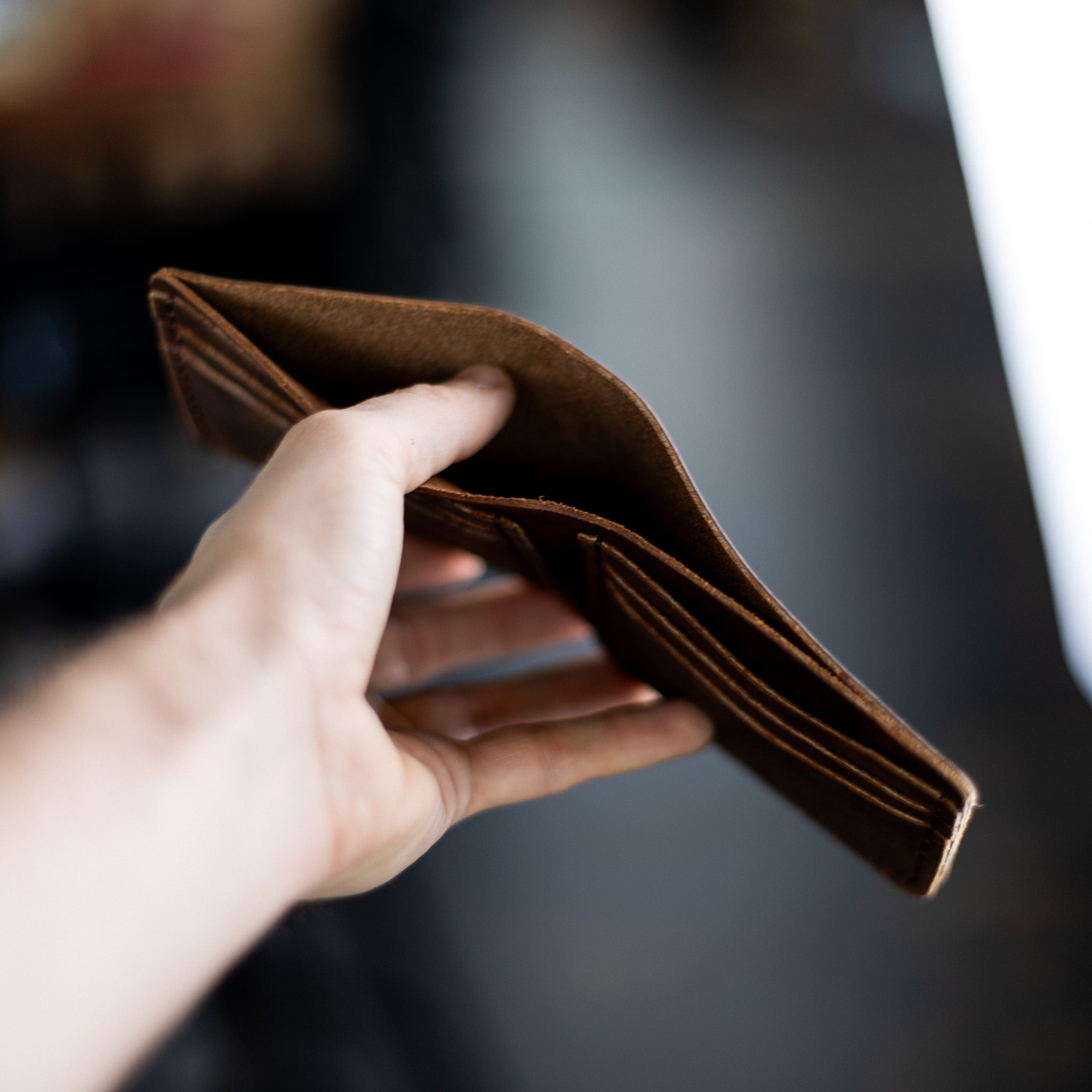
Traditional leather wallets break in rather than break down. The initial stiffness softens within weeks as the leather flexes with use. Quality Leather accessories start with a firm structure that gradually molds to the specific cards and cash carried daily, creating a custom fit impossible to replicate with rigid electronic housings.
Weight differences seem minimal but become noticeable over hours of carry. Electronics and batteries add 2-4 ounces compared to leather alone. For front-pocket carry, especially, this extra weight pulls differently on fabric and feels more present throughout the day.
When Smart Features Actually Matter
Certain use cases genuinely benefit from smart wallet technology. Frequent travelers moving through airports and hotels face a higher loss risk, making GPS tracking valuable. People with memory challenges or ADHD who regularly misplace items gain real utility from location pinging.
Business professionals carrying multiple access cards or hotel keys might appreciate RFID organization features that some smart wallets provide, allowing app-based selection of which card to activate. This remains a niche need, but for those who face it daily, the convenience justifies the trade-offs.
Parents tracking teen spending through smart wallet apps gain visibility into card usage and location. This monitoring capability doesn't exist with traditional wallets, representing a legitimate advantage for specific family situations.
However, these scenarios represent maybe 15-20% of wallet users. Most people simply need a reliable way to carry cards and cash without adding charging routines or worrying about software updates.
The Case for Traditional Craftsmanship
Traditional leather goods solve the fundamental wallet problem elegantly: protect and organize payment methods and identification in a compact, durable format. This hasn't changed in 100 years because the problem hasn't changed.
What has changed is manufacturing quality. Mass production introduced shortcuts - bonded leather instead of full-grain, machine stitching instead of hand-sewing, and synthetic materials instead of vegetable-tanned hides. These compromises reduce production costs but sacrifice the longevity that made leather goods valuable.
Returning to traditional construction methods means accepting higher initial costs. Quality wallets cost more than department store alternatives because the materials and labor involved cost more. Full-grain leather costs 3-4 times more than corrected leather. Hand-stitching takes 10 times longer than machine stitching.
The value proposition rests on longevity and satisfaction. A wallet that lasts 25 years and improves with age provides a different value than one lasting 5 years before disposal. The daily interaction with quality materials - the texture, the smell, the way it ages - creates satisfaction that electronics can't replicate.
Material Authenticity: What You're Actually Carrying
Smart wallet manufacturers rarely specify leather quality because it's not the focus - the electronics are. Most use "genuine leather," which sounds premium but actually represents the lowest grade of real leather. It's made from hide layers beneath the full-grain surface, often sanded and stamped with artificial grain patterns.
This material won't develop patina. It won't last decades. It serves primarily as a covering for the electronic components inside, chosen for cost efficiency rather than longevity.
Full-grain leather retains all the characteristics that make leather valuable: fiber density, natural grain variation, and the ability to absorb oils and develop character. You can't fake this. When you handle a full-grain leather wallet, the difference is immediately apparent - the material feels substantial, smells natural, and shows authentic texture rather than stamped patterns.
Quality handcrafted wallets demonstrate what's possible when material quality drives design rather than accommodating electronics. Cut from premium leather with meticulous stitching, they represent the ultimate expression of material confidence - letting the leather's natural properties provide all necessary structure.
Maintenance Reality: Time and Effort Required
Smart wallets require regular charging, typically weekly. The routine seems minor until you're traveling and realize you've packed another charger and cable. Battery degradation means charging frequency increases over time, and eventually, the battery fails completely.
Software updates introduce another maintenance layer. Apps require updates to maintain compatibility with new phone operating systems. Sometimes these updates change functionality or introduce bugs. You're dependent on the manufacturer continuing to support the product.
Traditional leather maintenance involves conditioning every 3-6 months with leather cream or oil. This takes five minutes and keeps the material supple. That's it. No charging, no updates, no compatibility concerns.
If stitching eventually loosens after years of use, many leather craftsmen can repair hand-sewn wallets by re-stitching the affected area. This costs $20-40 and extends life another decade. Smart wallets can't be meaningfully repaired - when electronics fail, the entire unit becomes waste.
Making the Choice: Matching Product to Priorities
The smart wallet versus traditional leather decision ultimately reflects priorities. If tracking technology genuinely solves a problem you face regularly, and you're comfortable with charging routines and replacement cycles, smart wallets deliver specific benefits.
For most users, though, the fundamental wallet function hasn't changed enough to justify the complications technology introduces. Cards and cash still need secure, organized storage. That's what traditionally crafted leather does exceptionally well, without batteries, apps, or planned obsolescence.
Consider what you actually need from your wallet versus what seems novel. GPS tracking sounds useful until you realize you've never actually lost your wallet - you've misplaced it in your house or car, where Bluetooth tracking works poorly anyway. RFID blocking addresses a threat that affects a tiny percentage of card users.
What everyone needs is a wallet that reliably holds essentials, fits comfortably in your pocket, and doesn't require replacement every few years. Traditional leather craftsmanship delivers this through material quality and construction methods proven over generations.
The Long-Term Relationship
Quality leather goods create a different ownership experience than disposable products. A wallet carried daily for years becomes familiar in a way smart devices never do - it conforms to your specific carry, develops wear patterns unique to your use, and accumulates character that reflects your life.
This relationship with everyday objects has value beyond function. There's satisfaction in using something well-made, in knowing it'll serve reliably for decades, in not contributing to the cycle of consumption and disposal that defines most modern products.
Smart wallets position themselves as the future, but they're solving problems most people don't have while introducing maintenance requirements nobody wants. Traditional craftsmanship solves the actual problem - carrying essentials securely and durably - without unnecessary complications.
The choice isn't really about old versus new. It's about understanding what you value in the objects you carry daily and choosing accordingly. Technology for its own sake rarely improves on solutions that already work well.
Conclusion
The comparison between smart wallets and traditionally crafted leather goods reveals fundamentally different approaches to everyday carry. Smart wallets add technology to address concerns about loss and security, but introduce charging requirements, planned obsolescence, and environmental costs that traditional leather avoids entirely.
Quality leather craftsmanship focuses on material integrity and construction methods that prioritize decades of use over novel features. Full-grain leather, hand-stitching, and time-tested designs create wallets that improve with age rather than degrade, eliminating replacement cycles and the waste they generate.
For the small percentage of users who genuinely benefit from GPS tracking or need specific smart features, the trade-offs might make sense. For everyone else, traditionally crafted leather delivers superior longevity, lower lifetime costs, and the satisfaction of carrying something built to last.
The decision comes down to whether you value technology's convenience or craftsmanship's permanence. One requires regular charging and eventual replacement. The other requires occasional conditioning and gets better with time. Choose based on which relationship with your everyday carry makes more sense for how you actually live. If you have questions about traditional leather craftsmanship or would like to explore handmade options, contact us to learn more.