Sunk Cost Fallacy - When to Actually Replace Your Beloved Old Wallet
That worn leather wallet tucked in your back pocket carries more than cash and cards. It holds years of daily use, the memory of where you bought it, and perhaps a stubborn belief that "it still works fine." But there's a difference between a wallet developing character through patina and one that's genuinely past its prime.
The sunk cost fallacy tricks people into keeping things simply because they've already invested time or money. With leather goods, this becomes particularly complicated. Unlike a broken appliance, a deteriorating wallet doesn't suddenly stop functioning. It degrades gradually, often crossing from "well-worn" to "worn out" without a clear marker.
Understanding when to replace old leather wallet choices requires looking beyond sentimentality. The decision hinges on structural integrity, functionality, and whether the wallet still serves its purpose or has become a liability. Lost Dutchman Leather has spent years helping customers understand these wallet lifespan indicators that separate character from compromise.
The Real Cost of Holding On Too Long
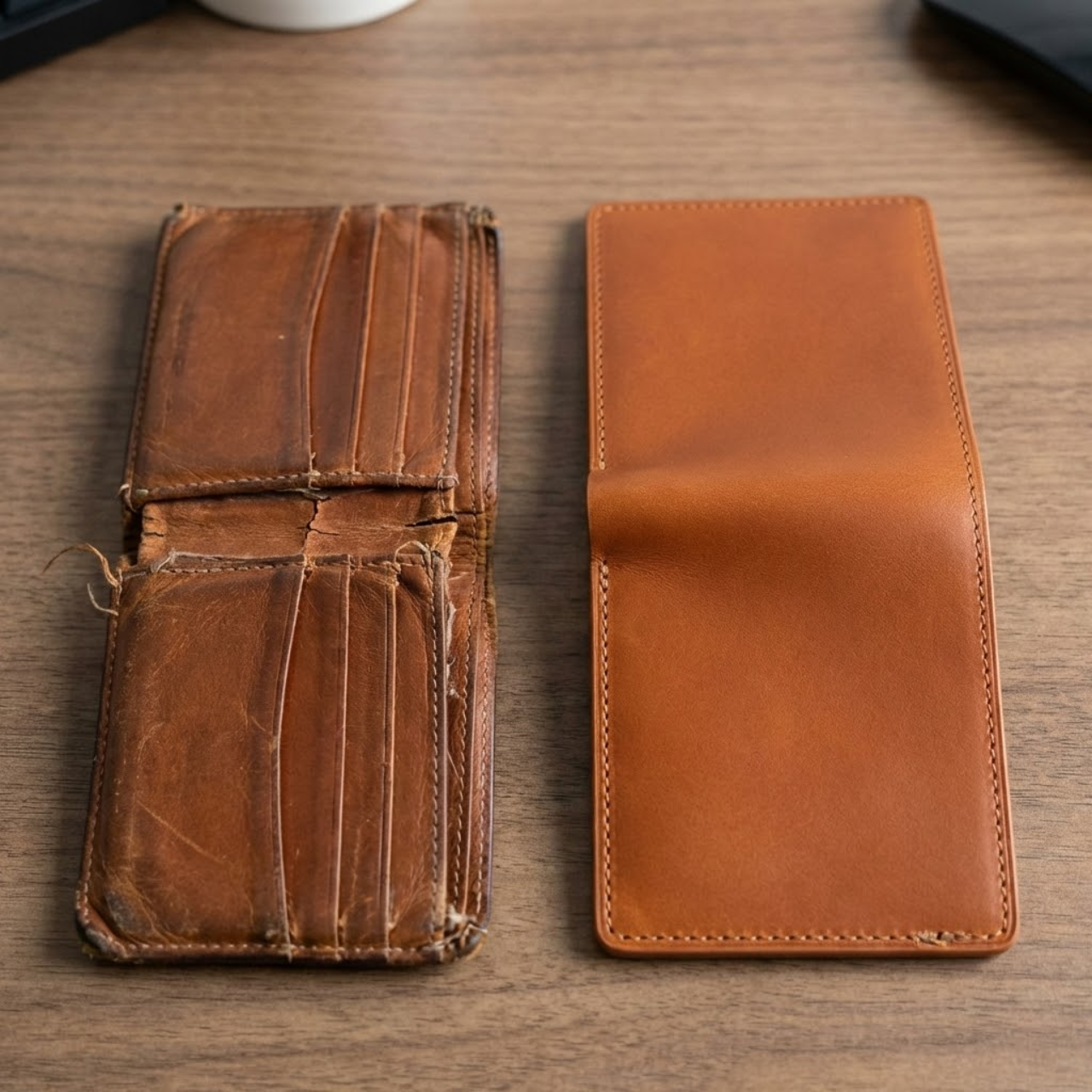
A wallet's primary job is protecting what's inside. When leather develops cracks along fold lines, those aren't just cosmetic issues. They're structural failures that expose cards to moisture, dirt, and potential loss.
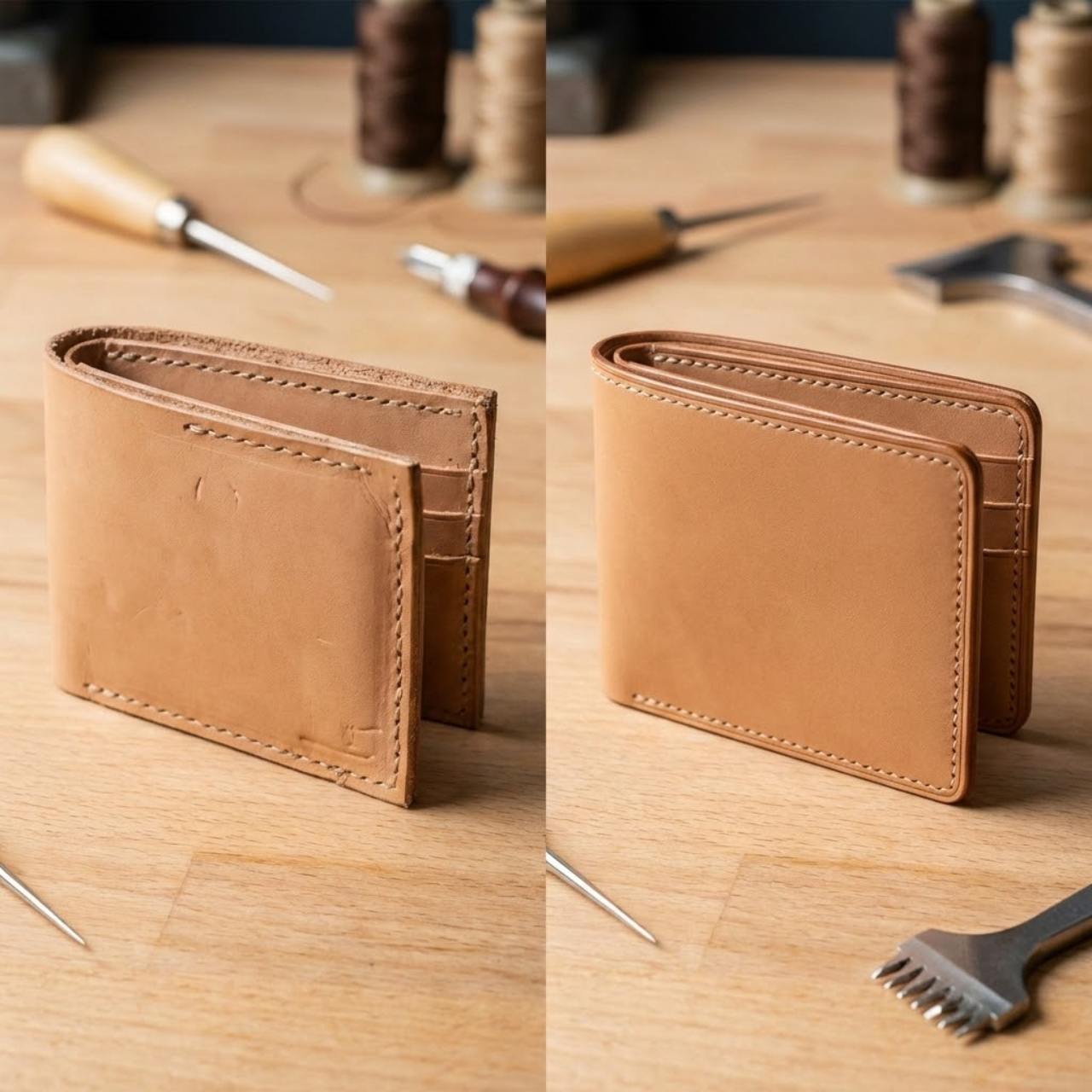
Compromised stitching presents an even clearer problem. The saddle stitch used in quality wallets creates a lock-stitch pattern where each thread supports the next. Once those threads break, the entire seam becomes vulnerable. A single broken stitch can unravel an entire pocket within weeks of normal use.
The financial risk compounds over time. A wallet that can't securely hold cards increases the likelihood of losing a credit card, driver's license, or insurance card. Replacing these documents costs both money and hours of administrative hassle. The inconvenience of a dropped credit card at a checkout counter or a license that slides out during a traffic stop far exceeds the cost of a new wallet.
Security concerns extend beyond physical loss. Worn leather that's become thin and pliable makes it easier for RFID skimmers to access contactless payment cards. While this threat gets overstated in marketing materials, degraded leather does provide less shielding than intact full-grain construction.
What Actual Wear Looks Like Versus Damage
Full-grain leather develops patina through use - a natural darkening and smoothing that occurs as oils from hands interact with the leather's surface. This process is desirable. The leather becomes more supple, develops color variations, and gains visual depth. A five-year-old wallet with rich patina often looks better than it did new.
Damage presents differently. Look for these specific wallet lifespan indicators:
Cracking along stress points: Folds and corners that show linear breaks in the leather surface indicate the fibers have broken down. This differs from creasing, which is normal and expected.
Delamination: When the leather's layers separate, creating bubbles or peeling sections, the tanning process has failed or moisture has compromised the hide's structure.
Persistent odor: Leather naturally has a smell, but musty or sour odors indicate mold or bacterial growth within the material. This typically occurs when a wallet has been repeatedly soaked and dried improperly.
Loss of shape retention: Quality leather maintains its form even when empty. If a wallet won't stay folded or card slots have stretched to where cards slide out freely, the leather has lost its structural integrity.
Color transfer: While some dye transfer is normal in the first weeks of use, ongoing color bleeding onto clothes or other items suggests the leather wasn't properly finished or has degraded.
The card holders designed with structural integrity develop natural patina while maintaining functionality for decades. The difference between aging and failing comes down to the quality of materials and construction methods used from the start.
The Timeline Question - How Long Should a Wallet Last?
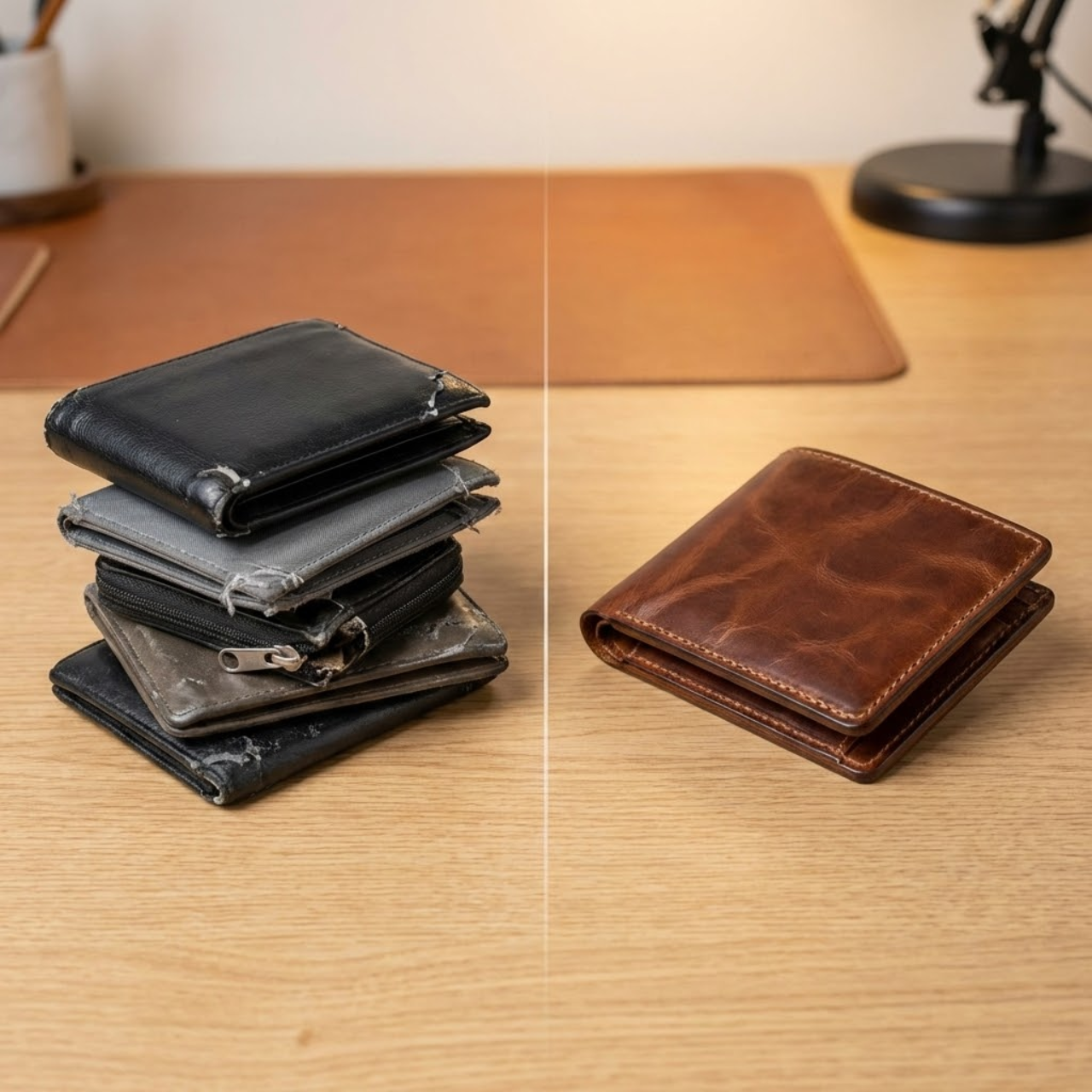
Mass-market wallets typically survive two to three years of daily use. They're constructed from corrected-grain or bonded leather with machine stitching designed for speed rather than longevity. The price point reflects this planned obsolescence.
Full-grain leather wallets with proper construction should last 10 to 20 years minimum. Some well-maintained examples function for 30+ years. The leather itself, when sourced from quality hides and vegetable-tanned, becomes more durable over time as the fibers compress and the material work-hardens.
Several factors affect this timeline:
Carry position: Back pocket carry subjects wallets to repeated compression and heat from body contact. Front pocket carry extends lifespan by reducing stress and moisture exposure.
Environment: Desert climates dry leather out, requiring more frequent conditioning. Humid environments promote mold growth if wallets aren't aired out. Extreme temperature swings cause expansion and contraction that stresses stitching.
Maintenance frequency: Leather needs occasional conditioning to replace oils that evaporate over time. Neglected leather becomes brittle and prone to cracking. Over-conditioned leather becomes limp and loses shape retention.
Load capacity: Consistently overstuffing a wallet stretches leather beyond its design parameters. A bifold designed for 8-10 cards that regularly carries 15 will fail prematurely regardless of quality.
The bifolds collection demonstrates how proper design accommodates realistic capacity while maintaining slim profiles. When a wallet is engineered correctly from the start, it ages into its role rather than aging out of usefulness.
When Repair Makes Sense (And When It Doesn't)
Not every damaged wallet needs replacement. Leather repair can extend the life of quality pieces when the core structure remains sound.
Candidates for repair include:
-
Broken stitching with intact leather
-
Scratches or scuffs on the surface (often buffed out)
-
Loose rivets or hardware
-
Minor edge wear on corners
Professional leather workers can re-stitch seams, replace hardware, and refinish edges. The cost typically runs $30-60 depending on complexity, making it economical for wallets that originally cost $100+.
Repair becomes impractical when:
The leather itself has failed: Cracked, torn, or delaminated leather can't be meaningfully repaired. Patches look obvious and don't restore structural integrity.
Multiple systems need work: When stitching, leather, and hardware all show significant wear, repair costs approach or exceed replacement cost.
The wallet was inexpensive to begin with: Repairing a $30 wallet makes no financial sense. The construction quality that led to early failure won't improve with repair.
Sentimental value is the only driver: Emotion is valid, but a wallet that can't function properly serves neither practical nor sentimental purposes effectively.
For pieces worth saving, finding a skilled leather worker matters. Shoe repair shops often lack the specific expertise for wallet construction. Seek out leather goods specialists or contact the original manufacturer. Many premium makers, including those focused on American craftsmanship, offer repair services for their products.
The Psychology of Letting Go
The sunk cost fallacy operates on emotional logic: "I paid good money for this" or "I've carried this for years" become reasons to continue using something that no longer serves its purpose. This thinking confuses past investment with present value.
Endowment effect compounds the problem. People assign higher value to things they own simply because they own them. A wallet carried for five years feels more valuable than an identical wallet on a store shelf, even when objective assessment shows the owned wallet has deteriorated.
Breaking this pattern requires reframing the decision. The money spent on the old wallet is gone regardless of what happens next. The question isn't whether to "waste" that investment - it's already spent. The actual question is whether continuing to use a compromised wallet serves current needs better than replacing it.
Consider the opportunity cost. Every day spent using a wallet that doesn't function properly is a day not spent using something better. The frustration of cards falling out, the anxiety about losing something important, and the poor impression of pulling out a ratty wallet in professional settings all carry costs that don't show up on a receipt.
Quality leather goods deserve to be used fully and then retired when they've served their purpose. There's no honor in nursing a failing wallet past its useful life. The respect for craftsmanship comes from recognizing when something has given all it can give.
What to Look for in a Replacement
When the decision to replace old leather wallet items becomes clear, selecting the right replacement prevents repeating the cycle. Focus on these factors:
Material quality: Full-grain leather from reputable tanneries ages well. Look for vegetable-tanned options that develop patina rather than coatings that peel. The leather should feel substantial without being stiff, and show natural grain patterns rather than uniform artificial texture.
Construction method: Saddle stitching by hand creates the most durable seams. Machine stitching can be acceptable if done with quality thread and proper tension, but check that seams are reinforced at stress points.
Design appropriateness: Match the wallet style to actual carry needs. Minimalists benefit from slim card holders that reduce bulk. Those needing more capacity should choose bifolds designed with proper organization rather than overstuffing a minimal design.
Hardware quality: Rivets, snaps, and other metal components should be solid brass or stainless steel. Plated hardware wears through quickly, leaving rust stains on leather.
Edge finishing: Properly finished edges resist moisture and wear. Look for burnished or painted edges rather than raw cuts that will fray.
The Environmental Angle
Sustainability concerns often drive people to keep items longer than practical. The logic seems sound: buying less reduces consumption and waste. But this oversimplifies the environmental calculation.
A cheaply made wallet that lasts three years and ends up in a landfill has a worse environmental impact than a quality piece that lasts 20 years and can be composted at end of life. Vegetable-tanned leather biodegrades naturally, unlike synthetic materials or chrome-tanned leather that contains heavy metals.
The environmental cost of manufacturing is amortized over the product's useful life. A wallet used for 15 years has 1/15th the per-year manufacturing impact of one replaced annually. Quality construction that enables long service life is inherently more sustainable than cheap construction that requires frequent replacement.
When a wallet genuinely reaches end of life, disposal matters. Full-grain vegetable-tanned leather can be composted in industrial facilities. Some leather workers accept old pieces for scrap use in smaller projects. Donating functional but unwanted wallets extends their useful life through another user.
The most sustainable choice is buying quality once rather than buying cheap repeatedly. This requires higher upfront investment but lower lifetime cost and environmental impact.
Making the Call
Deciding to replace old leather wallet items ultimately comes down to honest assessment. Remove emotion and sunk cost thinking from the equation. Evaluate the wallet against these criteria:
Does it securely hold everything it needs to carry? If cards slip out or cash isn't protected, functionality has failed.
Is the leather structurally sound? Surface wear is acceptable, but cracks and tears are not.
Does it represent you appropriately? A wallet is visible in many social and professional contexts. If pulling it out causes embarrassment, that's information worth considering.
Can it be repaired cost-effectively? If yes, and the base quality justifies repair, that's a valid option. If not, repair is delaying the inevitable.
Would you buy the same wallet again in its current condition? This question cuts through rationalization. The answer reveals whether continued use is truly justified or just habitual.
The sunk cost fallacy loses power when the real costs of continuing become clear. A wallet that no longer serves its purpose isn't being "used up" or "gotten value from" - it's creating ongoing inconvenience and risk.
Conclusion
The decision to replace a wallet isn't about disposable consumer culture or lack of appreciation for quality goods. It's about recognizing when something has completed its service life and making a practical choice based on current needs rather than past investment.
A wallet developing rich patina and character through years of use deserves continued carry. One that's cracking, losing structural integrity, or failing to protect its contents deserves retirement. The difference between these states isn't always obvious, but honest assessment reveals it.
The sunk cost fallacy keeps people tied to things that no longer serve them well. Breaking free from that thinking means acknowledging that money spent is gone regardless of what happens next. The relevant question is always: "What choice serves me best going forward?"
Quality leather goods earn their place through performance, not sentiment. When a wallet has given years of reliable service and finally reaches its limits, replacing it isn't wasteful - it's practical. And choosing the next wallet based on quality construction, appropriate materials, and thoughtful design ensures the cycle of reliable service continues.
For those ready to move forward, exploring handcrafted wallets built to last decades rather than years shifts the calculation entirely. The question becomes not "when will this need replacement?" but "will this outlast the need for it?" That's the difference quality craftsmanship makes. For specific questions or custom options, contact us to discuss which design best fits your needs.