
Future-Proofing Your Leather: Designing for Technologies That Don't Exist Yet
The best wallets from 1920 still function perfectly today. They hold cards (which didn't exist when they were made), modern currency, and even RFID-blocking inserts. That's not luck - it's the result of designing around principles rather than specifications.
A future-proof leather wallet doesn't anticipate every technological shift. It creates space for adaptation through material choice, construction method, and intentional simplicity. While tech companies plan for 2-3 year product cycles, quality leather goods operate on generational timelines.
The challenge isn't predicting what comes next. It's building flexibility into something as seemingly fixed as a piece of stitched leather.
The Fundamental Problem With Tech-Specific Design
Most "smart wallets" fail within 18 months of their technology becoming obsolete. Bluetooth trackers get replaced. Charging ports change standards. The wallet itself becomes electronic waste.
Traditional leather wallets avoid this trap entirely. They don't integrate technology - they accommodate it.
Full-grain leather maintains structural integrity for decades because it's the complete hide, with all natural grain patterns intact. Unlike corrected or split leather that degrades predictably, full-grain actually improves with age. The fibers compress and tighten rather than separate.
This matters for future-proofing because the material itself won't fail. Whatever technology emerges - thinner cards, different payment chips, biometric readers - the leather remains constant. The wallet doesn't need updating because it was never designed around temporary specifications.
Design Principles That Transcend Technology
Three core principles separate temporary products from lasting ones:
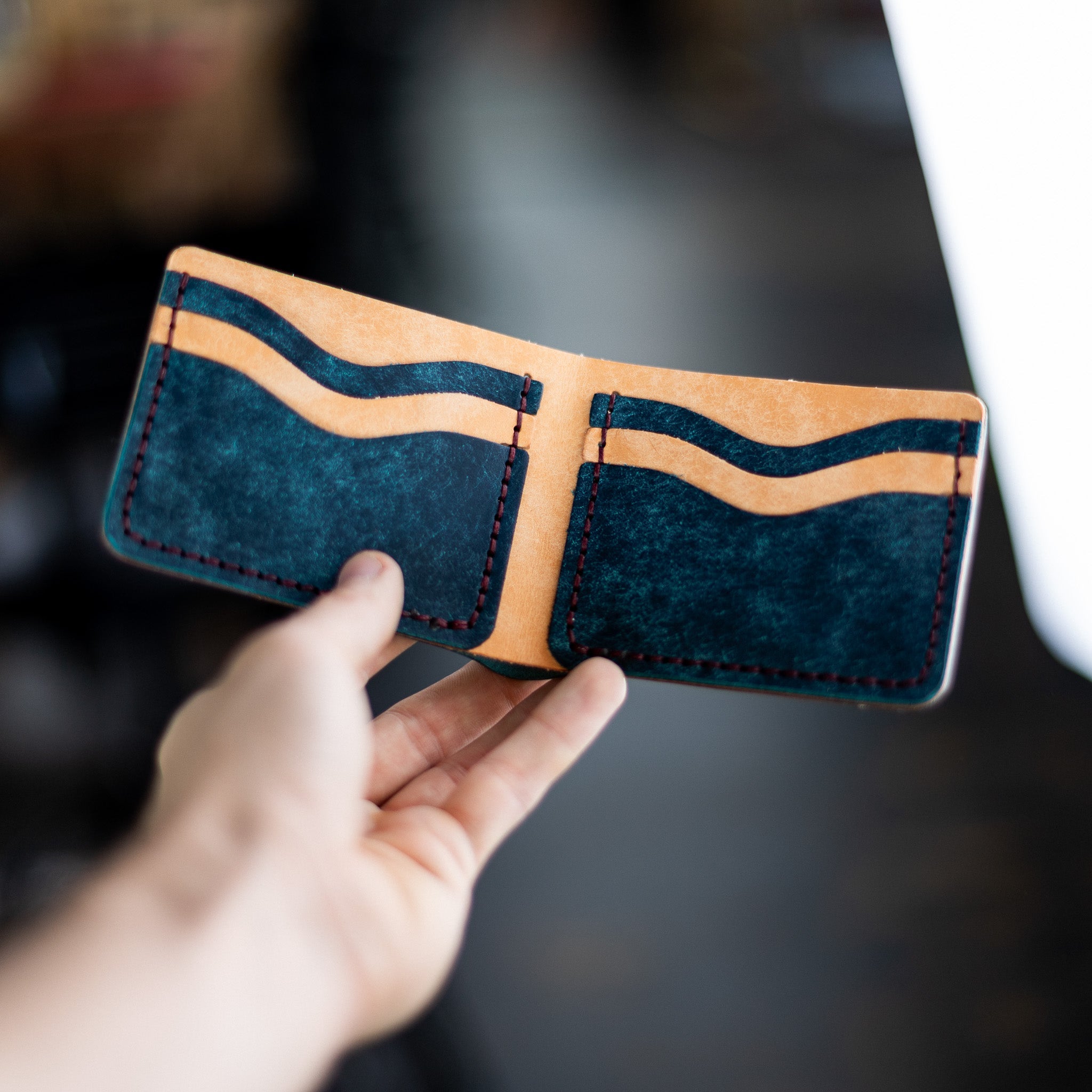
Modularity without complexity. The best approach creates distinct spaces without over-engineering them. A simple card slot works for credit cards, digital key cards, or whatever replaces them. Compare this to wallets with custom-molded compartments for specific card dimensions - they fail the moment standards change.
Material honesty. Leather that's 3-4 oz in thickness provides enough structure to hold shape while remaining flexible enough to adapt. Thicker leather becomes rigid and cracks. Thinner leather collapses under use. The sweet spot allows the wallet to conform to new contents without forcing them into predetermined shapes.
Minimal failure points. Every zipper, snap, or complex closure mechanism represents a potential breakdown. Saddle-stitched construction using two needles and waxed thread creates interlocking stitches that hold even if the thread breaks in one spot. This 200-year-old technique outlasts modern alternatives precisely because it's simpler.
Lost Dutchman Leather builds around these principles rather than chasing trends. The result is products that accommodate technological change without requiring redesign.
How Thickness and Construction Create Flexibility
A 3-oz leather wallet maintains its shape for 20+ years of daily use. That consistency matters when technology changes because the wallet doesn't deform to match old contents.
Consider what happened when credit cards shifted from embossed numbers to flat printing. Wallets designed with tight, molded pockets for embossed cards suddenly had too much grip and not enough glide. Simple, straight card slots adapted instantly - they never assumed a specific card texture.
Vegetable-tanned leather develops patina but doesn't lose structural properties. Chrome-tanned leather, while softer initially, breaks down faster under repeated stress. For a future-proof leather wallet that might need to hold entirely different objects in 2040, starting with material that ages predictably, is essential.
The construction method determines whether the wallet can be repaired or modified. Saddle-stitching can be redone. Glued seams cannot. Machine stitching with single-thread lockstitch unravels completely if broken. Hand-stitching with a two-needle saddle stitch prevents the damage.
This isn't nostalgia - it's engineering for longevity when the requirements are unknown.
Real-World Adaptation Examples
Wallets from the 1950s weren't designed for plastic cards, yet they hold modern credit cards perfectly. Why? Because they were built around fundamental dimensions of what people carry: rectangular objects roughly 3-4 inches wide.
When contactless payment cards arrived, requiring less removal from wallets, the design didn't need adjustment. The cards still fit the same slots. When RFID-blocking became necessary, thin metal or carbon fiber sheets slipped into existing card pockets.
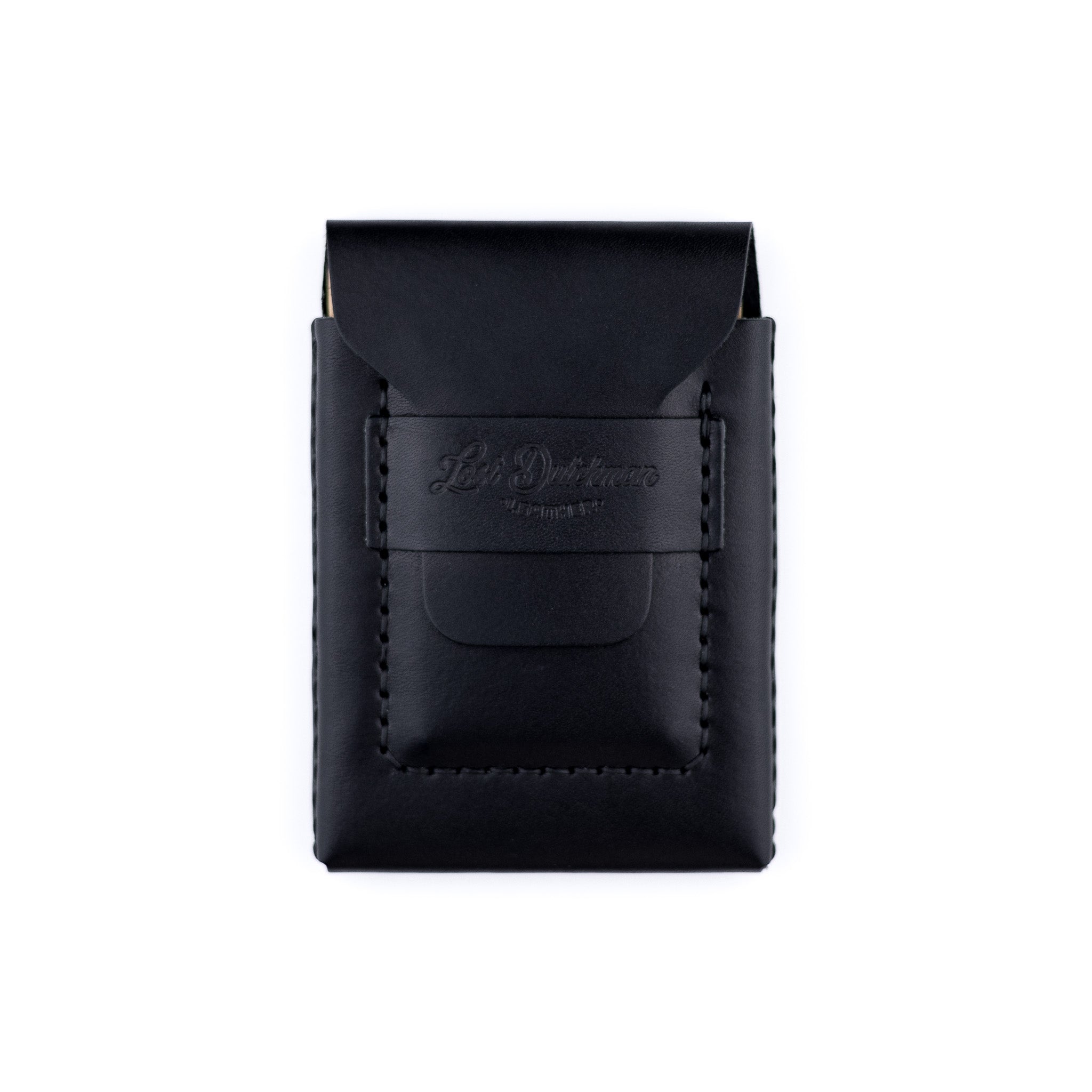
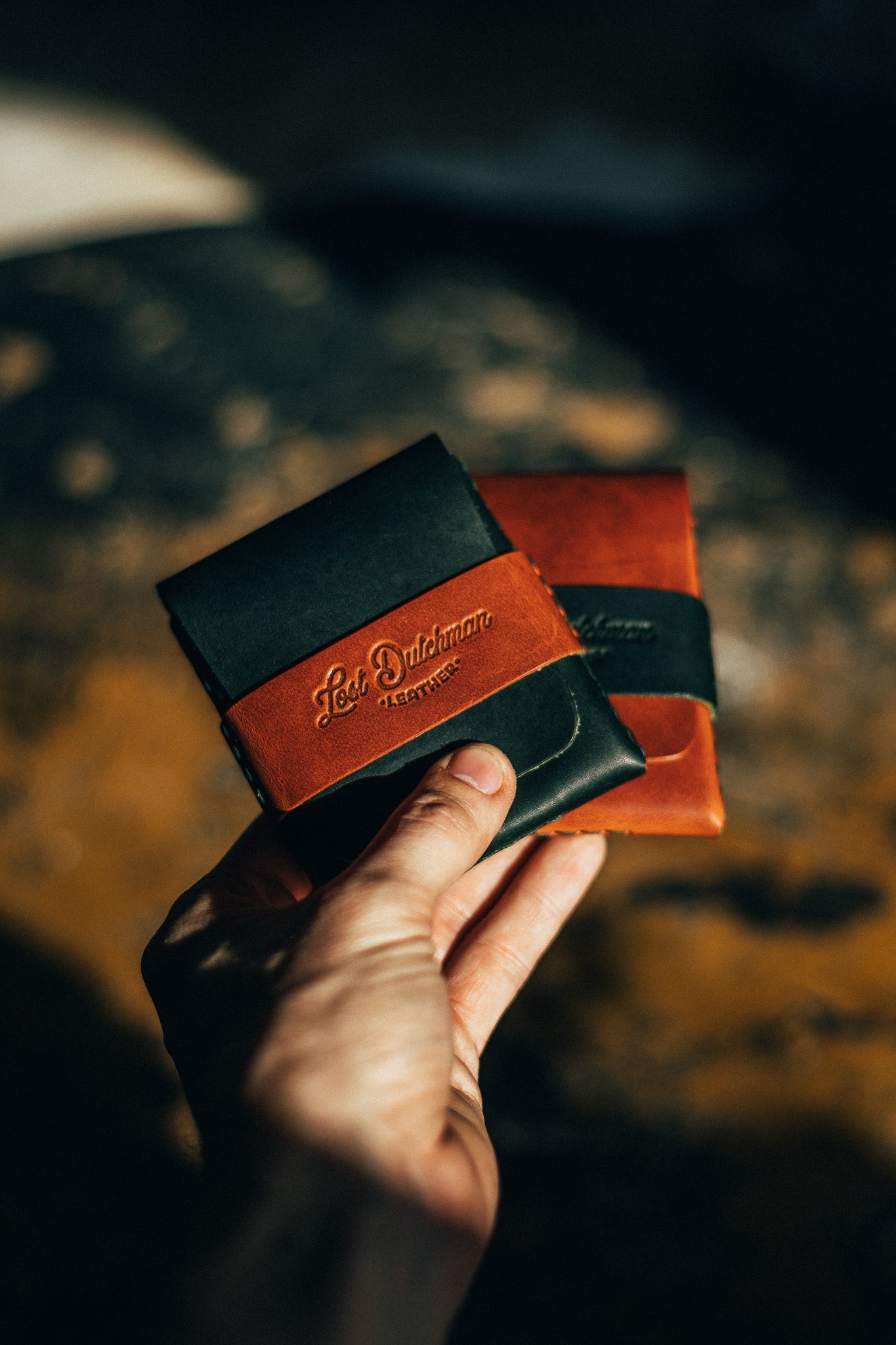
Real-world examples demonstrate this principle through elimination rather than addition. Made from a single piece of leather with no stitching, certain designs have virtually no failure points. The design accommodates 4-10 cards and a folded case, but it doesn't specify what those cards are or will be.
That's the key insight: design for categories, not specifications.
A card holder that holds "4-6 standard cards" works for credit cards, hotel keys, transit passes, or whatever card-shaped technology emerges. One designed specifically for "4 credit cards with EMV chips" becomes obsolete the moment card technology shifts.
The Role of Minimalism in Future-Proofing
Every feature added is a bet on the future. Every feature removed is a hedge against uncertainty.
Minimalist wallets work across technological eras because they don't make assumptions. A simple bifold with four card slots and a cash pocket worked in 1950, works now, and will work in 2050 - regardless of what those cards do or what currency looks like.
Complex wallets with coin pouches, ID windows, and zippered compartments make sense only if those specific needs persist. When coins become rare, phone-based ID becomes standard, and physical currency declines, those features become dead weight.
Minimalist wallet designs work by removing bulk while maintaining functionality. They hold what people actually carry - cards and some cash - without predicting how those items will evolve. The slimmer profile works whether cards get thicker or thinner, because it's designed with tolerance rather than precision fit.
This approach seems counterintuitive. Won't a wallet designed for specific modern needs work better now? Yes, for about 18 months. Then the needs change, and the wallet becomes awkward.
Material Science Meets Unknown Requirements
Full-grain leather has a tensile strength of 2,000-4,000 PSI, depending on tanning method and thickness. That's not just durability - it's adaptability under stress.
When new technology requires different carrying methods, the leather flexes without permanent deformation. Folding a wallet differently to access contactless payment doesn't create memory creases in quality leather. The fibers compress and recover.
Compare this to synthetic materials engineered for specific use cases. They perform brilliantly within parameters but fail catastrophically outside them. A synthetic wallet designed for cards of exactly 0.76mm thickness struggles with cards at 0.80mm.
Vegetable-tanned full-grain leather accommodates a range because it's a natural material with inherent variability. That variability - once considered a defect in manufacturing - becomes an asset when requirements change unpredictably.
The aging process also matters. Leather that develops patina becomes more supple and conforming over time. It literally adapts to use patterns. A 10-year-old wallet fits its contents better than a new one, regardless of what those contents are.
Why Single-Purpose Features Fail
Remember wallets with built-in calculators? Or specific pockets sized for PDA styluses? Each seemed essential at the time.
The pattern repeats with every technology cycle. Wallets with built-in Bluetooth trackers work perfectly until the battery dies or the Bluetooth standard changes. Wallets with specific AirTag pockets work until Apple changes AirTag dimensions or a better tracking technology emerges.
A different approach exists. Rather than integrating the tracker into a wallet, creating a separate leather accessory housing that can be attached or removed allows flexibility. When tracking technology changes, the accessory gets replaced - not the entire wallet.
This modular thinking extends beyond tech accessories. A wallet with a removable cash strap works for people who carry cash now and people who might return to cash later. A fixed money clip assumes cash remains constant.
The difference seems subtle but compounds over decades. Each rigid feature is a countdown timer to obsolescence.
Construction Methods That Enable Repair and Modification
Machine-stitched wallets use lockstitch - a single thread looped around a bobbin thread. Fast to produce, but if it breaks anywhere, the entire seam can unravel. Hand saddle-stitching uses two needles passing through the same holes from opposite directions, creating interlocking stitches.
If saddle-stitching breaks, it stops at that point. More importantly, it can be repaired or modified. Adding a new pocket to a 10-year-old wallet is possible with saddle-stitching. With machine stitching, the repair is visible and weak.
This matters for future-proofing because modification is adaptation. A wallet that can be altered accommodates needs that didn't exist when it was made.
Edge finishing also plays a role. Leather edges sealed with wax and burnished can be refinished decades later. Painted edges cannot - the paint cracks and peels, and repainting never matches. Small detail, but it's the difference between a wallet that can be refreshed and one that looks permanently worn.
The Economics of Buying Once
A $200 wallet that lasts 30 years costs $6.67 per year. A $40 wallet replaced every 2 years costs $20 per year. The math favors quality even before considering the hassle of replacement.
But the real economic advantage is flexibility. When payment technology shifts from cards to phones and back to cards (as some predictions suggest), the person with a simple leather wallet doesn't need to buy anything new. The person with a tech-integrated wallet needs to replace their entire system.
Full-grain leather belts demonstrate this principle clearly. A quality belt works with any buckle style, any pant type, any fashion trend. The belt itself remains constant while everything around it changes.
This isn't about resisting change - it's about separating what changes from what doesn't. The need to carry essential items doesn't change. The specific items change constantly.
Design Tolerance vs. Precision Fit
Engineers optimize for known conditions. Craftspeople build for unknown ones.
A wallet designed with 0.5mm tolerance in card slots works for current credit cards. One designed with a 2mm tolerance works for current cards and whatever comes next. The lower tolerance seems inferior until you consider a 20-year timeline.
This doesn't mean sloppy construction. It means intentional flexibility in the right places. Card slots should have tolerance. Stitch spacing should be precise. The leather thickness should be consistent. But the overall design should accommodate variation.
Quality designs demonstrate this balance. The card slots are sized for standard cards, but with enough room for slight variations. The cash pocket holds folded bills of various denominations and currencies. Nothing is custom-fit to current specifications.
That's the distinction: precision in execution, tolerance in design.
What Actually Makes a Wallet Future-Proof
Strip away the philosophies, and the answer is straightforward: quality materials, simple construction, minimal features, and repairability.
Full-grain leather provides the material foundation. It ages well, maintains structure, and develops character rather than deterioration. The difference between full-grain and corrected leather becomes obvious after 5 years and undeniable after 10.
Saddle-stitching provides construction durability. Hand-stitched seams last longer than machine-stitched ones and can be repaired or modified. This 200-year-old technique persists because nothing better exists for joining leather permanently yet flexibly.
Minimal design provides adaptability. Each feature removed is one less thing to become obsolete. A wallet with card slots, a cash pocket, and nothing else works across technological eras because it doesn't assume specific technologies.
Repairability provides longevity extension. A wallet that can be restitched, re-edged, and refinished lasts multiple lifetimes. One that's glued and machine-stitched becomes trash when any component fails.
These aren't predictions about future technology. They're observations about what has already worked across past technological shifts.
The Catch-All Principle Applied to Wallets
Specialization creates vulnerability. Generalization creates resilience.
A catch-all tray holds keys, coins, watches, or whatever needs temporary storage. It doesn't care what those items are. The same principle applies to wallets - design for categories of objects, not specific objects.
This seems obvious, but contradicts most product development thinking. Modern design methodology says: identify specific user needs, optimize for those needs, create the perfect solution. That works brilliantly for 18-month product cycles.
For products meant to last decades, the methodology inverts: identify enduring patterns, build flexibility around those patterns, let users adapt the solution to their specific needs.
The wallet doesn't need to be smart. The user adapts it to smart uses.
Why This Matters Now More Than Ever
Technology cycles are accelerating. The time between "new standard" and "obsolete standard" keeps shrinking. Payment technology that seemed permanent five years ago is already being replaced.
In this environment, buying products designed for current technology guarantees rapid obsolescence. The smart choice is actually the simple one - flexible, repairable goods that don't try to predict the future.
Minimalist wallet construction takes this concept even further. Fewer features, smaller footprint, but the same fundamental approach: quality material, simple construction, no assumptions about what users will carry in 2035.
That's not anti-technology sentiment. It's recognition that the technology layer and the carrying layer should remain separate. Your phone gets upgraded every few years. Your wallet shouldn't need to.
Building for the Unknown
Future-proofing isn't about prediction. It's about creating resilience through simplicity, quality, and adaptability. The technologies that emerge in the next 20 years will surprise everyone. The wallet that accommodates them won't try to anticipate them - it'll simply provide flexible space for whatever comes.
Full-grain leather provides material longevity. Saddle-stitching provides structural durability. Minimal design provides functional flexibility. Combined, they create products that work across technological eras without modification.
The best future-proof leather wallet is the one that doesn't need to know about the future. It's built on principles that transcend specific technologies: carry essential items securely, age gracefully, and last long enough that replacement becomes a choice rather than a necessity.
Quality leather goods operate on generational timelines while technology operates on annual cycles. Keeping those layers separate - physically and conceptually - is how products remain relevant when everything around them changes. The wallet in your pocket today should work just as well in 2045, regardless of what those cards actually do or whether physical currency still exists.
That's not nostalgia. It's engineering for uncertainty.
For those interested in exploring these design principles firsthand, contact us to discuss how quality craftsmanship creates products built to last generations.
,%20modern%20currency,%20and%20even%20RFID-blocking%20inserts.%20That's%20not%20luck%20-%20it's%20the%20resu...)