The Real Cost of Cheap Wallets: Lifetime Value Analysis of Premium Leather
Most people replace their wallet every 18 months. That's not because they want to. The wallet simply falls apart. The real cost of cheap wallets becomes obvious over time. They fail predictably. Stitching unravels quickly. Cheap materials peel away. Card slots stretch until they hold nothing. The cycle repeats continuously. Buy, use, replace, repeat. We craft premium leather to work differently. We build gear to last decades. The upfront cost looks higher initially. However, the math tells a different story. A true lifetime value analysis proves that quality saves money.
The Hidden Economics of Wallet Replacement
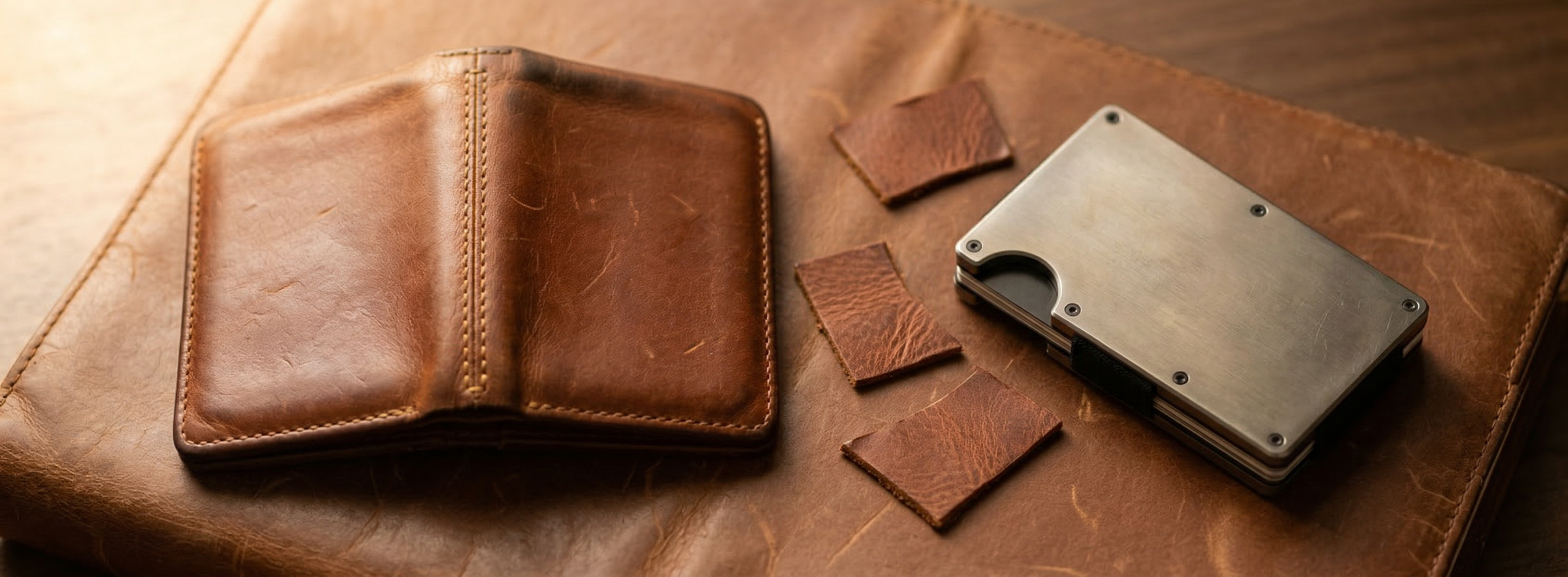
A $20 wallet from a department store lasts 12 to 18 months. The wallet replacement cycle starts early. Stitching fails first along the edges. Bonded leather delamination happens quickly. Leather scraps glued together can't survive daily use. Replace that wallet every year and a half. You'll buy 20 wallets over 30 years. That equals $400 spent on goods that never improve. Compare that to a single piece of premium leather at $80 to $120. You make one purchase. You get three decades of use. The real cost of cheap wallets is constant replacement.
At Lost Dutchman Leather, we build goods that stop this cycle. You deserve a wallet that earns its keep.
What Makes Premium Leather Actually Last
Full-grain leather is the top layer of the hide. It contains the natural grain structure that makes leather strong. Unlike corrected-grain options, nothing is sanded away. This matters because the leather fiber density is highest at the surface. Remove that layer, and you remove durability. Cheaper goods fail quickly because they use weaker material. Vegetable tanning adds another dimension to the process. This uses plant-based tannins instead of harsh chemicals. The result is leather that develops character. It avoids bonded leather delamination entirely. The Franklin single-piece design demonstrates this principle perfectly. It's cut from a single piece of leather. It has no stitching to fail. This eliminates common failure points. You can explore The Franklin wallet to see this structure.
Breaking Down the Real Numbers
Let's calculate actual long-term costs across different quality tiers.
-
Budget Leather: Lifespan is 12 to 18 months. You need 20 to 30 replacements over 30 years. Total cost hits $300 to $750.
-
Mid-Tier Leather: Lifespan is 2 to 4 years. You need 7 to 15 replacements. Total cost reaches $280 to $900.
-
Premium Leather: Lifespan spans 20 to 30+ years. You only need 1 to 2 wallets. Total cost stays between $80 and $300.
The premium option costs less per year than the budget choice. A complete lifetime value analysis shows clear savings. We offer full grain leather wallets that prove this math.
The Time Cost Nobody Calculates
Each wallet replacement takes effort. You research options for 30 minutes. You make the purchase. You transfer contents. You break in the new item. A 20-part wallet replacement cycle wastes 15 to 20 hours. At a modest hourly value, that adds $150 to $400 in time alone. High-quality premium leather eliminates this cycle entirely. You make one decision. You get decades of reliable use.
A customer brought a department store billfold into our shop last month. The plastic layers were peeling apart after just eight months of pocket time. He replaced it with one of our solid hides, realizing that buying cheap means buying twice.
How Patina Adds Value Instead of Removing It
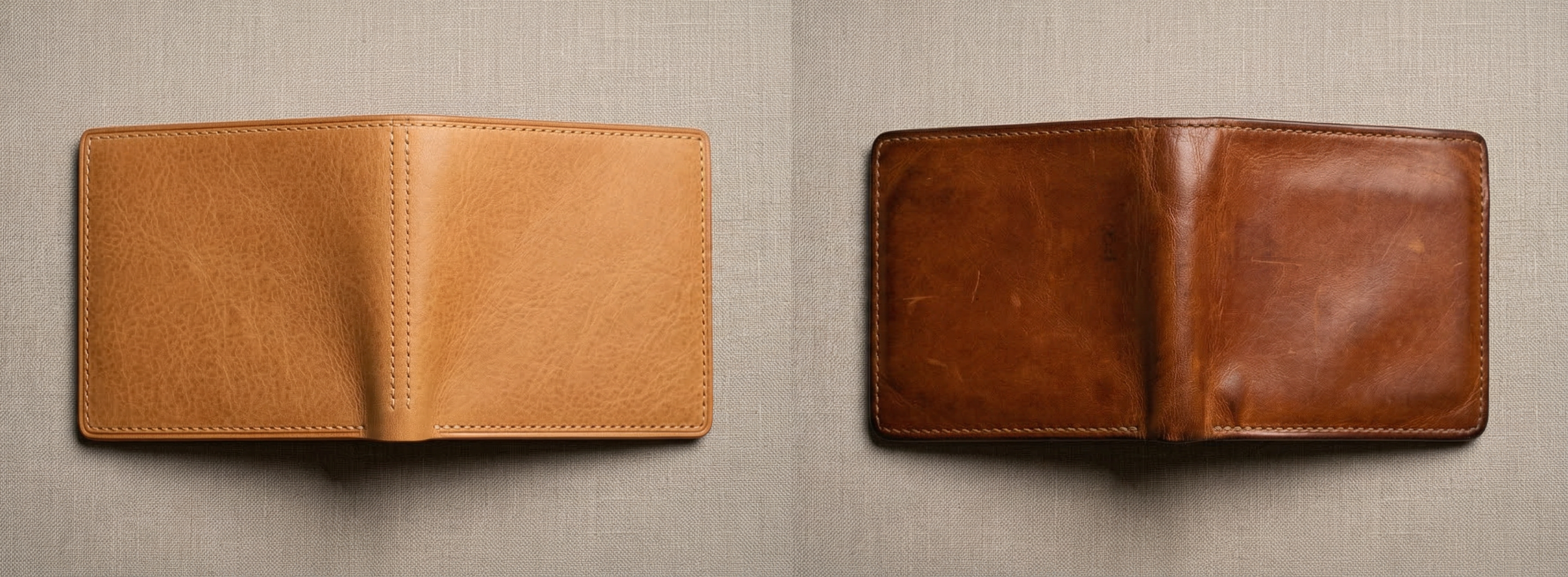
Cheap wallets don't age. They simply decay. Bonded leather delamination ruins the finish within months. Synthetic materials fade and stiffen. These are clear signs of failure. Full-grain leather develops a rich patina. The surface darkens where your hands touch it. Natural oils condition the leather.
Think of full-grain leather like the foundation of a well-built house. If you start with solid ground, the structure holds up for decades. If you use cheap fillers, the walls eventually crack.
The tannins react with oils and light. The material becomes more supple over time. A ten-year-old wallet often sells for 60 to 80 percent of its original price. That residual value lowers your long-term costs. We build a robust full grain bifold wallet to age beautifully.
The Environmental Math
Manufacturing impact compounds with every replacement. Each wallet requires raw materials, energy, and transportation. Multiply that by 20 wallets, and the environmental cost grows. One durable wallet reduces that impact by 95 percent. The real cost of cheap wallets includes this waste. A single item lasting 30 years has far less total impact.
What Premium Construction Actually Means
Quality shows up in specific construction choices. We use full-grain leather from the best sections of the hide. The shoulder and back provide the best leather fiber density. Cheap wallets use thin belly leather that stretches easily. Cut edges on budget items are painted or left raw. They fail quickly. Premium edge finishing involves burnishing. We compress and polish the leather fibers until they form a smooth, sealed edge. We use solid brass hardware and waxed thread. If you want a slim option, a leather card holder built this way lasts decades without failure.
The Front-Pocket Factor
Thick wallets create physical discomfort. Sitting on a bulky back-pocket wallet causes lower back problems. Slim bifolds designed for front-pocket carry eliminate this issue. They're thin enough to be comfortable. They still hold your essential cards. This matters for a lifetime value analysis. If a bulky wallet contributes to back problems, the real cost extends beyond the price tag. A vertical wallet provides a great front-pocket solution.
The Repair Economics and Minimalist Advantage
Quality leather can be repaired. Worn stitching can be re-sewn. Scratched edges can be re-burnished. A simple repair extends the wallet's life another decade. Cheap wallets aren't worth repairing. The labor cost exceeds the replacement cost. This use-it-until-it-breaks cycle increases long-term costs. Minimalist designs feature fewer pockets and compartments. Fewer pockets mean fewer failure points. The Franklin single-piece design relies on simplicity. It forces better organization habits. Carrying less means knowing exactly what you carry.
Making the Calculation Personal
Actual costs depend on specific usage patterns. Calculate your real numbers. How often do you replace your current wallet? What do you typically spend per replacement? The wallet replacement cycle adds up quickly. Multiply your replacement frequency by the typical cost. Add your time cost. Compare that to a single premium purchase. For most people carrying a wallet daily, the premium option costs less over any period longer than five years. The real cost of cheap wallets is simply too high.
Conclusion
The math doesn't lie. Cheap wallets cost more inevitably. The replacement cycle creates ongoing costs that compound over time. Material failure, time spent shopping, and environmental impact exceed the upfront savings. Premium leather reverses the equation. You get a higher initial cost but a lower lifetime cost. One purchase replaces twenty. You get decades of use instead of months. The premium option costs 75 percent less annually. High leather fiber density ensures it lasts. The Franklin single-piece design proves that simplicity works. A proper lifetime value analysis points in the same direction. One wallet provides decades of use. That's mathematics. Ask our workshop about your leather gear to find your next everyday carry.