
Lost Dutchman vs Saddleback Leather: American Heritage Wallet Showdown
Two brands claim the heritage crown today. Both promise gear that outlasts passing trends. Both build an American heritage wallet that develops deep character. However, our approaches differ entirely. We handcraft small-batch American goods in our Mesa, Arizona workshop. We focus heavily on radical simplicity. Saddleback Leather built its name on bombproof goods. Which brand actually matches your daily use? This heritage wallet showdown cuts through the noise. A proper Saddleback Leather comparison reveals two totally different philosophies.
We believe a wallet should be a companion. It should get better every time you touch it. It should not just be a thick chunk of material in your pocket. Choosing between these brands is about more than leather. It is about how you want to interact with your gear every day.
The Design Philosophy Split
Lost Dutchman Leather strips wallets down to their essential geometry. We remove everything unnecessary from the design. We think fewer parts mean fewer problems. Saddleback takes the opposite path entirely. Their bombproof construction features heavy stitching and multiple leather layers. The construction resembles thick saddle-making techniques. A piece from our workshop feels refined and deliberate. A heavy-duty wallet feels like literal armor for your cash.
One brand strips away everything. The other adds layers for strength. Both approaches aim for longevity. However, they feel very different in your hand. Our philosophy favors a slim, clever design. We want your gear to disappear into your pocket.
Material Selection and Sourcing
Both brands use full-grain leather for their gear. This is the top layer of the hide. It contains incredible fiber density naturally. This layer is the strongest part of the animal. It has not been sanded or buffed down. We use plant-tanned leather exclusively. Plant-based tannins create a material that ages beautifully. Saddleback uses both natural and chrome-tanned options. The tanning method matters significantly for your gear.
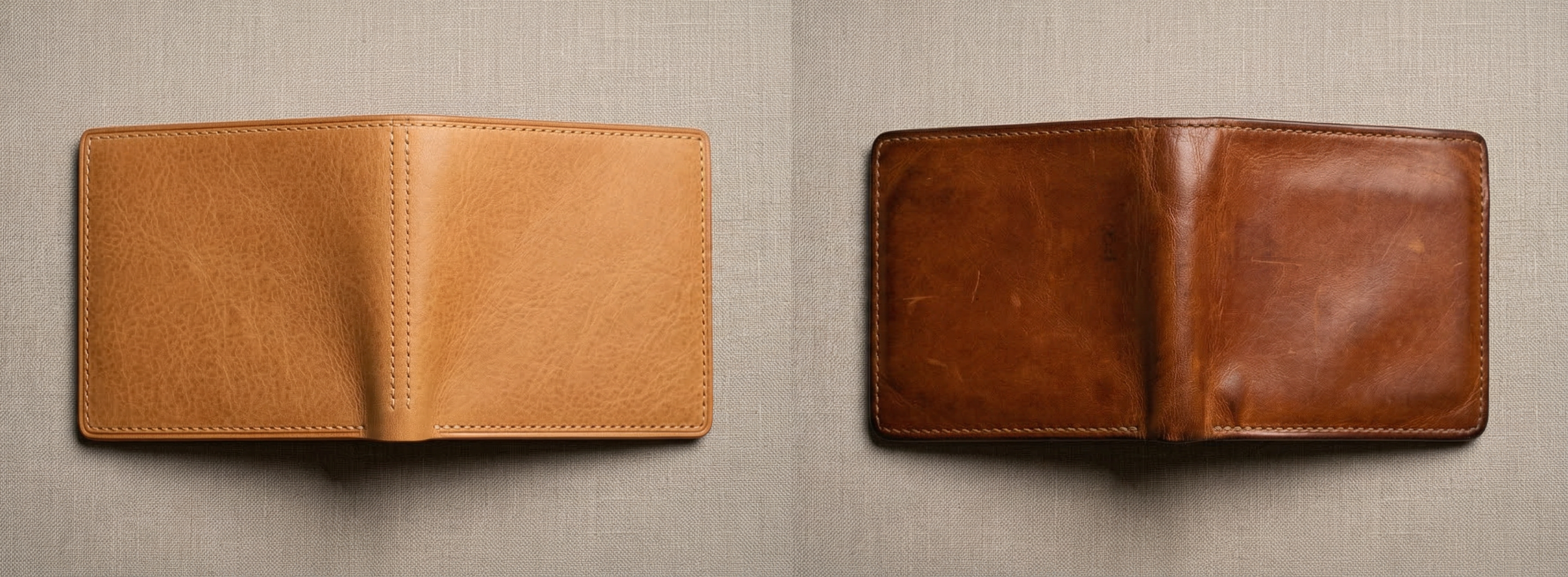
Natural tanning allows the leather to mold precisely. It produces a rich patina over time. You'll find this beautiful leather in every genuine leather wallet we make. It starts out a bit stiff. It breaks in over time to fit your life.
Construction Methods Under Scrutiny
Our design sounds surprising until you consider the engineering. Traditional wallets fail exactly where thread meets leather. We use strategic leather folding instead. We remove the thread entirely to eliminate that failure point. You can see this clearly in a lost dutchman franklin. It uses a single piece of hide. No stitches mean nothing can unravel.
Saddleback builds wallets like furniture. They use multiple layers and heavy-duty thread. They finish with thick, painted edges. This raises a highly practical question. How much durability does an everyday pocket item actually need? We ensure proper burnished edge finishing for true longevity. We compress the fibers with heat and friction. Our gear handles daily stress perfectly without unnecessary bulk.
Size and Carry Considerations
Modern carry culture demands far less bulk. Bulky billfolds often feel incredibly excessive today. We design specifically for comfortable front-pocket carry. A vertical leather wallet uses strategic leather folding to eliminate extra layers. It stays thin even when full.
Carrying a massive billfold is like driving a dump truck to grab groceries. It absolutely gets the job done. However, it brings completely unnecessary bulk to a simple task.
Saddleback's wallets trend much larger and thicker. The extra size accommodates more items. But it requires large pockets. We assume you carry your essential cards mostly. We believe in keeping things light and efficient.
Price Points and Value Proposition
A fair Saddleback Leather comparison requires examining long-term value. Our goods reflect small-batch American goods production directly. The pricing stays honest without inflated markup margins. Saddleback's higher price points include their famous warranty. Here is the calculation that actually matters most. A sixty-dollar wallet lasting twenty years costs three dollars annually.
The real question is whether you'll carry it daily. Price is only one part of the equation. True value is measured over decades. You want gear that works without being a burden. Investing in an American heritage wallet saves you money in the long run.
Break-In Period and Daily Use
Natural leather starts out quite stiff originally. Our wallets require weeks of use before softening. The tight card slots prevent your cards from sliding out. The firm leather maintains its shape beautifully. The payoff is incredible, personalized character. Thicker wallets require even more break-in time. A heavy american made leather wallet becomes totally custom-fitted to you eventually.
Natural leather is a living material. It reacts to your touch and the sun. It becomes more supple every single day. This is the reward for choosing quality.
The Warranty Question
Saddleback's 100-year warranty generated massive attention online. However, warranty terms matter much more than marketing slogans. Most guarantees cover manufacturing defects. They do not cover normal wear or loss. Since leather naturally ages, massive warranties have limited practical application.
A guy recently asked about guarantees after his heavy-duty wallet wore out its stitching. He learned that most century-long promises only cover defects. He preferred our honest approach to repairs over a catchy slogan.
We offer straightforward defect warranties and reasonable repair services. We want your gear to stay in your pocket. Proper care matters much more than any warranty length.
Aesthetic and Style Differences
We embrace minimalism with burnished edge finishing and understated branding. Most pieces feature no visible logos whatsoever. The aesthetic works well in both jeans and business casual settings. Heavy-duty brands lean into rugged, adventure-ready styling. They feature visible brand stamps and thick hardware. Choose the style that fits your daily environment. A slim handmade leather bifold wallet blends into your life seamlessly.
Your gear should reflect your personality. Some people want their tools to look like armor. Others want them to look like art. Both are valid choices for your carry.
Making the Decision
This heritage wallet showdown isn't about declaring a single winner. It requires matching brand philosophy to your personal priorities. Choose our workshop if you want minimalist design. Choose an American heritage wallet for an incredibly rich patina. Choose heavy-duty brands if you want extreme, bombproof construction. Both brands deliver strictly on their promises. The right choice depends entirely on your daily habits.
Think about what you carry every day. Do you need a tank or a precision tool? Your answer points you to the right brand.
Conclusion
This Saddleback Leather comparison reveals two incredibly valid approaches. We strip wallets down to their essential, working elements. We use innovative construction to create a slim American heritage wallet. Heavy-duty brands build thick wallets with a 100-year warranty. Neither brand compromises on material quality or domestic production.
A true heritage wallet showdown proves that longevity matters most. Choose the wallet you'll actually enjoy carrying. It should be a tool that serves you faithfully. Have a question about leather? Ask our team and we'll gladly help you decide. We are here to help you find the perfect piece.