Saddle Stitches & Burnished Edges: Little Design Details That Matter
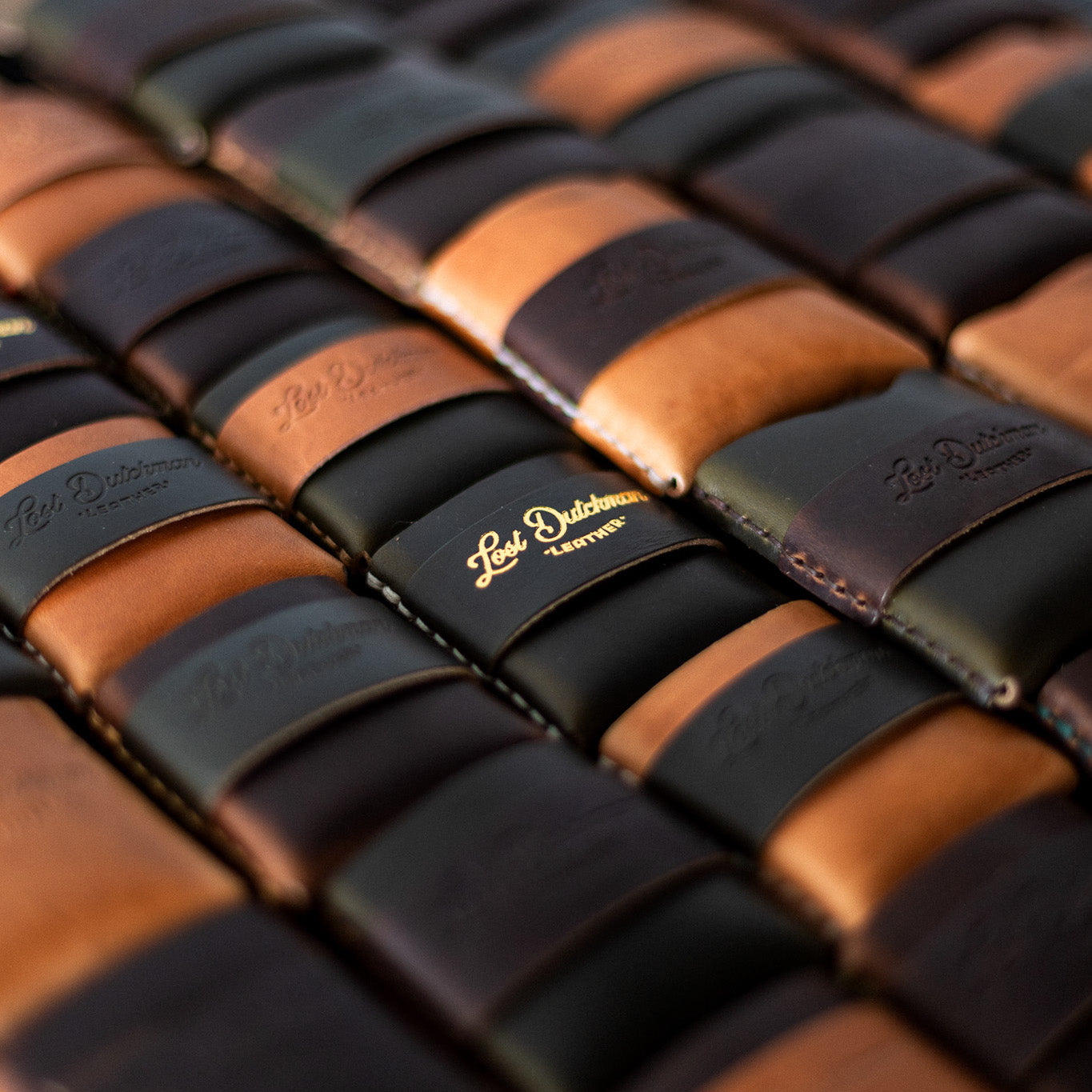
Some designs stand out not because they shout for attention, but because they whisper of craftsmanship. The quiet strength of a seam, the soft glow of a finished edge, these are the hallmarks of true artisanship. At Lost Dutchman Leather, every product begins with these understated touches. They’re not decorative afterthoughts; they’re the backbone of quality.
When you hold one of our wallets or belts, you’re not just looking at leather; you’re seeing the sum of hours spent refining the smallest elements. The kind of leather design details that define the difference between something made and something crafted.
Among them, two stand out as the clearest expressions of our philosophy: the saddle stitch and the burnished edge. These quiet features transform raw material into enduring art, subtle, strong, and deeply human.
The Story Behind Every Stitch
There’s a rhythm to hand-sewing leather, a tempo that a machine can’t replicate. The sound of two needles piercing the hide in harmony, the steady pull of thread, the gentle tightening of each stitch, it’s both craft and meditation.
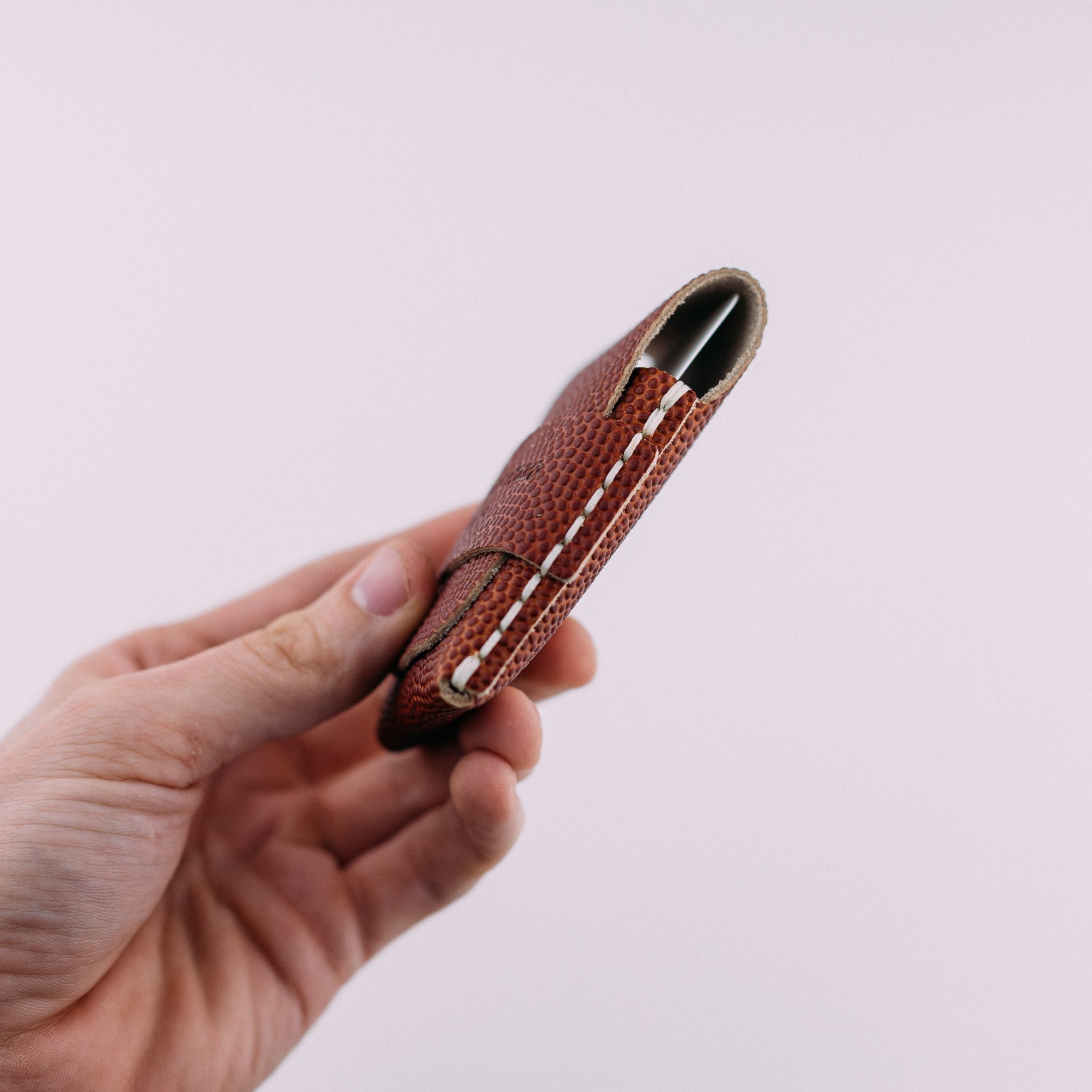
That’s where the saddle stitch comes in. For those wondering what is a saddle stitch, think of it as a method that doubles both the effort and the reward. Instead of relying on a single thread looping mechanically through the material, the saddle stitch uses two needles and one continuous thread. Each needle passes through the same hole from opposite sides, interlocking in the centre.
It’s a process as old as leatherworking itself, used by saddlers, cobblers, and craftsmen who understood that durability begins where patience resides.
Unlike the even, hollow precision of a machine stitch, a hand saddle stitch carries a human fingerprint. It’s deliberate, strong, and reliable. If one section ever breaks, the remaining thread holds the seam firmly in place. This resilience is why Lost Dutchman Leather uses it for products meant to last a lifetime, not just a season.
In essence:
-
Each stitch is made by hand, using two needles and a single continuous thread.
-
The design ensures strength even if one side wears through.
-
It creates a visual texture, a faint, rhythmic line that feels alive under your fingertips.
The process demands precision. Every hole is punched individually, perfectly aligned. The thread must glide through smoothly, tensioned just right. Pull too tightly, and the leather puckers. Too loosely, and it loses its integrity. The goal is balance, strength without strain, elegance without excess.
Why the Saddle Stitch Matters
Most people don’t think about stitching when they buy a wallet or belt. But the longevity of a leather product depends on it more than any surface detail. A poorly sewn seam can fail long before the leather itself shows wear.
Machine stitching, while efficient, relies on a continuous loop. If that loop breaks, the entire line can unravel like a pulled thread on a sweater. The saddle stitch, by contrast, doesn’t unravel. Its interlocking structure prevents cascading failure, which means the seam holds even under years of daily movement.
That reliability is why traditional saddlers used this technique on horse tack, equipment that endured tension, sweat, and the elements. The same philosophy applies to modern craftsmanship: durability through method, not material alone.
At Lost Dutchman Leather, every hand-sewn edge on pieces like The Dutchman or The Franklin Wallet reflects that tradition. The process might take longer, but time has always been the best investment in quality.
What the saddle stitch achieves:
-
Increased Longevity: A seam that holds firm through years of use.
-
Enhanced Strength: Twin-thread construction resists separation.
-
Visual Appeal: A distinctive, tactile pattern that celebrates handcraft.
To understand the saddle stitch is to appreciate the philosophy behind every Lost Dutchman product, that strength and beauty are born from patience.
The Subtle Power of Burnished Edges
If stitching is the skeleton of a leather piece, the edge is its skin, the first thing your hands feel and the last impression left behind. While easy to overlook, a properly burnished edge is one of the most defining leather design details there is.
Burnishing transforms a rough, fibrous edge into a smooth, sealed finish. The technique involves friction, patience, and a careful understanding of how leather responds to touch. It’s both science and art: the fibres are coaxed to lie flat and meld together, forming a clean, glass-like surface that protects against wear.
A raw edge is open and vulnerable, like a frayed rope. Burnishing seals those fibres, adding structure and elegance. But it’s more than appearance; it’s about longevity. Edges that aren’t sealed properly absorb moisture, swell, and weaken over time. Burnished edges, on the other hand, repel water, resist abrasion, and maintain a polished look even after years of use.
When you run your thumb along the edge of a Lost Dutchman belt or wallet, what you feel is intention, the culmination of hours spent refining an area most never think twice about.
The Art of the Burnish
The burnishing process demands a slow, steady hand. It’s repetitive, meticulous work, the kind that separates industrial output from true craftsmanship.
-
Trimming: Every edge begins with precision cutting, ensuring perfect alignment between layers.
-
Sanding: The surface is gently smoothed to remove imperfections.
-
Applying a Burnishing Agent: Substances like beeswax or gum tragacanth are worked into the edge to lubricate the fibres.
-
Rubbing: A wooden or bone tool is used to generate heat through friction. The fibres compress and fuse, creating a durable seal.
-
Polishing: The final step, a rhythmic back-and-forth that produces that soft gleam unique to quality leather.
It’s a tactile process, the kind that relies on instinct as much as experience. Too much heat, and the leather scorches. Too little, and it won’t seal. Each craftsman learns by feel, by watching the light change on the surface and sensing the subtle resistance as the leather tightens beneath the tool.
Our belts, such as those in the Belts Collection, showcase this dedication. The edges are mirror-smooth because they’ve been burnished by hand, not rushed through machinery. It’s this attention to detail that gives every product its refined silhouette and lasting strength.
Burnishing ensures:
-
Protection from moisture and environmental wear.
-
Comfort in handling, smooth, snag-free edges.
-
A clean, professional finish that enhances aesthetic balance.
Every polished line is a silent signature of care.
Design Integrity: Where Craftsmanship Meets Philosophy
When you look closely at a piece of fine leatherwork, you begin to realise how much meaning lies in the smallest choices. The way a stitch meets a corner. The colour transition along a beveled edge. These decisions form the foundation of quality.
At Lost Dutchman Leather, leather design details aren’t optional embellishments, they’re integral to our identity. We don’t add a saddle stitch or a burnished edge because tradition demands it. We do it because those choices embody honesty. They reflect our belief that products should serve faithfully for years, not months.
A single wallet, properly stitched and edged, can endure daily use for decades. The leather softens, the patina deepens, but the structure holds. That’s the difference between “made” and “crafted.”
Our craftsmen often say the final proof of a product isn’t in how it looks new, but in how it ages. That philosophy guides everything we produce, from a compact Card Holder to a rugged Belt. Each one is designed to live, age, and evolve with its owner.
From Workshop to Legacy
Every product that leaves the workshop carries not just material quality, but the spirit of the hands that built it. Each saddle stitch and polished edge stands as a quiet promise of endurance.
The process might seem old-fashioned in a world chasing speed and automation, but the best things have never been rushed. Craftsmanship rewards patience with beauty, a beauty that lasts.
Over time, you’ll see how these details pay off. The seams stay tight. The edges stay smooth. The surface takes on that sought-after patina, darker, richer, more personal. That’s the reward of genuine craftsmanship: objects that don’t wear out, they wear in.
When someone asks what is a saddle stitch, it’s tempting to explain with diagrams or definitions. But truthfully, the better answer is to hand them one of our wallets and let them feel it. The texture, the strength, the subtle rhythm of the stitch line, it speaks louder than words.
Sustainability Through Quality
Durability and sustainability go hand in hand. Every product that lasts longer reduces waste. Using the finest full-grain leather ensures that the material’s natural fibres remain strong enough to withstand decades of use. Hand-sewing reinforces that strength, meaning fewer replacements and less discarded material over time.
Our approach to sustainability doesn’t rely on buzzwords. It’s rooted in traditional values, repair over replace, quality over quantity. When we finish a product with a saddle stitch and burnished edge, we’re not just enhancing aesthetics; we’re ensuring longevity. That’s the quiet form of sustainability embedded in every Lost Dutchman Leather creation.
Little Details, Lasting Difference
At first glance, a wallet or belt might seem simple, leather, thread, hardware. But within those materials lies complexity: craft, precision, and devotion. The leather design details, stitching, edges, finishing, turn utility into artistry.
The saddle stitch represents endurance. The burnished edge represents refinement. Together, they reflect our promise to create pieces that grow more beautiful, not weaker, with time.
They are proof that the smallest things, done right, matter the most.
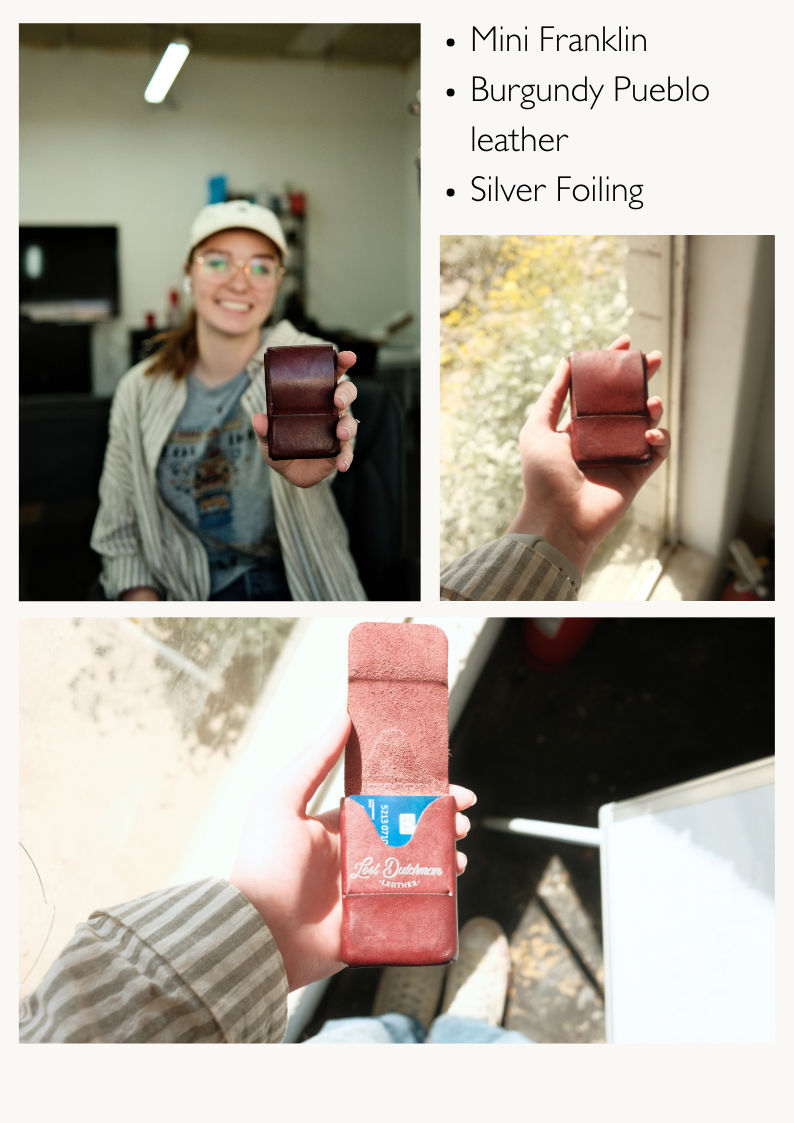
Each wallet, from The Mini Franklin to The Vertical Dutchman, is an example of how those two techniques transform leather into something living. Every line, every polish, tells a story of care.
When you invest in quality, you invest in longevity. And when you invest in longevity, you invest in the people and traditions that make it possible.
Key Lessons in Craftsmanship
-
The saddle stitch is a hand-sewn method that creates unmatched durability and visual charm.
-
Burnished edges protect leather from wear and moisture while adding elegance.
-
True leather design details combine beauty with purpose, form and function working together.
-
Each Lost Dutchman product embodies patience, precision, and pride.
-
Craftsmanship isn’t decoration; it’s integrity made visible.
Next Steps
To see how these techniques come to life, explore the wallet collection, each one shaped by the same principles of precision and care.
If you’re looking for timeless everyday accessories, discover The Belt or The AirTag Keyring, both designed with the same meticulous attention to stitch and edge.
For any questions about care, restoration, or craftsmanship, don’t hesitate to contact us. Our team is always ready to share knowledge and help you preserve what you value.
Because good design isn’t just seen, it’s felt, day after day, year after year.