Design Evolution: How Our Wallets Have Improved Over the Years
Progress in craftsmanship rarely happens overnight. It’s shaped by persistence, feedback, and the constant pursuit of refinement. At Lost Dutchman Leather, that journey is defined by one enduring principle: to create leather wallets that balance timeless design with everyday function.
This ongoing wallet design evolution reflects years of careful study, material mastery, and iterative product improvements. Each new model stands on the shoulders of those before it, carrying forward the lessons of every stitch, fold, and finish.
The Initial Vision
Lost Dutchman Leather began with a straightforward but ambitious goal: to craft goods that last longer than trends. From the beginning, the mission was to create high-quality leather wallets that would stand the test of time, products that grow richer with use rather than fading with fashion.
These weren’t accessories for fleeting seasons, but companions for life. Every piece would tell its owner’s story through patina, wear, and touch. Function and form were never at odds; they were partners in endurance.
Key Takeaways:
-
Lost Dutchman Leather was founded on the pursuit of timeless quality.
-
Early designs aimed to outlast disposable trends.
-
Durability and elegance were integral from the start.
Early Designs: Lessons in Craftsmanship
Every craftsman remembers the early prototypes, the excitement, the flaws, the breakthroughs. In the beginning, those first bifold wallets were functional but imperfect. Edges needed refinement, stitching needed precision, and the leather itself taught lessons in thickness and flexibility.
What emerged from that phase wasn’t just a better product, but a deeper respect for process. Attention to detail became the brand’s compass. Every edge, every cut, and every thread mattered.
Those formative years marked the foundation of iterative product improvements, the cycle of testing, adjusting, and perfecting that continues to define Lost Dutchman Leather’s work today.
Key Takeaways:
-
Early models revealed valuable lessons in material handling and stitching.
-
Craft refinement became a continuous process.
-
Iteration and experimentation built the groundwork for precision.
Key Improvements Over Time
The ongoing wallet design evolution has centered on three main areas: materials, construction, and design philosophy. Each has played a vital role in shaping the wallets seen today, leaner, stronger, and more efficient than ever before.
Material Selection
The transition to full-grain leather was the most defining step in the brand’s growth. Full-grain leather, the highest grade available, retains the natural surface of the hide. It’s tougher, more breathable, and develops an incomparable patina through use.
This upgrade didn’t just improve durability, it deepened the emotional bond between wallet and owner. Much like a pair of jeans that molds to your frame, a full-grain leather wallet conforms to its user, becoming uniquely personal over time.
Key Takeaways:
-
Full-grain leather enhanced both quality and character.
-
The material’s patina creates a one-of-a-kind finish.
-
Natural durability means fewer replacements and more longevity.
Construction Techniques
Durability begins with construction. Over time, Lost Dutchman Leather perfected a blend of machine and hand-stitching, ensuring strength without sacrificing precision.
The brand’s signature saddle stitch technique exemplifies this balance. Using two needles that interlock through each hole, the method guarantees that if one stitch fails, the rest remain secure. The result: a wallet capable of enduring years of daily use while retaining its shape and integrity.
This craftsmanship represents the essence of iterative product improvements, refining traditional methods through modern understanding.
Key Takeaways:
-
The saddle stitch creates a stronger, longer-lasting seam.
-
Hand-stitched elements ensure exceptional structural integrity.
-
Modern refinements enhance traditional craftsmanship.
Minimalist Design
A key part of Lost Dutchman Leather’s evolution has been its embrace of minimalist design. The goal: remove the unnecessary, elevate the essential.
Slim silhouettes replaced bulky forms, ensuring every pocket and fold served a clear purpose. Wallets like the Card Holders embody this shift, compact, elegant, and made for efficiency without compromise.
Key Takeaways:
-
Minimalism emphasizes usability and comfort.
-
Streamlined design eliminates clutter.
-
Form and function coexist in balance.
The Franklin Wallet: A Case Study in Evolution
Few designs illustrate the wallet design evolution better than The Franklin Wallet, a stitch-less marvel crafted from a single piece of full-grain leather. It’s a study in both innovation and restraint.
The Original Franklin
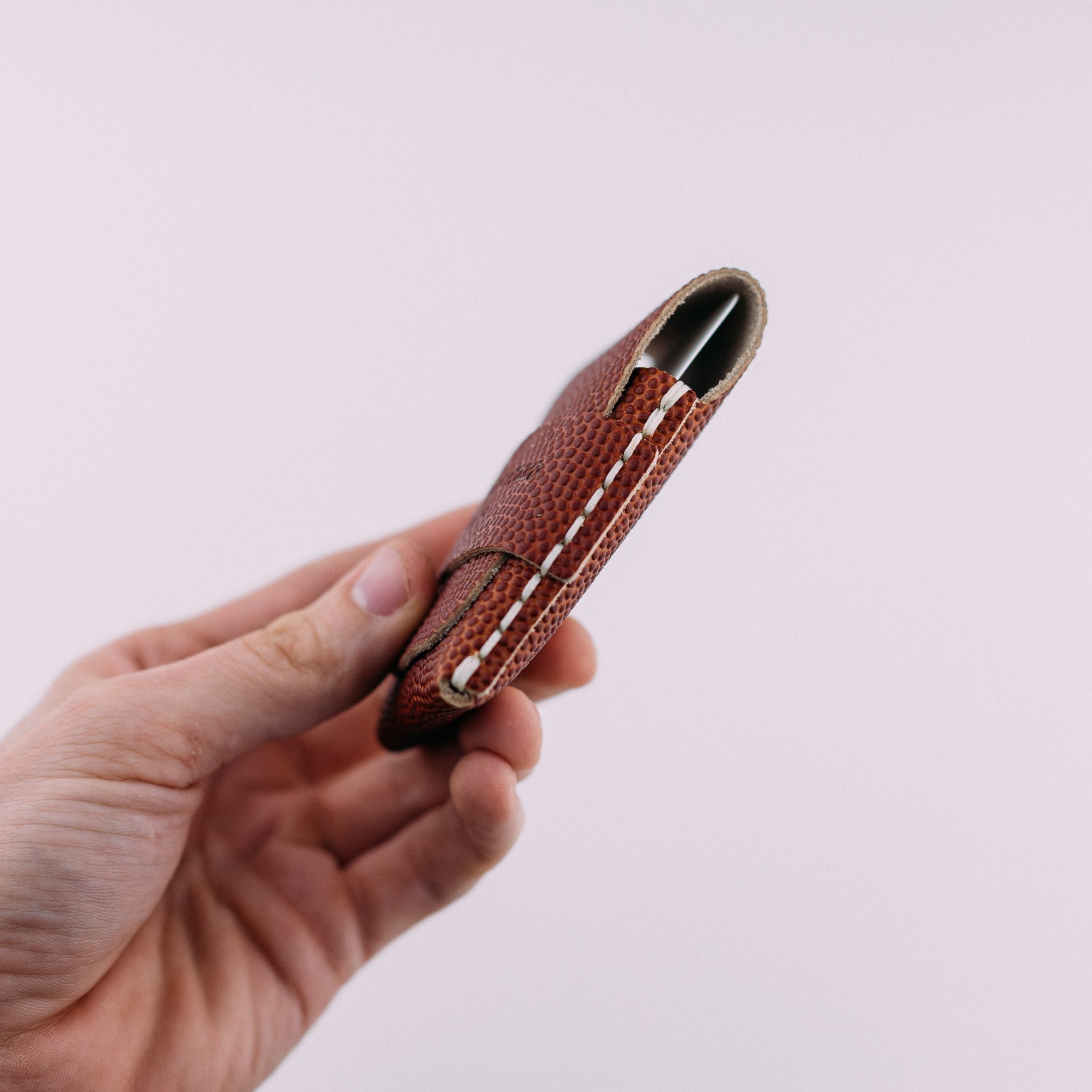
The original Franklin introduced a radical concept: strength without stitching. Using only precise folds and tension, the design produced an incredibly slim yet durable structure. It was a breakthrough in minimalist wallet design and remains a cornerstone of the collection.
But perfection is a moving target. The team sought ways to make it even smaller, even more efficient, leading to the next chapter in the design’s story.
Key Takeaways:
-
The Franklin pioneered a stitch-less wallet design.
-
Its fold-based construction optimized durability and simplicity.
-
The design set new standards for minimalist carry.
The Mini Franklin
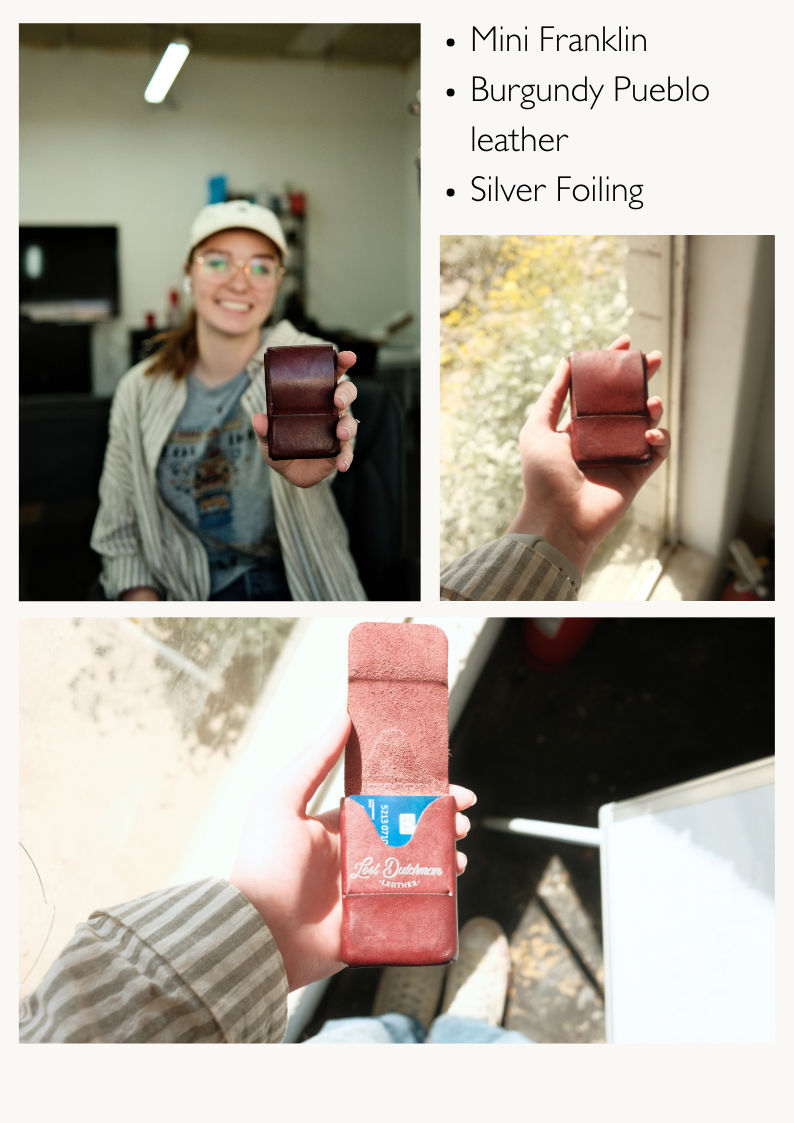
Enter The Mini Franklin, the refined successor. By reducing its dimensions and reconfiguring its internal layout, Lost Dutchman Leather created a piece that maintained the original’s elegance while enhancing portability.
This evolution perfectly embodies iterative product improvements, the art of refining excellence without losing its soul. Each redesign carries forward what worked best while shaving away what didn’t.
Key Takeaways:
-
The Mini Franklin delivers greater compactness with the same stitch-less design.
-
Every design update builds upon proven success.
-
Continuous improvement is at the heart of Lost Dutchman Leather’s craft.
Listening to the Customer
Feedback has been the silent collaborator in every design. Lost Dutchman Leather’s customers, craftsmen, travelers, minimalists, have shaped its progress as much as the tools in the workshop.
When clients mentioned wanting slimmer bifolds, the team re-engineered The Dutchman, reducing bulk while retaining full functionality. The result was a leaner, sharper design that met both aesthetic and practical needs.
This open dialogue ensures every product serves a purpose grounded in real-world use.
Key Takeaways:
-
Customer insight drives innovation.
-
Direct feedback fuels meaningful design evolution.
-
The Dutchman wallet exemplifies adaptive craftsmanship.
Sustainability and Ethical Craftsmanship
True craftsmanship respects its materials. Lost Dutchman Leather’s commitment to sustainability begins with responsible sourcing of full-grain hides from environmentally conscious tanneries.
Nothing goes to waste. Offcuts from wallet production become smaller accessories like keychains and Limited Leather Coasters. It’s a small but meaningful way to ensure efficiency without compromise.
The result: products made with integrity, from the raw material to the final stitch.
Key Takeaways:
-
Leather is ethically sourced from sustainable tanneries.
-
Scrap materials are repurposed to minimize waste.
-
Sustainability complements quality craftsmanship.
The Future of Lost Dutchman Leather Wallets
Innovation doesn’t replace tradition, it refines it. The future of Lost Dutchman Leather lies in the continuous balance of both. The workshop continues to explore new technologies, sustainable finishes, and material enhancements, all while preserving the handcrafting methods that define the brand.
The mission remains unchanged: to push forward through iterative product improvements while staying true to heritage craftsmanship. Every wallet is both a product of the past and a promise for the future.
Key Takeaways:
-
Innovation and tradition evolve hand in hand.
-
Future designs will refine existing strengths.
-
The pursuit of perfection never stops.
Next Steps
Explore the full Wallet Collection to see the culmination of this evolution for yourself, from Card Holders to Bifolds. Each piece reflects years of dedication, craftsmanship, and purposeful design.
For questions or personalized recommendations, contact us. The team is always happy to help you find the wallet that fits your life perfectly.