Organize Your Wallet: Tricks to Keep Cash and Cards in Order
The wallet is one of the most frequently accessed items in daily life, yet it often becomes a disorganized mess of crumpled receipts, expired cards, and forgotten business contacts. Every time you fumble through a chaotic wallet while someone waits, you waste time and project an image of disorganization. Learning how to organize your wallet properly isn't about perfection; it's about creating a reliable system that serves you efficiently every single day.
A well-organized wallet does more than save seconds at the checkout counter. It prevents lost cards, protects important documents, and creates a sense of control over your everyday carry. The good news is that organizing your wallet requires no special skills - just a clear strategy, a few minutes of setup time, and commitment to maintaining the system. This guide provides practical techniques for how to organize your wallet and establish the best way to organize credit cards for immediate access when you need them.
The Cost of a Disorganized Wallet
Before diving into solutions, it's worth understanding what disorganization actually costs. Time is the obvious factor - searching through ten cards to find the right one adds up across hundreds of transactions per year. But the costs extend further.
Missed opportunities arise when you can't quickly produce a business card at a networking event, or when you're fumbling for your insurance card during a medical appointment. Physical wear accelerates when cards are jammed haphazardly into slots, causing magnetic stripes to degrade and corners to fray. Security risks increase as you're more likely to misplace important cards when you don't have a consistent spot for each item.
Perhaps most significantly, mental clutter affects confidence. A messy wallet reflects disorganization in a small but meaningful way. Conversely, opening a well-organized wallet and immediately accessing what you need creates a subtle boost of competence that carries into other interactions. Understanding how to organize your wallet is ultimately about respecting both your time and your gear.
The Foundation: Audit and Purge
Effective organization begins with ruthless editing. Empty your wallet completely and examine every single item. The question isn't "might this be useful someday?" but rather "have I used this in the past month, and will I genuinely need it in the next month?"
What Really Needs to Live in Your Wallet
Essential daily items fall into clear categories:
Primary Identification: Driver's license or state ID card that you need for age verification, identification, or travel.
Primary Payment Method: Your most-used debit or credit card that handles 80% of your transactions.
Health Insurance Card: Medical emergencies don't announce themselves, so this stays in your wallet.
One Backup Payment Card: A second credit or debit card in case your primary card is declined or lost.
Small Amount of Cash: Twenty to fifty dollars covers situations where cards aren't accepted or systems are down.
Essential Business Cards: A small supply (three to five) of your own cards for networking opportunities.
Everything beyond this core set is optional and should be evaluated critically. That loyalty card for the coffee shop you visit once a quarter? It can live on your phone or stay home. The gift card with $3.47 remaining? Use it or discard it, but don't let it occupy valuable space.
The 30-Day Rule for Wallet Contents
Implement this simple test: if you haven't used an item in your wallet within the past 30 days, and you can't articulate a specific upcoming situation where you'll need it, remove it. This rule naturally filters out the accumulated clutter that makes how to organize your wallet seem impossible.
Review your wallet quarterly using this 30-day rule. Cards and documents that seemed essential in January may be irrelevant by April. Seasonal changes, life transitions, and evolving routines mean your wallet's contents should adapt accordingly. The goal when learning how to organize your wallet is a lean, purposeful collection that serves your current life, not your past habits.
Strategic Card Placement: The Best Way to Organize Credit Cards
Once you've established which cards belong in your wallet, the next step is determining where each card lives. Random placement means you're searching every time you need something. Strategic placement means you can access any card without looking.
The Frequency-Based System
The best way to organize credit cards is by usage frequency. Your most-used card goes in the easiest-access position - typically the front slot of your cardholder or the outside pocket of your bifold wallet. This card handles daily purchases and should be accessible with a single motion.
Secondary cards - those used weekly but not daily - occupy middle positions. These might include a rewards card for specific stores, a business expense card, or a backup payment method. They're available when needed but don't monopolize prime real estate.
Emergency and rarely-used cards belong in back slots or interior compartments. These include spare credit cards kept for security, insurance cards, or specialized payment cards used only in specific situations. Being harder to access isn't a problem since you're using them infrequently anyway.
This frequency-based approach is the best way to organize credit cards because it aligns your wallet's physical layout with your actual behavior. Your hands learn the muscle memory of reaching for the right slot, making transactions faster and more confident.
Color and Pattern Recognition
Visual organization complements physical placement. Group cards by color when possible - if your two primary bank cards are both blue, place them in adjacent slots. This way, you can identify the right card at a glance based on the color showing at the slot edge.
Pattern recognition extends beyond color. Group similar card types together: all bank cards in one section, loyalty and rewards cards in another, identification and medical cards in a third zone. This categorical organization means you know which area of your wallet to target based on the transaction type. When implementing how to organize your wallet, these visual cues dramatically reduce search time.
The Alternating Direction Method
Here's a lesser-known technique that addresses physical comfort: alternate the direction cards face in your wallet. Place every other card upside down relative to its neighbors. This distributes thickness more evenly across the wallet, preventing the bulging that occurs when all cards align the same way.
The alternating method serves a secondary purpose - the exposed edge of each card shows different details (card number area versus magnetic stripe area), making it easier to identify cards without pulling them out fully. This is particularly effective in slim wallets where space is at a premium and every millimeter of thickness matters.
Cash Organization Techniques
While digital payments dominate, cash remains relevant for tips, small purchases, and emergency situations. Proper cash management is integral to how to organize your wallet effectively.
Denominations and Folding
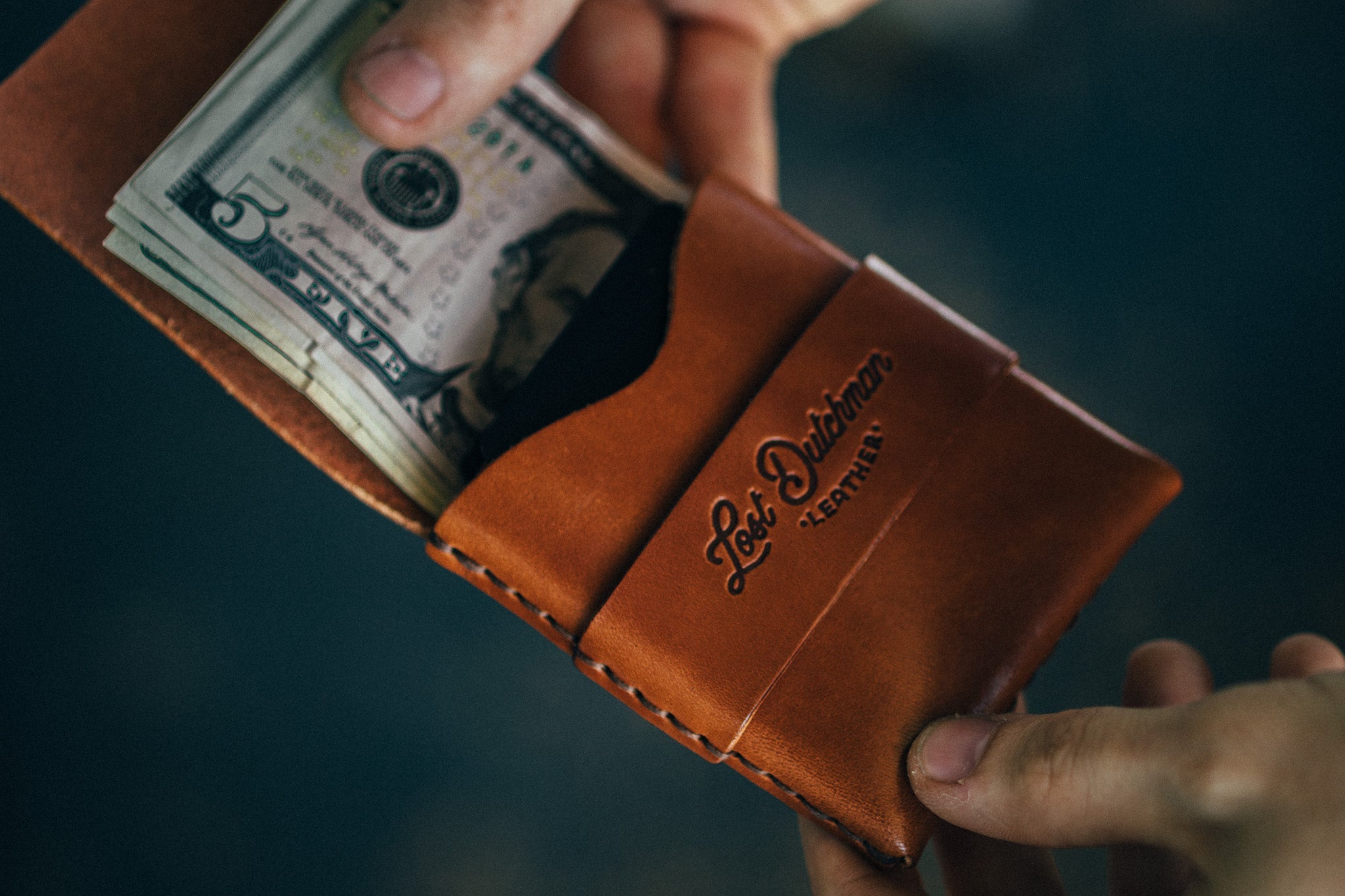
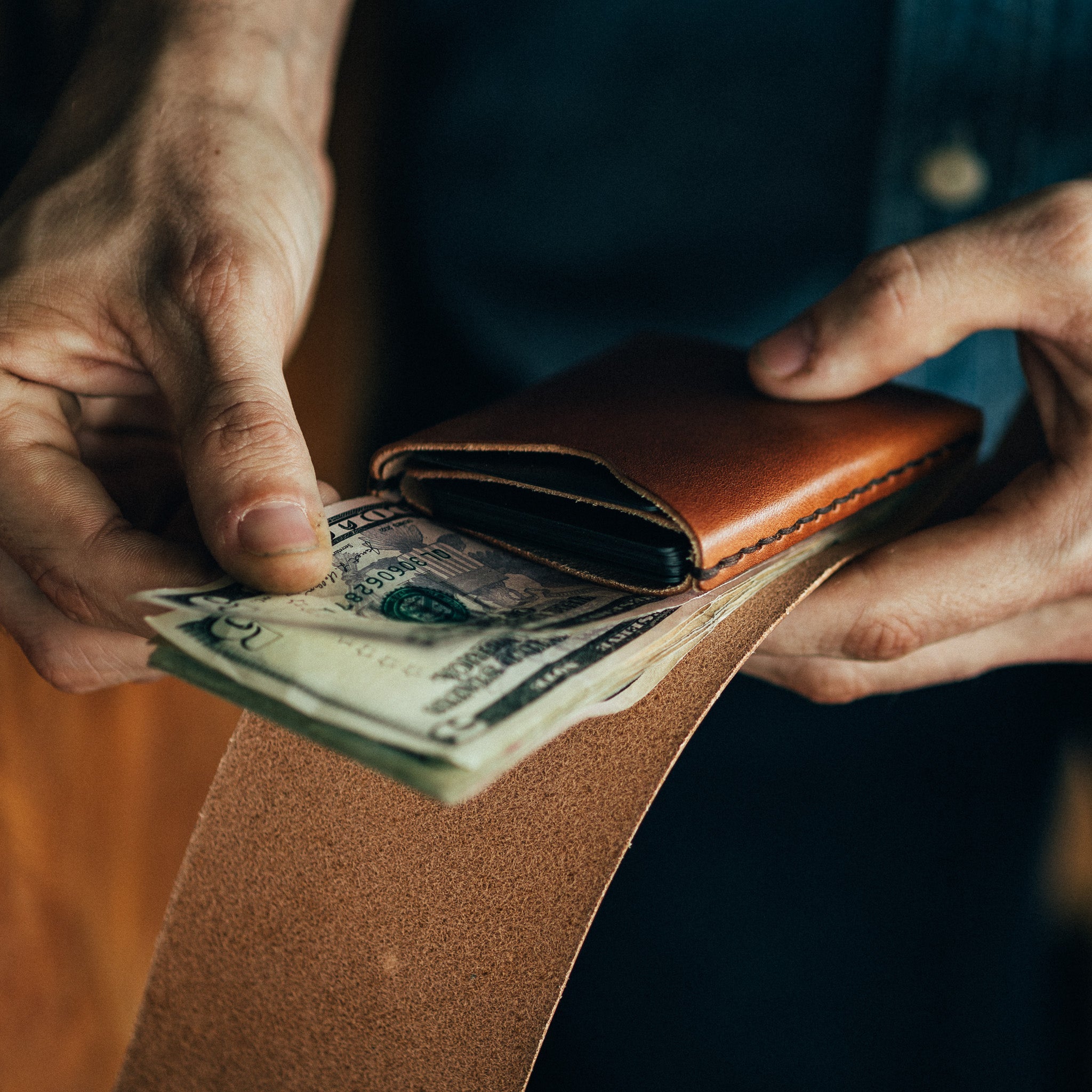
Organize bills by denomination with the largest bills in the back and smallest bills most accessible. This positioning protects valuable currency while making it easy to grab appropriate bills for small purchases without exposing your entire cash supply.
Face all bills in the same direction - all portraits up and facing the same way. This isn't just aesthetics; uniform orientation allows you to count money quickly by fanning bills without sorting. When you receive change, take the extra second to orient new bills correctly before inserting them.
Most quality leather wallets have a dedicated cash compartment. The proper technique is folding bills once lengthwise, then sliding them into the slot without additional creasing. Never mix coins with bills - the metal damages leather and creates unnecessary bulk. Carry a separate coin holder if you regularly handle change.
The Emergency Cash Strategy
Smart wallet organization includes an emergency backup. Hide a larger bill (a twenty or fifty) in a hidden slot, behind a card in a rarely-used compartment, or in a dedicated secret pocket if your wallet design includes one. This emergency cash serves when your cards fail, whether due to technical issues, loss, or unexpected circumstances.
The key is treating emergency cash as truly separate from daily spending money. Replace it immediately if you must use it, and don't casually dip into it for convenience purchases. This discipline ensures you always have a backup when genuinely needed.
Receipts and Business Cards: Temporary Storage Solutions
Receipts and collected business cards represent temporary items that shouldn't become permanent residents of your wallet. Managing these flowing elements is crucial to maintaining organization.
The Receipt Problem
Establish a hard rule: receipts never stay in your wallet overnight. Each evening, remove all receipts. Ones needed for expense reports, returns, or record-keeping get photographed with your phone, then filed in a designated envelope or folder at home. Unnecessary receipts go directly to recycling.
Some people need receipts for business expense tracking or budget monitoring. For these situations, create a temporary holding system outside your wallet. A small envelope in your bag or car serves as a staging area for receipts until you process them properly at home or office. This prevents the receipt buildup that destroys wallet organization and demonstrates solid understanding of how to organize your wallet long-term.
Managing Business Cards Efficiently
When someone hands you their business card, input the contact information into your phone immediately if possible, or as soon as the interaction ends. Once digitized, the physical card serves no purpose and should be discarded. This real-time processing prevents the accumulation of business cards that you'll forget about within weeks.
For your own cards to distribute, keep only three to five in your wallet at any time. More than this creates bulk and suggests poor planning. Replenish your supply regularly, but resist the temptation to carry your entire box. If you attend an event where you'll distribute many cards, bring extra cards in a separate card case rather than stuffing your wallet.
Choosing the Right Wallet Design for Organization
The physical wallet itself significantly impacts how successfully you can organize its contents. Different designs support different organizational approaches, and matching your wallet style to your needs is part of mastering how to organize your wallet.
Wallet Styles and Organization Features
Bifolds offer traditional compartments with dedicated spaces for cash, multiple card slots, and often a clear ID window. They work well for people who carry moderate amounts of both cards and cash. The two-fold design keeps everything accessible while maintaining a relatively slim profile when properly managed.
Cardholders provide minimal slots - typically two to six card positions - that force organizational discipline. If you're committed to minimalist carry, a cardholder's limited capacity becomes an advantage. You literally cannot overstuff it, so you maintain organization by necessity.
Travel wallets feature specialized compartments for passports, boarding passes, travel documents, and multiple currencies. These larger formats suit frequent travelers who need to organize more complex sets of items, though they're too bulky for daily urban use.
The best way to organize credit cards varies by wallet type, but the underlying principle remains constant: each item needs a specific, consistent home.
Material Matters for Organization
Beyond design, material quality determines how well a wallet maintains organization over time. Full-grain leather holds its shape and keeps card slots tight, preventing cards from sliding out unexpectedly. Quality stitching ensures compartments don't collapse or lose definition as the wallet ages.
Premium leather accessories made from full-grain leather actually improve with use, developing a patina while maintaining structural integrity. Cheaper wallets made from bonded leather or synthetic materials lose shape quickly, allowing cards to migrate between compartments and defeating any organizational system you establish. When learning how to organize your wallet, starting with quality construction provides the foundation for success.
Creating and Maintaining Your Organization System
Organization isn't a one-time achievement; it's an ongoing practice. Establishing rituals for wallet maintenance ensures your system persists rather than degrading back into chaos.
The Weekly Wallet Refresh Ritual
Designate one time each week - Sunday evening works well for most people - for a five-minute wallet refresh. Empty your wallet completely and sort contents into keep, digitize, and discard piles. Remove all receipts, outdated cards, and accumulated debris. Wipe down the interior with a clean, slightly damp cloth to remove pocket lint and dust.
Examine each card you're keeping. Is it still needed? Is it damaged or wearing out? Should you request a replacement? Verify you have all essential cards and haven't misplaced anything. Then rebuild your wallet according to your established system - frequency-based placement, color grouping, whatever method you've chosen for the best way to organize credit cards in your specific context.
This weekly ritual takes just minutes but prevents the slow drift toward disorganization that occurs naturally with daily use. It's far easier to maintain organization than to repeatedly start from scratch.
Month-End Deep Clean
Once per month, conduct a deeper audit. Question whether your current organization system is still serving you effectively. Have your spending patterns changed? Are you using different cards more frequently now? Does your wallet need to accommodate new categories of items?
This monthly review is also the time for leather conditioning if needed. Apply a small amount of leather conditioner to keep your full-grain leather wallet supple and prevent cracking. A well-maintained wallet not only lasts longer but also maintains the tight slots and defined compartments that make organization possible.
Digital Solutions to Complement Physical Organization
Physical organization works best when complemented by digital tools that reduce what you need to carry in the first place.
Mobile Payment Integration
Add your most-used cards to Apple Pay, Google Pay, or Samsung Pay. This reduces how often you need to physically extract cards from your wallet, decreasing wear and making the best way to organize credit cards partially a matter of keeping them safely stored rather than constantly accessing them. Digital wallets serve as a practical backup if you lose your physical wallet or forget it at home.
Contact and Loyalty Card Apps
Nearly every major retailer now offers an app that stores your loyalty card digitally, accessible by phone number or app barcode. Download these apps and remove the corresponding physical cards from your wallet. The same applies to gym memberships, library cards, and similar items that don't need to be physical cards anymore.
For business card management, apps like CamCard or HiHello scan business cards and automatically extract contact information. This eliminates the need to manually input data and provides a searchable database of professional contacts that's far more useful than a stack of physical cards.
Understanding how to organize your wallet in the modern context means recognizing that the best solution is often not carrying something in the first place. Digital alternatives reduce physical bulk while maintaining or improving accessibility.
Common Organization Mistakes to Avoid
Even with good intentions, certain habits undermine wallet organization:
Overstuffing Beyond Capacity: Your wallet has a designed capacity. Exceeding it stretches card slots, makes access difficult, and creates bulk. If you consistently need more space than your wallet provides, you need a larger wallet or fewer items, not a system of forcing things in.
No Designated Spot for Each Item: Random placement where you put cards in whatever slot is available defeats organization entirely. Each card must have its specific home.
Inconsistent System That Changes Daily: Your organization system should be consistent enough that you can access items without looking. If card positions change daily, you'll always be searching.
Keeping Damaged or Expired Cards: Regular audits should catch these. Damaged cards need replacement. Expired cards need removal. Don't let dead weight occupy space.
Neglecting Regular Maintenance: The weekly refresh and monthly deep clean aren't optional if you want lasting organization. Skipping maintenance allows chaos to return gradually until you're back where you started.
Conclusion and Next Steps
Mastering how to organize your wallet creates subtle but meaningful improvements in daily life. You save time, protect your belongings, and project competence through a simple organized system. The best way to organize credit cards and cash is the method you'll actually maintain consistently - whether that's frequency-based placement, color grouping, or another approach that fits your mind.
Start by auditing your current wallet contents and purging ruthlessly. Establish clear placement rules for what remains. Implement the weekly refresh ritual to prevent backsliding. Within a few weeks, accessing the right card becomes automatic, and you'll wonder how you tolerated the chaos before.
Quality organization deserves quality materials. Explore handcrafted leather wallets built with structured compartments that maintain their shape and support your organizational system for decades. If you have questions about choosing the right wallet design for your specific needs or want advice on customization options, please contact us for personalized guidance.