Oil Absorption Rates: How Different Leathers Accept Conditioning
Not all leather drinks up conditioning oil the same way. Some hides soak up treatment like desert sand after rain, while others resist it like a freshly waxed car. Understanding these differences prevents wasted product, uneven finishes, and the frustration of watching expensive conditioner sit on the surface instead of penetrating where it's needed.
The leather oil absorption rate depends on several factors: tanning method, leather grade, surface treatment, and the hide's natural porosity. Lost Dutchman Leather products use full-grain leather specifically because it develops the most authentic patina through controlled oil absorption over time.
The Science Behind Leather Porosity
Leather is skin - preserved and processed, but still organic material with a cellular structure. The collagen fibers that give leather its strength also create microscopic spaces between them. These gaps determine how readily the material accepts oils and conditioners.
Tanning Impact on Porosity
During the tanning process, chemicals or natural tannins bind to these collagen fibers. Vegetable-tanned leather maintains more of its natural structure, leaving larger spaces between fibers. Chrome-tanned leather gets more compact during processing, reducing pore size and slowing absorption.
The surface finish adds another layer of complexity. A completely untreated full-grain surface absorbs oils quickly. Apply a protective coating or heavy dye, and absorption drops dramatically.
Full-Grain Leather: The Gold Standard for Absorption
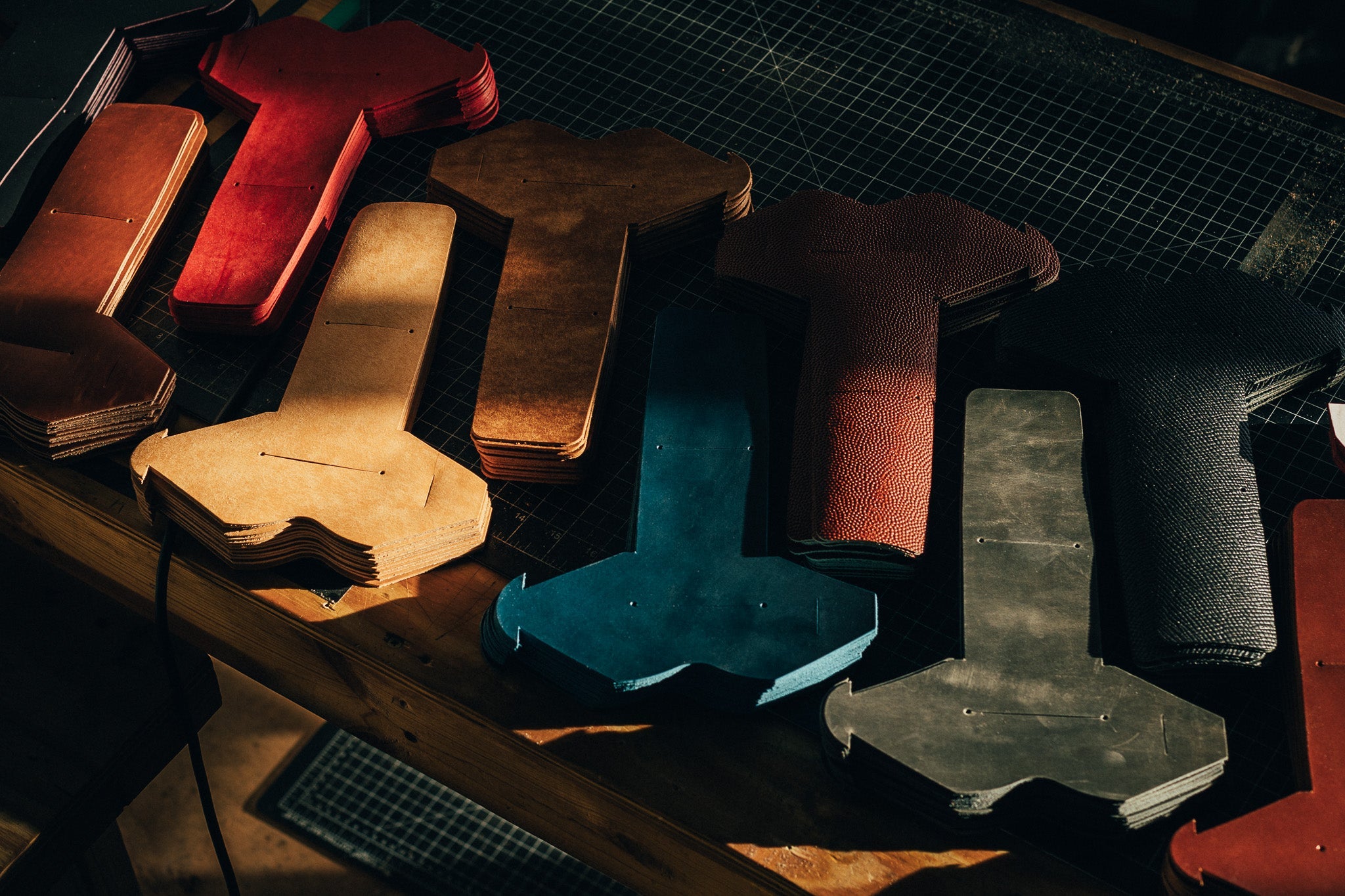
Full-grain leather retains the hide's original surface, complete with natural grain patterns and pores. Nothing's been sanded away or corrected. This preservation of the natural structure creates the most balanced leather oil absorption profile.
Absorption Characteristics
-
Moderate initial uptake (10-15 minutes to penetrate)
-
Even distribution across the surface
-
Develops rich patina as oils oxidize within the fiber structure
-
Requires conditioning every 3-6 months depending on use
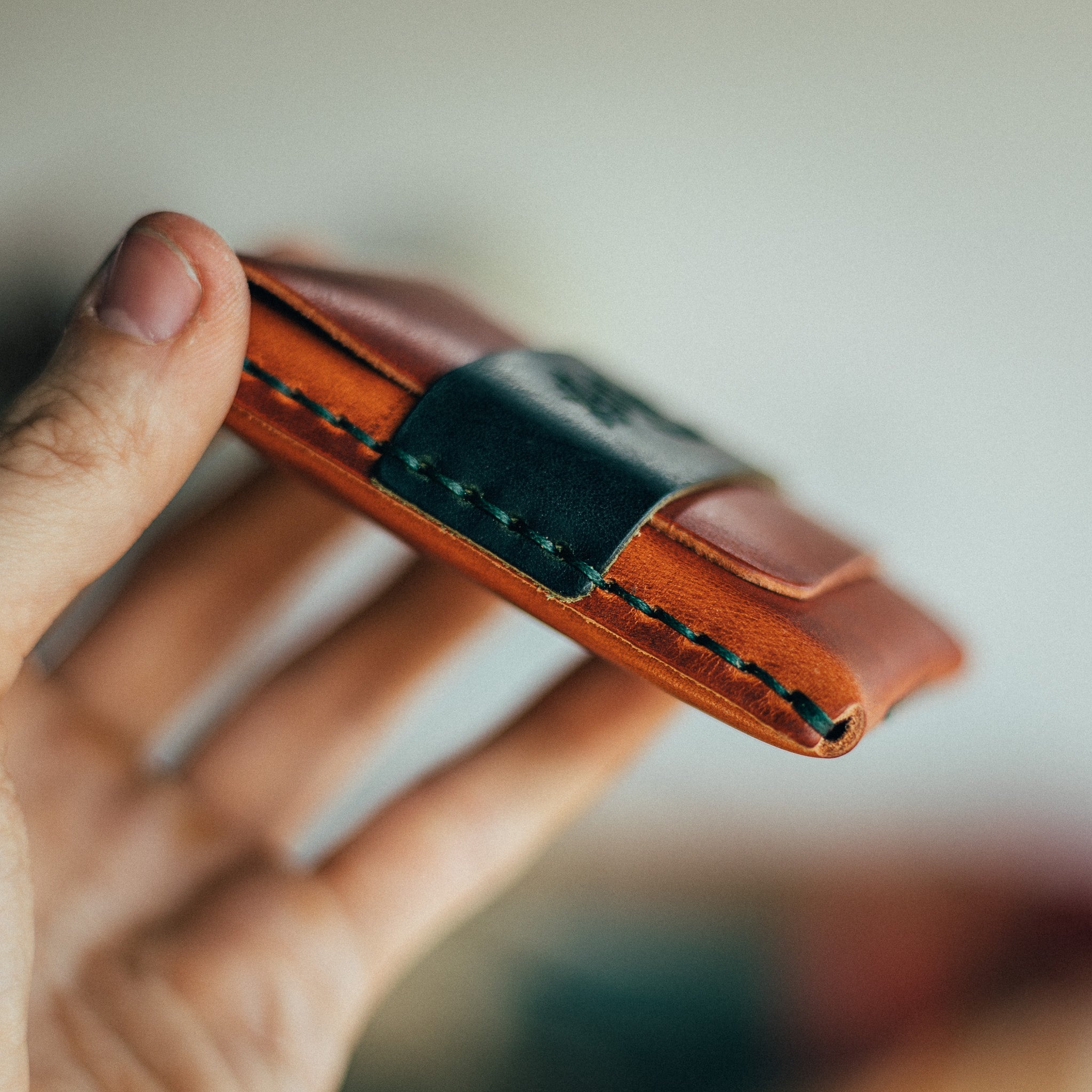
The natural oils in full-grain leather gradually migrate to the surface and evaporate. Regular conditioning replaces these oils, maintaining flexibility and preventing cracks. Quality leather wallets showcase how full-grain leather ages when properly maintained - darkening evenly and developing character marks that tell the story of daily carry.
Breaking In New Leather
Full-grain vegetable-tanned leather absorbs oils fastest when new because tanneries don't add heavy finishing layers. After the first few conditioning cycles, the leather reaches equilibrium. It'll still accept treatment, but more slowly as the fiber structure fills with oils.
Top-Grain Leather: Modified Absorption
Top-grain leather starts as full-grain but gets sanded to remove imperfections. This process cuts away the tightest fiber layer - the part that naturally regulates absorption. Manufacturers then apply pigmented finishes to create uniform color and texture.
Top-Grain Absorption Patterns
-
Surface coating blocks most direct penetration
-
Requires 30-60 minutes for oils to work through finish
-
Uneven absorption creates blotchy appearance if over-applied
-
Needs conditioning less frequently (every 6-12 months)
The sanding creates a more porous subsurface layer, but the protective coating acts as a barrier. Think of it like painting a fence - the wood underneath might be thirsty, but the paint layer controls what gets through.
When conditioning top-grain leather, less is more. Apply a thin layer and give it time to work through the finish. Heavy application just sits on the surface, attracting dirt and creating a greasy feel.
Genuine Leather: Unpredictable Absorption
"Genuine leather" is a grade designation, not a quality marker. It typically refers to split leather - the lower layers separated from the top grain. These layers lack the tight fiber structure of the outer hide.
Absorption Challenges
-
Highly variable depending on processing
-
Often absorbs too quickly, leading to oversaturation
-
May develop dark spots or uneven coloring
-
Synthetic coatings can block absorption entirely
Split leather gets heavily processed to make it usable. Manufacturers might add polyurethane coatings, emboss fake grain patterns, or bond multiple layers together. Each treatment changes absorption rates unpredictably.
Some genuine leather products absorb conditioner so rapidly they become oversaturated before the oil can distribute evenly. Others have such thick synthetic coatings that conditioning does nothing except make the surface slippery.
Vegetable-Tanned vs. Chrome-Tanned: The Absorption Divide
The tanning method creates the biggest difference in how leather accepts conditioning oils through different leather treatment methods.
Vegetable-Tanned Characteristics
-
Uses natural tannins from tree bark, leaves, and plant matter
-
Creates larger spaces between collagen fibers
-
Absorbs oils readily and evenly
-
Develops warm honey to deep brown patina
-
Requires regular conditioning to prevent drying
Chrome-Tanned Characteristics
-
Uses chromium salts for rapid processing
-
Compresses fiber structure more tightly
-
Resists oil absorption initially
-
Maintains original color longer
-
Needs less frequent conditioning
Vegetable tanning takes weeks or months. The slow process allows tannins to bind gradually without compressing the leather's structure. Chrome tanning happens in hours, using chemicals that bind aggressively and shrink the spaces between fibers.
For everyday carry items like card holders, vegetable-tanned leather's absorption properties create that sought-after patina. The leather darkens where hands touch it most, creating natural wear patterns that chrome-tanned leather can't replicate.
Oil Type Matters: Matching Conditioner to Leather
The conditioning product itself affects leather oil absorption rates. Different oils have different molecular sizes and viscosities.
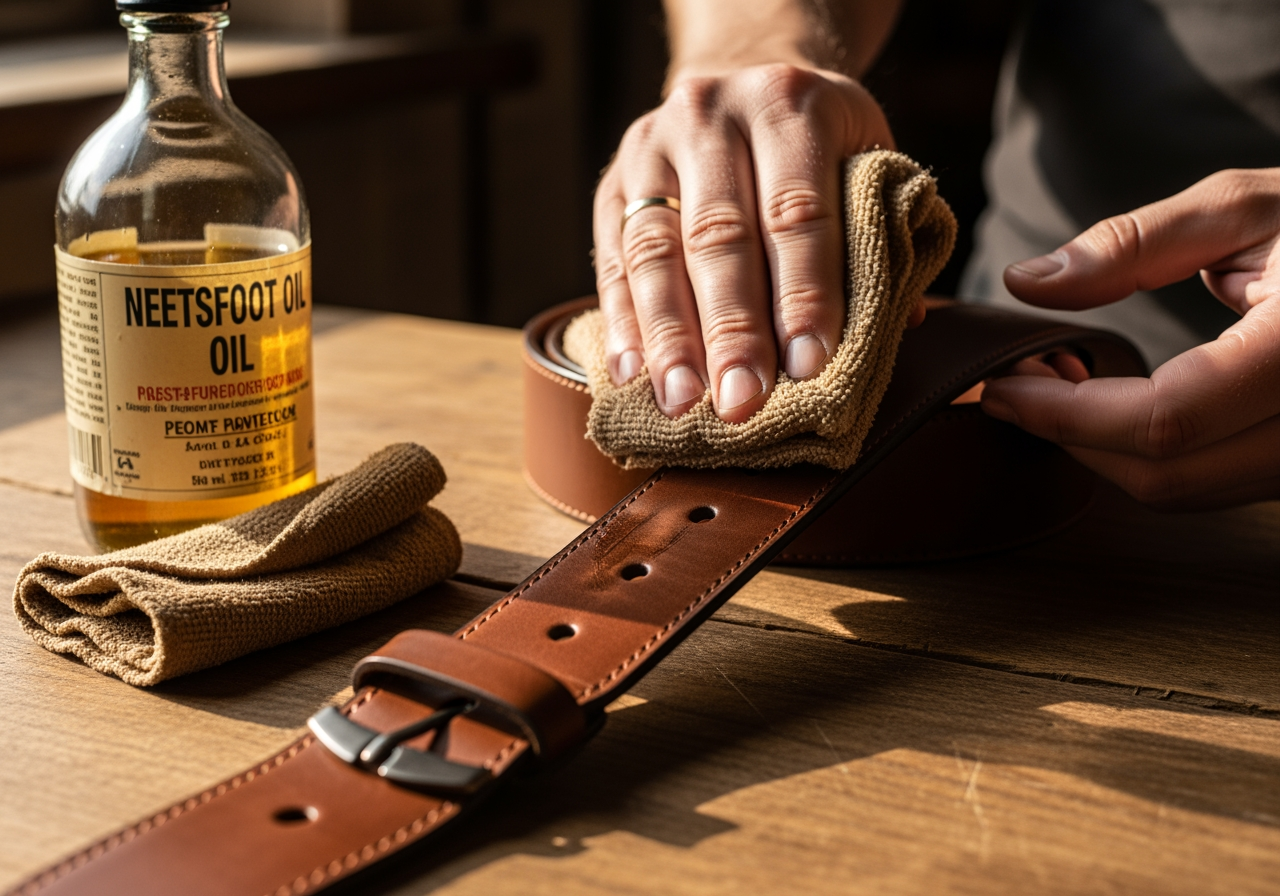
Neatsfoot Oil
-
Small molecules penetrate deeply
-
Absorbs quickly (5-10 minutes)
-
Can oversaturate if over-applied
-
Best for vegetable-tanned leather
Mink Oil
-
Medium-weight molecules
-
Moderate absorption (15-20 minutes)
-
Adds water resistance
-
Works well on most leather types
Lanolin-Based Products
-
Large molecules stay near surface
-
Slow absorption (30-60 minutes)
-
Creates protective barrier
-
Ideal for finished leathers
Commercial Conditioners
-
Variable molecular sizes
-
Often include penetrating agents
-
Absorption depends on formula
-
May contain silicones that block pores
Thin oils like neatsfoot compound penetrate faster but offer less surface protection. Thick balms take longer to absorb but create weather-resistant barriers. The leather type should determine which product to use.
Testing Absorption: The Water Drop Method
Before conditioning any leather item, test its current absorption rate. This prevents over-conditioning and helps gauge how much product to apply.
How to Test
Place a small water droplet on an inconspicuous area. Watch what happens:
Absorbs in under 3 seconds: Leather is very dry, needs conditioning urgently, will accept oil readily. Apply thin coats to prevent oversaturation.
Absorbs in 3-10 seconds: Leather is moderately dry, ready for conditioning. Standard application works. Normal maintenance cycle.
Beads up or takes 10+ seconds: Leather is well-conditioned or has a heavy finish. Doesn't need treatment yet. Additional oil will just sit on the surface. Check again in 2-3 months.
This simple test works because water and oil behave similarly in the leather's fiber structure. If water can't penetrate, oil won't either.
Factors That Slow Absorption
Several conditions reduce leather's ability to accept conditioning oils:
Cold temperatures: Leather fibers contract in cold, closing pores and slowing absorption. Condition leather at room temperature (65-75°F) for best results.
Previous oversaturation: Leather already full of oils can't accept more. The fiber structure has finite capacity.
Age and oxidation: Old leather develops a surface crust as oils oxidize. Light cleaning before conditioning helps.
Dye and pigment layers: Heavy coloring agents fill pores and block penetration.
Waxes and sealants: Protective treatments intentionally reduce absorption to add water resistance.
Items like bifold wallets carried daily in warm pockets absorb conditioning oils faster than belts exposed to cold weather. Context matters.
Signs of Over-Conditioning
More isn't better. Leather oversaturated with oils loses structural integrity and develops problems:
-
Darkening beyond normal patina: Excessive oils oxidize to near-black
-
Sticky or greasy surface: Oils can't penetrate further
-
Weakened stitching: Thread absorbs oils and loses strength
-
Stretched or loose leather: Over-saturation reduces stiffness
-
Mold growth: Excess oils provide food for mildew
Full-grain leather has natural limits to leather oil absorption. Once the fiber structure fills, additional product just sits on the surface. This surface oil attracts dirt, creates uneven coloring, and can transfer to clothing.
Recovery From Over-Conditioning
If over-conditioning occurs, the leather needs time to oxidize and release excess oils. Place the item in a warm, dry location with good airflow. Don't use it for several days. The oils will gradually evaporate or migrate deeper into the fiber structure.
Optimal Conditioning Frequency by Leather Type
Different leathers need different maintenance schedules based on their absorption characteristics and appropriate leather treatment methods.
Full-Grain Vegetable-Tanned
-
Every 3-4 months for daily carry items
-
Every 6-8 months for occasional use
-
More frequently in dry climates
Chrome-Tanned/Top-Grain
-
Every 6-8 months for regular use
-
Annually for items with a protective finish
-
May not need conditioning if heavily coated
Pull-Up Leather
-
Every 4-6 months
-
Already contains high oil content
-
Needs less product per application
Finished/Coated Leather
-
Annually or as-needed
-
Focus on cleaning rather than conditioning
-
Heavy conditioning can damage the finish
Rather than following a rigid schedule, condition based on the water drop test results. Leather exposed to sun, heat, and friction dries faster. A belt worn daily in summer needs more frequent treatment than one worn occasionally in climate-controlled environments.
Application Techniques for Different Absorption Rates
Matching the application method to the absorption rate prevents waste and ensures even treatment.
Fast-Absorbing Leather
-
Apply thin coats with a soft cloth
-
Work in small sections
-
Reapply to areas that absorb completely within minutes
-
Buff excess after 15-20 minutes
Slow-Absorbing Leather
-
Use minimal product
-
Apply with fingertips for better control
-
Let sit 30-60 minutes before buffing
-
Don't reapply until fully absorbed
Unknown or Unpredictable Leather
-
Test a small hidden area first
-
Start with a very light application
-
Wait 24 hours to assess results
-
Proceed cautiously based on test results
Warm leather absorbs faster. Some craftsmen warm conditioning oil slightly (never hot) to reduce viscosity and improve penetration. This works well for thick balms on cold leather, but it isn't necessary for thin oils or room-temperature leather.
How Use Patterns Affect Absorption
Where and how leather gets used changes its absorption characteristics over time.
High-Contact Areas
Spots touched frequently by hands - wallet edges, belt holes - absorb body oils constantly. These areas need less conditioning because they're already receiving oils from skin contact. They'll also resist applied conditioner because the fiber structure is saturated.
Friction Zones
Areas that rub against other materials - belt loops, pocket edges - lose oils faster through abrasion. The mechanical action strips away surface oils and can damage the grain layer. These spots need more frequent attention.
Folded Sections
Creases in bifolds and card holders stress the fiber structure. The repeated flexing pushes oils out of the fold line. These areas benefit from targeted conditioning to maintain flexibility and prevent cracking.
Sun-Exposed Surfaces
UV radiation breaks down leather oils and the collagen structure itself. Sun-damaged leather becomes brittle and loses absorption capacity. It may need multiple light conditioning treatments to restore flexibility.
The Patina Factor: Absorption Creates Character
The way leather absorbs oils over time creates patina - the aged appearance that makes quality leather goods distinctive. This isn't damage; it's the material developing character through use.
How Patina Develops
Oils absorbed into leather oxidize slowly when exposed to air and UV light. This oxidation darkens the leather gradually. Areas that absorb more oils - either from conditioning or hand contact - darken faster. The result is natural shading that maps the item's use history.
Vegetable-tanned full-grain leather develops the richest patina because its absorption properties allow even oil distribution while maintaining the natural grain. Chrome-tanned leather resists this process, maintaining its original color longer but developing less character.
Quality wallets showcase this transformation. A new wallet in natural vegetable-tanned leather starts pale tan. After months of daily carry and regular conditioning, it develops warm honey tones with darker edges where hands grip it most. After years, it reaches deep tobacco brown with distinctive wear patterns.
When Leather Won't Absorb: Troubleshooting
Sometimes leather refuses conditioning despite appearing dry. Several issues cause this:
Common Absorption Barriers
Heavy finish coating: Manufacturers apply thick sealants that block absorption. Light sanding (220-grit) can open pores, but this removes the finish permanently.
Silicone contamination: Previous treatment with silicone-based products creates an impermeable layer. Requires professional cleaning to remove.
Severe drying: Extremely desiccated leather develops a hard surface crust. Multiple light conditioning treatments over weeks may gradually restore absorption.
Bonded leather: Material made from leather scraps and polyurethane can't absorb oils. The synthetic binder blocks penetration.
Wrong product: Using wax-based products on leather that needs oil, or vice versa, creates barriers instead of conditioning.
If quality full-grain leather won't absorb conditioner, the issue is usually surface contamination or previous treatment buildup. Clean the leather with a dedicated leather cleaner, let it dry completely, then try conditioning again.
Leather Accessories: Special Absorption Considerations
Different leather goods have unique conditioning needs based on their construction and use.
Wallets and Card Holders
Thin leather absorbs faster than thick leather. The multiple layers in a bifold may need conditioning on both exterior and interior surfaces. Edge finishing affects how edges absorb compared to faces.
Belts
Thick leather belts absorb slowly. The side worn against clothing needs less conditioning than the exposed side. Buckle holes are stress points requiring extra attention.
Small Accessories
Items like keyrings and lanyards get heavy wear relative to their size. Metal hardware contact points may need more frequent treatment.
Home Goods
Items like leather coasters or catch-all trays need minimal conditioning since they don't flex or experience friction. Annual treatment maintains appearance without oversaturating.
Stitched leather goods require care around thread. Conditioning oils can weaken stitching if over-applied. Apply conditioner to leather surfaces, not directly to seams.
Conclusion
Leather oil absorption isn't one-size-fits-all. Full-grain vegetable-tanned leather accepts conditioning readily and develops rich patina through controlled oil uptake. Chrome-tanned and finished leathers resist absorption, requiring less frequent treatment and lighter application. Understanding these differences prevents over-conditioning, ensures even treatment, and helps quality leather goods age gracefully.
The water drop test reveals when leather needs conditioning better than any fixed schedule. Fast absorption signals dry leather ready for treatment. Slow absorption or beading indicates the material is already well-maintained. Matching conditioning products and leather treatment methods to absorption rates - thin oils for fast-absorbing vegetable-tanned leather, minimal balms for slow-absorbing finished leather - produces the best results.
Quality leather accessories use full-grain hides specifically for their balanced absorption properties. This allows the leather to accept conditioning when needed while developing authentic patina through daily use. The result is gear that improves with age rather than deteriorating - provided it receives appropriate care based on its natural absorption characteristics.
For questions about conditioning specific leather items or maintaining products with optimal leather treatment methods, contact us for guidance tailored to particular leather types and use conditions.