Card Ejection Issues: Why Cards Fall Out and How to Fix It
Few things frustrate wallet users more than reaching for a credit card only to find it's slipped halfway out - or worse, fallen onto the ground. Problems with cards falling out wallets plague both cheap gas station wallets and premium leather goods alike, but the causes and solutions differ dramatically depending on construction quality, material choice, and how the wallet ages over time.
Understanding why cards escape their designated slots requires examining the mechanics of leather behavior, pocket pressure, and design flaws that plague modern wallets. More importantly, finding an effective wallet card ejection fix often demands different approaches than simply buying a replacement.
The Physics Behind Card Ejection
Cards don't fall out randomly. They escape when the force pushing them outward exceeds the friction holding them in place.
Understanding Compression and Retention
Wallet card slots create retention through compression - the leather or fabric grips the card's surface on both sides. When this grip weakens or external forces increase, ejection occurs. Temperature changes cause leather to expand and contract, altering the tension in card slots throughout the day.
Body heat and moisture from sitting create additional variables. A wallet in a back pocket experiences constant pressure that can gradually deform the leather, loosening card slots over months or years. Front pocket carry subjects wallets to different stresses - repeated bending as you sit and stand, plus friction from keys or phones in the same pocket.
Card Material Variables
The card material itself matters too. Embossed cards with raised numbers create air gaps that reduce surface contact with the wallet's interior. Metal credit cards, increasingly common from premium banking services, weigh significantly more than plastic and can stretch leather slots faster.
Common Causes of Card Slot Failure
Break-In Period Problems
Break-in period problems affect new wallets differently from aged ones. Stiff, unbroken-in leather grips cards firmly - sometimes too firmly. But once the leather softens through use, poorly designed wallets lose their retention quickly. Quality full-grain leather wallets develop a controlled patina that maintains structural integrity while softening to the touch.
Overstuffing Issues
Overstuffing remains the primary user-created cause of card ejection. Each card slot has an optimal capacity - usually one to two cards maximum. Forcing three or four cards into a single pocket stretches the leather permanently. The material doesn't spring back to its original shape once overstretched, creating loose pockets that can't retain even a single card properly.
Low-Quality Leather Problems
Low-quality leather compounds these issues. Corrected-grain and bonded leather products lack the fiber structure necessary to maintain tension over time. These materials use a polyurethane coating on lower-grade leather or leather scraps, which peels and cracks with use. Once the coating fails, the underlying material offers virtually no card retention.
Stitching Failures
Stitching failures create structural weaknesses that allow card slots to deform. When the thread breaks or stitching pulls through thin leather, the pocket loses its shape entirely. Hand-sewn saddle stitching, used in quality wallets like The Dutchman, creates a lock-stitch that holds even if one section breaks - machine stitching unravels completely once compromised.
Design Flaws
Design flaws plague many modern minimalist wallets. Vertical card slots that extend to the wallet's top edge provide no mechanical barrier to prevent cards from sliding upward. Horizontal slots with insufficient depth allow cards to pivot and escape. Some ultra-slim designs sacrifice retention entirely in pursuit of thinness, creating wallets that can't reliably hold cards from day one.
Material Science: How Leather Responds to Stress
Full-Grain Leather Properties
Full-grain leather contains dense fiber structures that compress under pressure but resist permanent deformation. When properly tanned and finished, these fibers slide past each other slightly under stress, then return to their original position. This property, called elastic memory, determines how well a leather wallet maintains card retention over years of use.
Tanning Methods
Vegetable-tanned leather develops this quality more reliably than chrome-tanned alternatives. The tanning process affects the leather's cellular structure at a molecular level. Vegetable tannins create cross-links between collagen fibers that remain flexible while providing strength. Chrome tanning produces softer leather faster, but with less structural integrity over time.
Optimal Leather Thickness
The leather's thickness plays a crucial role. Card slots constructed from leather under 1.5mm thick lack the body to maintain compression. Leather exceeding 2.5mm creates slots too stiff for comfortable card access. The optimal range - 1.8mm to 2.2mm - provides enough structure for retention while allowing the break-in process to soften the leather naturally.
Immediate Fixes for Loose Card Slots
Moisture Conditioning Method
Moisture conditioning can temporarily tighten leather that's become too dry. Apply a small amount of leather conditioner to the interior of the card slot, then immediately insert a card wrapped in plastic wrap. Let the wallet sit for 24 hours. The conditioner softens the leather slightly, allowing it to mold around the card shape more tightly as it dries.
This wallet card ejection fix works once or twice, but won't solve fundamental design or material problems. Overconditioned leather loses even more retention, so use this approach sparingly.
Strategic Card Placement
Strategic card placement exploits the remaining grip in partially worn slots. Place your most frequently used cards in the tightest slots. Embossed cards create more friction than smooth ones, so position them in looser pockets. Metal cards, despite their weight, can actually help - their rigidity prevents the pocket from collapsing.
Temporary Solutions
Temporary barriers like small pieces of paper folded behind cards increase friction. This crude solution works in emergencies but looks unprofessional and addresses symptoms rather than causes.
Rubber band reinforcement around the entire wallet prevents cards from escaping but defeats the purpose of having a designed card holder. If wrapping wallets with rubber bands regularly, the wallet has failed its primary function.
Long-Term Solutions and Preventive Measures
Proper Break-In Technique
Proper break-in prevents many issues with cards falling out wallet before they start. New leather wallets benefit from gradual loading. Start with two or three cards for the first week, allowing the leather to mold to their shape. Add additional cards slowly over the next month. This controlled break-in creates custom-fitted pockets that maintain retention far longer than immediately stuffing the wallet to capacity.
Regular Card Rotation
Regular rotation of card positions prevents uneven wear. Cards accessed frequently-usually primary credit cards and ID - wear their slots faster than rarely-used cards. Switching positions every few months distributes the wear across all pockets, extending the wallet's useful life.
Maintenance Conditioning
Maintenance conditioning keeps leather supple without oversoftening. Apply a thin coat of quality leather conditioner every three to four months, focusing on the exterior. Avoid getting conditioner inside card slots unless they've become uncomfortably stiff. Properly maintained full-grain leather wallets develop a rich patina while retaining structural properties.
Capacity Discipline
Capacity discipline matters more than any other factor. A card holder designed for four cards will fail if forced to hold six. Respect the design limitations. If needing to carry more cards, choose a bifold wallet with additional capacity rather than overstressing a minimalist design.
When to Repair vs. Replace
Professional Repair Options
Stitching failures on quality leather goods deserve professional repair. A skilled leather worker can re-stitch failed seams using the original holes, restoring the wallet's structural integrity. This repair costs $20-40 typically, but extends the life of a well-made wallet by years.
Reforming Stretched Slots
Stretched card slots on premium leather can sometimes be reformed. Leather workers can add internal reinforcement - thin strips of leather glued inside the pocket to reduce its interior dimensions. This wallet card ejection fix works best on vegetable-tanned leather that retains its fiber structure.
When Replacement Makes Sense
Wallets showing surface coating failure (peeling, cracking, or flaking) can't be meaningfully repaired. This damage indicates low-quality leather that will continue deteriorating. Replacement makes more economic sense than attempting repairs that won't last.
Delamination - where layers of bonded or corrected leather separate - signals complete structural failure. No repair will restore these wallets to functional condition.
Design Features That Prevent Ejection
Proper Slot Depth
Proper slot depth extends at least 5mm beyond the card's top edge when fully inserted. This extra depth creates a mechanical barrier that prevents cards from walking upward through normal pocket friction. Vertical card slots need even more depth - 7-10mm of extra material - since gravity works against retention in this orientation.
Strategic Stitching Placement
Strategic stitching placement creates compression points that grip cards without requiring excessively tight slots. Stitching that runs parallel to the card edge, positioned 2-3mm from the pocket opening, creates a slight lip that cards must overcome to escape. This subtle design feature dramatically improves retention without affecting access.
Quality Leather Selection
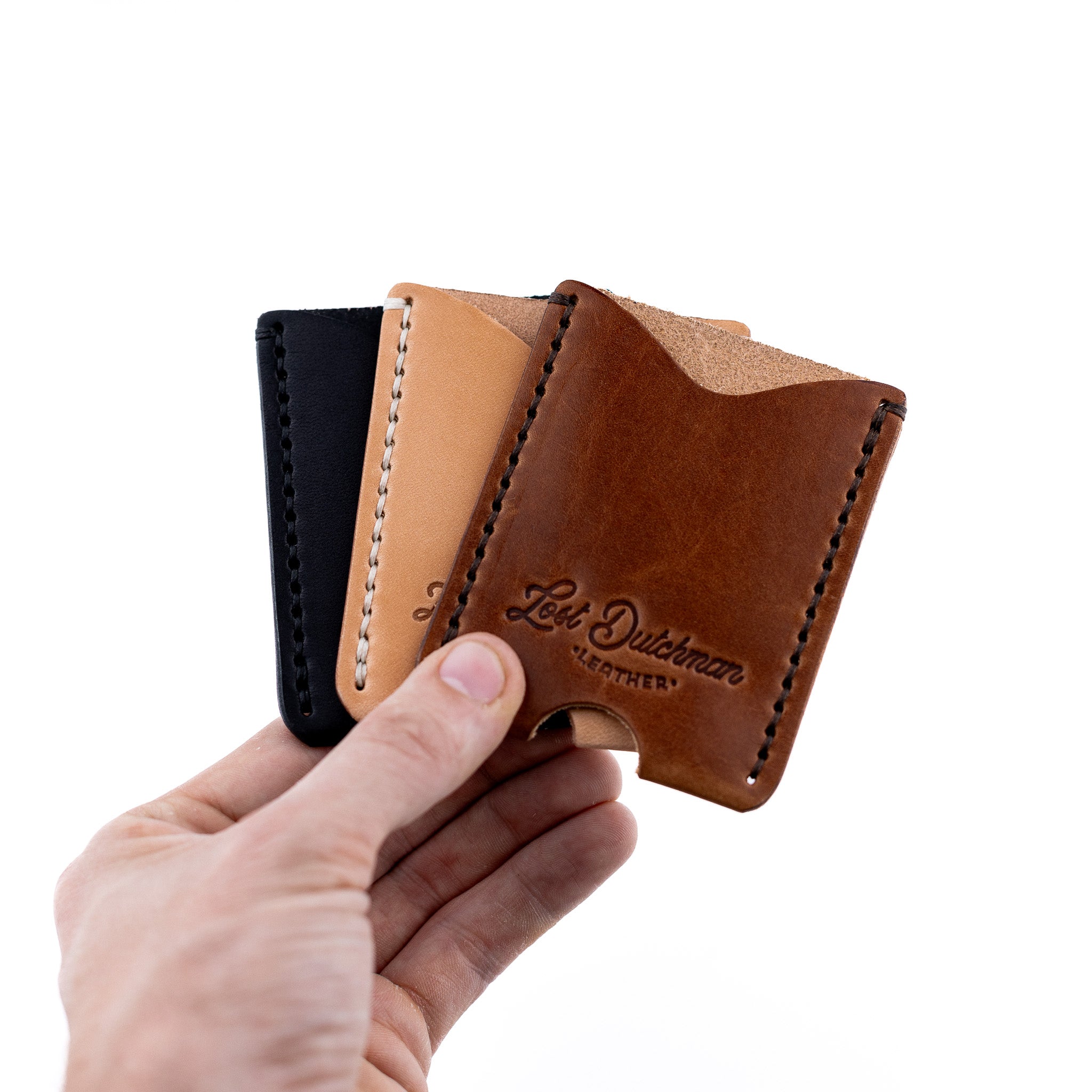
Leather selection determines long-term performance more than any other factor. Full-grain leather from quality tanneries maintains its fiber structure through years of daily use. The leather in products from Lost Dutchman Leather develops character through aging while retaining the structural properties necessary for reliable card retention.
Single-Piece Construction
Single-piece construction eliminates stitching failure points entirely. Designs like The Franklin Wallet use a single piece of leather folded to create card slots, with no stitching to fail. This approach trades some design flexibility for maximum durability and retention.
The Break-In Paradox
Initial Stiffness vs. Long-Term Performance
New leather wallets present a curious challenge - they grip cards so tightly that removal requires effort, yet users worry about future loosening. This initial stiffness actually indicates quality material that will age well.
The break-in process should soften the leather's surface while maintaining its structural density. Quality full-grain leather wallets achieve this through fiber compression rather than fiber breakdown. The surface fibers compact and polish through use, creating a smooth patina that allows easier card access while the underlying structure maintains its grip.
Cheap Leather Degradation
Cheap leather softens through surface coating breakdown and fiber deterioration. The wallet feels better initially, but loses retention rapidly as the material degrades. This explains why gas station wallets feel perfect for two months before problems with cards falling out wallet emerge - the material itself is failing, not just breaking in.
Environmental Factors and Card Retention
Temperature Cycling Effects
Temperature cycling affects leather dimensions measurably. A wallet left in a hot car can expand enough to loosen card slots noticeably. While the leather contracts again as it cools, repeated heat cycling accelerates the breakdown of the fiber structure.
Moisture Exposure
Moisture exposure creates more complex problems. Leather absorbs water vapor from humidity and body sweat, causing temporary expansion. As it dries, the leather should return to its original dimensions - but rapid drying causes uneven shrinkage that can permanently deform card slots.
Salt Damage
Salt from sweat creates particularly damaging conditions. Salt crystals that form as moisture evaporates can abrade leather fibers from the inside, gradually weakening the material's structure. Regular conditioning replaces natural oils that salt exposure depletes, maintaining the leather's resistance to this type of damage.
Card Characteristics That Affect Retention
Standard Card Dimensions
Standard credit cards measure 85.6mm × 53.98mm with a thickness of 0.76mm, but variations exist. Hotel key cards often run thinner - around 0.64mm - and slip out of slots sized for standard cards. Gift cards and store loyalty cards sometimes exceed standard dimensions, stretching pockets when forced into slots designed for regulation-sized cards.
Surface Texture Impact
Embossed numbers and logos create texture that increases friction against leather surfaces. Smooth cards - common with newer chip-and-tap designs - slide more easily through card slots. This explains why some cards stay put while others from the same wallet gradually work their way out.
Metal Card Weight
Metal credit cards weigh 15-18 grams compared to 5 grams for plastic cards. This three-fold weight increase creates constant downward pressure in vertical card slots and outward pressure in horizontal slots. Leather stretches faster under sustained load, so metal cards accelerate the wear that eventually causes ejection issues.
Conclusion
Problems with cards falling out wallet stem from a combination of material quality, design choices, and user habits. While cheap wallets fail quickly regardless of care, even premium leather goods require proper break-in, reasonable capacity limits, and basic maintenance to provide reliable long-term retention.
The right wallet card ejection fix depends entirely on the root cause. Stretched pockets in quality leather respond to conditioning and strategic card placement. Design flaws and material failures require replacement with better-constructed alternatives. Understanding the difference between leather that's breaking in properly and leather that's breaking down helps wallet users make informed decisions about repair versus replacement.
Quality construction matters more than any other factor. Hand-sewn full-grain leather wallets develop character through years of use while maintaining the structural integrity necessary to keep cards secure. The initial investment in properly constructed leather goods eliminates the recurring frustration of cards escaping their slots - and the recurring cost of replacing failed wallets every few months.
For questions about specific wallet designs or construction methods that prevent card ejection, contact us directly. Proper material selection and construction techniques solve these problems at the design stage, creating wallets that improve with age rather than deteriorating into unreliable card holders.