Belt Fit 101: Choosing the Right Size and Wearing It Properly
A proper belt is the anchor of your entire outfit, providing structure, support, and a clean line. Yet, finding the right fit for a quality full-grain leather belt is often misunderstood. Many people rely on their pant size, only to find the resulting belt is either too short or too long. This is where an expert eye, and a solid measuring tape, comes into play. Understanding how to choose belt size correctly avoids common pitfalls and ensures a perfect fit.
Full-grain leather belts are crafted to last decades, but even the finest materials can't fix a bad fit. A belt that's too tight stresses the leather and stitching, accelerating wear, while one that's too loose looks sloppy. This guide demystifies the process and ensures your investment fits perfectly from day one. Choosing a well-fitted, handcrafted belt is the first step toward lifelong style and reliability.
Understanding Belt Sizes
Belt sizes aren't always what they seem. You might assume your belt size is identical to your trouser waist size, but that's often not the case. Understanding how to choose belt size fundamentally starts with knowing the industry standard: the measurement from where the leather folds over the buckle to the middle hole of the belt.
Focusing on the middle hole is crucial because it gives you the ideal wiggle room. If your sizing is precise, the buckle prong will sit perfectly in the center hole, allowing you two holes for tightening and two holes for loosening. This balance ensures you never stress the leather unnecessarily, helping the belt maintain its intended shape and beautiful leather patina evenly over time.
How to Measure Your Belt Size Accurately
Forget what the label on your pants says; that number is often unreliable. A proper men's belt sizing chart approach requires an accurate measurement that applies universally.
The Best Measurement Method
The most accurate way to measure is by using a belt you already own that fits you well:
Lay it flat: Place your existing belt on a flat surface.
Measure the Anchor Point: Start your measurement from the inside edge of the buckle (where the leather wraps around the buckle post).
Measure to the Current Hole: Measure straight along the leather to the hole you use most often.
That measurement, in inches, is your perfect belt size. This method is flawless because it accounts for the exact way you wear your clothes and your buckle. If you don't have a well-fitting belt, measure comfortably through the belt loops of the trousers you'll wear most often, using a flexible tailor's tape. This practical approach works better than any generic men's belt sizing chart.
The careful craftsmanship put into belts is the same dedication found in specialized leather goods. For those who prefer a minimalist approach to everyday carry, understanding precise measurements also applies when choosing a sleek card holder for front-pocket convenience.
Converting Waist Size and Addressing Odd Sizes
If buying a belt for someone else or only having their pant waist size, you can use the industry standard conversion. While a universal men's belt sizing chart might give you a quick estimate, the reliable rule for how to choose belt size is simple: add 2 inches to the pant waist size. For example, if you wear size 34 pants, you should order a size 36 belt. This addition accounts for the girth of the trouser material and ensures the buckle lands on the middle hole.
Most quality belts are cut in even sizes (32, 34, 36, etc.). If your ideal measurement lands on an odd number, always round up to the next even size. It's far easier to have a leather worker punch an extra hole in a quality leather belt than it is to try and stretch one that's too short. This extra length provides flexibility without sacrificing the integrity of the leather.
The Quality Equation: Why Full-Grain Leather Belts Last Decades
Beyond sizing, the longevity of your belt is entirely determined by its material and construction. Mass-market belts are often made from bonded or "genuine" leather, which is essentially leather dust glued together, causing them to crack and split easily. Conversely, full-grain leather belts from Lost Dutchman Leather are cut from the thickest and strongest part of the hide.
This structural integrity allows the belt to mold to your body over time without breaking down, becoming incredibly comfortable while maintaining its strength. This same foundational quality is paramount in everyday carry pieces, from popular handmade wallets to specialized designs built for durability.
How to Wear Your Belt Properly
Choosing the right size is only half the battle; you also have to wear it correctly to achieve that polished, authoritative look.
Rules for a Polished Look
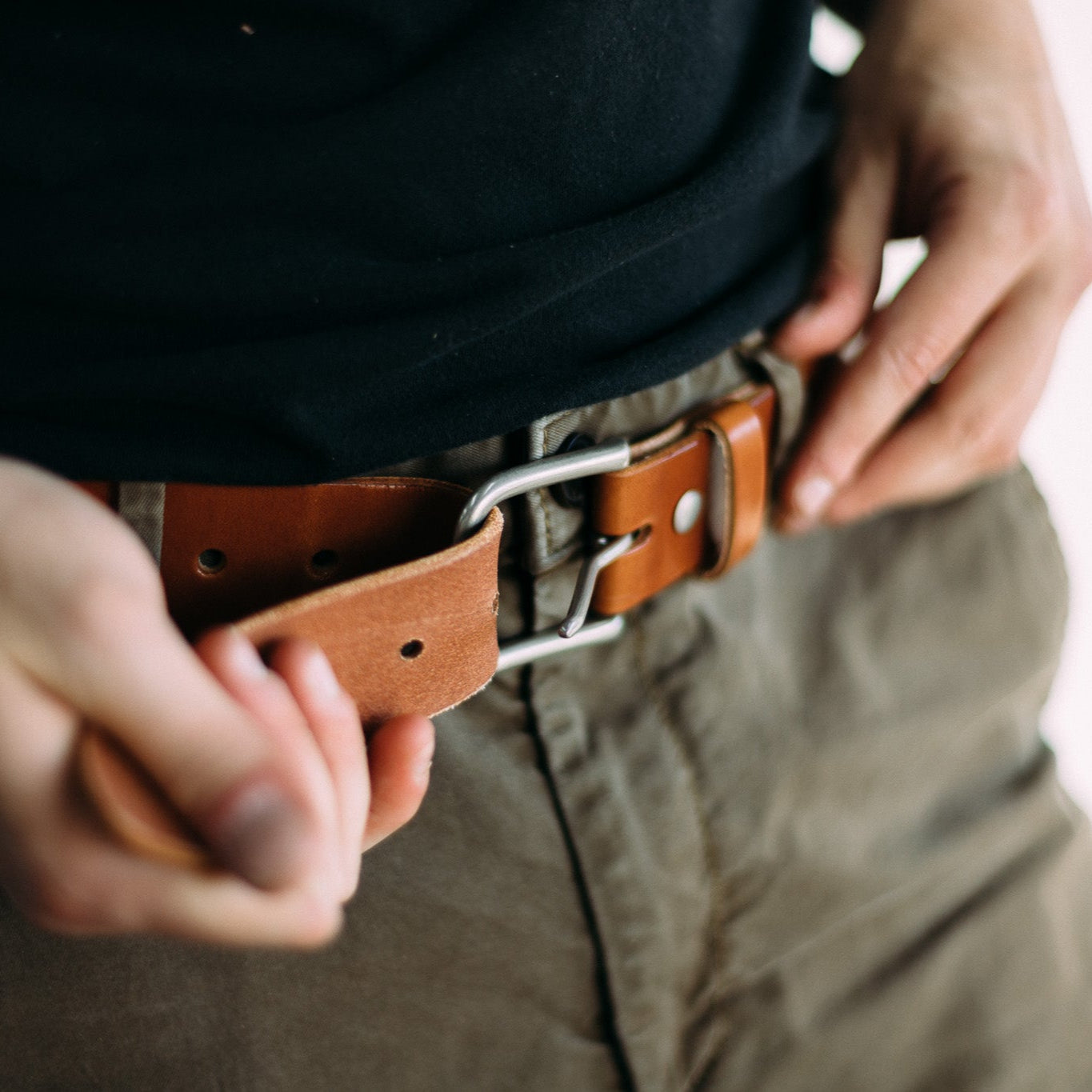
Middle Hole is King: Fasten your belt in the middle hole. This keeps the excess leather (the "tail") at a professional, manageable length.
Direction Matters: For men, belts are traditionally worn with the tail pointing to the left, threaded through the first belt loop.
Match Your Leather: For a clean, classic aesthetic, match the color of your belt to your shoes (e.g., a chestnut brown belt with brown loafers).
Consider the Belt Width: Wider belts (1.5" or more) are casual; narrower belts (1.25" and less) are formal. Essential full-grain leather belts offer a versatile width that performs well in most settings.
Think of your quality belt a bit like choosing the right frame for a picture. The picture (your outfit) is important, but the frame (the belt) ties all the elements together.
Leather Belt Care Tips
A full-grain leather belt is a lifetime investment, but like any premium tool, it needs basic maintenance. Proper leather belt care is essential for developing that coveted patina and preventing early cracks.
Simple Care and Storage
Condition Regularly: Use a high-quality leather conditioner every few months to keep the leather fibers supple. Think of conditioning as moisturizing your skin.
Store Properly: When you're not wearing your belt, avoid rolling it up tightly. Hang it vertically on a hook or lay it flat to prevent permanent stress marks. Similarly, keep your daily essentials organized with functional home and desk leather accessories, ensuring every piece of quality leather stays in top shape.
Keep it Clean: Wipe your belt down with a damp, soft cloth to remove surface dirt and dust.
A grandfather once had this old leather belt with beautiful, deep patina. Every crease told a story of a day worked or a long journey taken. He'd always say, "A good belt is like a good friend; it sticks with you through thick and thin, but you gotta check in on it every once in a while." That's the value of heirloom quality - it only gets better with the care you put into it.
Final Thoughts
Mastering how to choose belt size and knowing how to wear your belt properly makes a significant difference in your comfort, the look of your attire, and the lifespan of the belt itself. Take the time to measure accurately using the methods outlined rather than relying solely on a men's belt sizing chart, consider the guidelines on fit, and commit to basic leather belt care. A well-chosen and well-maintained full-grain leather belt will be a stylish and reliable companion for years to come.
Explore the full range of durable, handcrafted goods and discover a piece that will mold perfectly to your unique life. When you purchase quality leather items, you're not just buying a piece of leather; you're buying a lifetime of confidence. If you have any questions about custom sizing or leather maintenance, please don't hesitate to contact us.