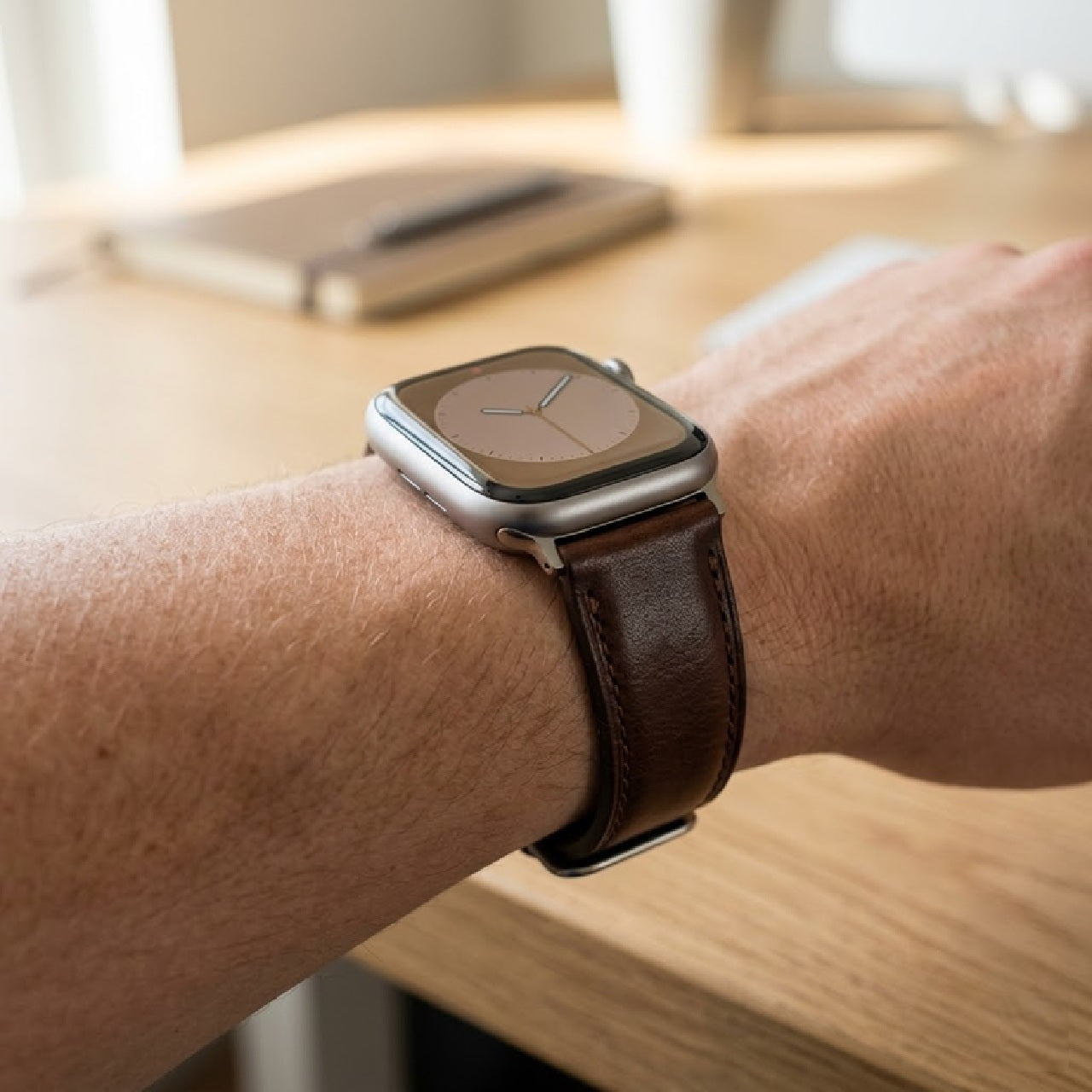
Sol Strap Watch Band Review: 2-Year Wear & Patina Development
A leather watch strap tells two stories. The first is about true craftsmanship. It's about how the material is cut, stitched, and finished.
The second story unfolds over months and years. The leather darkens, softens, and develops character marks that no factory can replicate.
The sol strap watch band has been on a daily-wear watch for 24 months. This leather watch strap review documents what actually happens when vegetable-tanned leather meets sweat, sun, and constant flexing.
What Sol Strap Promises vs. What It Delivers
Lost Dutchman Leather markets the Sol Strap as a minimal, durable watch band. It's cut from full-grain vegetable-tanned leather.
The design is incredibly simple. It uses two pieces of leather, hand-stitched edges, and basic hardware.
After two years, the core promise holds. The strap hasn't torn, the stitching remains intact, and the leather has developed the exact sol strap patina we describe. But the real story is in the details most reviews skip.
Breaking In Period: Weeks 1 to 4
New vegetable-tanned leather is stiff. It isn't uncomfortable, but it's noticeably rigid compared to a chrome-tanned leather alternative.
The sol strap watch band required about three weeks of daily wear before it molded to the wrist shape. During this period, the leather showed minimal color change.
The natural tan remained consistent. Slight darkening appeared only at the buckle holes where skin oils made first contact.
The stitching showed no signs of stress. Saddle stitch durability ensured each thread remained tight. There was no fraying at the edges where the strap bends most frequently.
Month 3 to 6: First Patina Development
This is where vegetable-tanned leather separates itself from cheaper materials. Around month three, the full-grain leather watch band began showing uneven color development.
Think of leather patina like the way a brown leather belt wears in around the buckle. The more you use it, the better it looks. Full-grain leather works the same way.
The underside touching the skin darkened faster than the top. This isn't a defect. It's how natural leather responds to oils, moisture, and body chemistry.
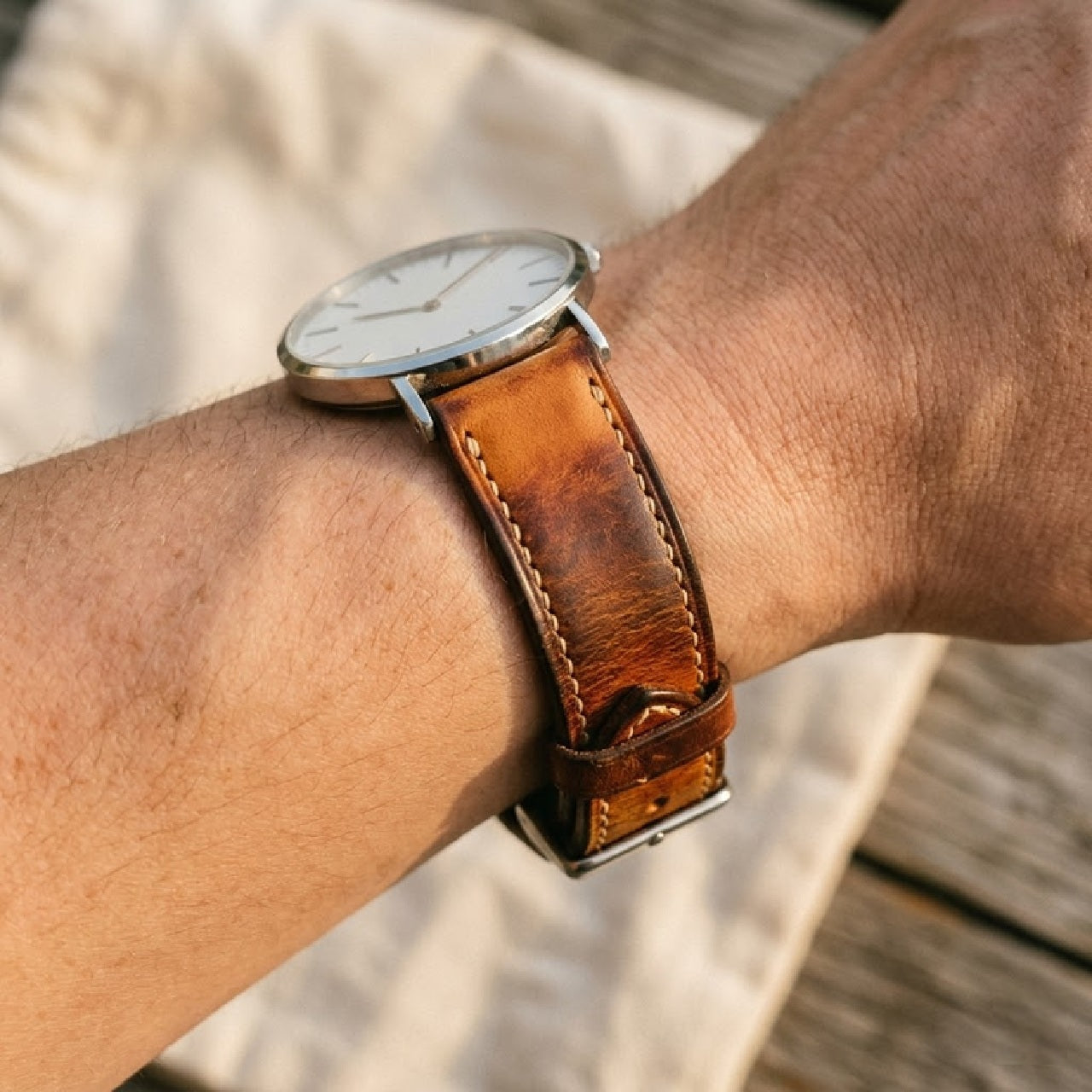
The color shifted from light tan to a warm amber tone. Small scratches appeared on the surface. Rather than looking damaged, these marks added depth.
Light scratches on vegetable-tanned leather don't cut through dye because there is no dye. The natural tannins color shift happens organically. The color comes from natural tannins that penetrate the entire hide.
Year One: Structural Changes
By month twelve, the sol strap watch band had transformed completely. The stiffness was gone. It was replaced by a suppleness that made the band feel custom-molded.
The leather thinned slightly at the bend points. This happened from compression as the fibers settled, not from wearing through. The color deepened to a rich cognac brown.
Areas exposed to sunlight showed more red undertones. The underside developed darker, almost chocolate hues. One buckle hole showed elongation from daily use.
This is normal for any full-grain leather watch band. The hole stretched about two millimeters, affecting the fit minimally. The saddle stitch durability around the hardware kept everything completely intact.
Year Two: Full Patina and Performance Assessment
At 24 months, the watch band looks nothing like it did new. The transformation is dramatic but not uniform. Different areas aged at different rates based on exposure and stress.
A customer recently brought his five-year-old franklin wallet into the workshop. It had darkened into a rich, glossy chestnut tone from daily carry. You earn true patina through years of honest wear. Our straps age with that exact same character.
The band now displays at least four distinct tones. These range from light caramel on protected areas to deep brown where oils concentrated. This isn't inconsistency. It's proof the leather reacts naturally to its environment.
The smooth finish from day one gave way to a slightly burnished appearance. High-contact areas show a subtle sheen from natural oils. Lower-contact zones maintain more of the original matte texture.
The full-grain leather now bends effortlessly at every point. There's no cracking at stress points, no separation at the stitching, and no structural weakness anywhere.
Comparing Sol Strap Patina to Other Leather Goods
The sol strap patina mirrors what happens with our other goods. The patina development on this watch band mirrors what happens with our leather wallets. Both use the same vegetable-tanned leather, so both age similarly.
However, watch bands face unique challenges. They experience more moisture exposure than a standard wallet. They handle more frequent flexing than a traditional belt loop.
They take more direct sunlight than most front-pocket card holders. Despite these stressors, the aging process remained controlled.
The leather didn't dry out, crack, or lose structural integrity. This proves our tanning and finishing process creates genuine durability.
What Accelerates Patina Development
After two years of observation, certain factors clearly speed up color change. Days involving heavy sweating or rain exposure darkened the vegetable-tanned leather noticeably.
The effect was cumulative. Occasional moisture created subtle darkening, while regular summer exposure produced dramatic color shifts. Direct sunlight lightened and reddened the top surface.
The underside continued darkening from skin oils. This created the most dramatic contrast in the band's appearance. Individual skin chemistry and oil production also affect how leather ages.
This explains why two people wearing identical straps will see different patina patterns. A strap worn daily will show more character in six months than one worn occasionally will show in two years.
Maintenance Impact on Appearance
The band received minimal maintenance during the test period. Every three months, it was wiped with a slightly damp cloth to remove salt and dirt buildup.
We used no conditioners, no oils, and no special treatments. This approach let the natural tannins color shift happen without interference. Leather conditioners can even out color development.
Some people prefer that look. But conditioners also mask the organic aging process that makes vegetable-tanned leather unique. Around month eighteen, the leather began feeling slightly dry.
A single application of pure neatsfoot oil restored suppleness without significantly altering the sol strap patina. The oil darkened the strap temporarily. Within a week, the color settled back to its pre-treatment appearance.
Durability Assessment After 730 Days
Two years of daily wear reveals whether construction quality holds up. The band passed every practical test. There were zero stitching failures.
Not a single stitch loosened, broke, or showed signs of coming undone. The saddle stitch durability proved its reputation for longevity. There were no tears, no separation at stress points, and no thinning that threatened structural failure.
The leather maintained its strength even as it softened. The buckle and keeper loop showed no damage. Both pieces moved smoothly throughout the test period.
There was no binding or excessive wear on the leather where they made contact. The burnished edges remained intact. There's minor scuffing where the band makes contact with surfaces. There's no peeling that indicates poor edge treatment.
How Sol Strap Compares to Mass-Market Alternatives
Most watch bands under $30 use corrected-grain leather. That term describes lower-quality cuts. These materials are sanded, embossed, and coated to hide imperfections.
The difference becomes obvious after six months. Coated leather doesn't develop a patina. It wears through to reveal the processed surface underneath. The coating cracks, peels, or flakes off entirely.
A chrome-tanned leather alternative softens faster but ages differently. It doesn't develop the same color depth or character marks. Our full-grain construction means there's no coating to fail.
The leather is the finished surface. Scratches and marks become part of the patina rather than damage to repair.
Is Two-Year Patina Worth the Initial Investment?
Our bands cost more than mass-market options. That price gap narrows when measured per year of use. The real value isn't about cost averaging. Vegetable-tanned leather improves with age.
A two-year-old band looks better than a new one. It's more comfortable, more visually interesting, and more personal. Mass-market straps look best on day one and decline from there.
This aging characteristic makes our gear similar to handcrafted wallets or leather belts. These products reward long-term ownership rather than frequent replacement.
What This Review Does Not Cover
Two years reveals long-term durability and patina development. This leather watch strap review doesn't test extreme conditions like saltwater exposure or industrial chemical contact.
It also can't account for every possible body chemistry variation. Individual results will differ based on skin pH, activity level, and environmental factors.
Finally, this assessment focuses on the natural leather version. We offer multiple leather colors and finishes. Each will age differently based on the tanning and dyeing process used.
Long-Term Ownership Realities
After 730 days, this remains the daily-wear choice. The patina created a unique piece that can't be purchased new. The character marks tell a specific story about this watch, this wrist, and this two-year period.
The band will likely last several more years before requiring replacement. The full-grain leather watch band shows no signs of structural failure.
When replacement becomes necessary, it won't be due to catastrophic failure. It will be from gradual wear that eventually compromises fit or appearance.
Understand that you're buying a product designed to change. This applies to this strap and our leather card holders. Vegetable-tanned leather isn't the right choice if you prefer static gear.
Conclusion
Two years transformed the band from a stiff, light tan strap into a supple, multi-toned piece. The character marks reflect its specific use history.
The vegetable-tanned leather darkened, softened, and developed uneven coloring that proves its full-grain construction. The durability matched the patina development perfectly.
There were zero stitch failures, no structural weakness, and no edge deterioration after 730 days of daily wear. It performed exactly as full-grain leather should. It got better with age rather than wearing out.
The patina alone justifies the investment, but the structural integrity proves this isn't just about aesthetics. It's about choosing gear built to last and improve through honest use.
This leather watch strap review proves that true craftsmanship stands the test of time. Ready to experience natural leather aging on your own watch? Explore our complete collection of leather accessories, or Get expert help choosing the right wallet and watch band.