Professional Men: Leather Accessories That Work From Meetings to Fatherhood
The average professional man touches his wallet at least 12 times per day. Between morning coffee, parking validation, lunch meetings, and after-work errands, that single accessory sees more action than any other item in his pocket or bag. Yet most men carry wallets designed for someone else's life - bulky bifolds that create uncomfortable pocket bulge or flimsy fashion pieces that fall apart within months.
Quality leather accessories solve a problem most men don't realize they have until they experience the alternative. A well-crafted wallet isn't just about storing cards and cash. It's about reliability during a day that demands juggling client presentations, soccer practice schedules, and everything in between without fumbling through a disorganized mess at the checkout line.
The shift toward minimalist, full-grain leather wallets reflects a broader change in how professional men approach their everyday carry. Function matters. Durability matters. And the ability to transition seamlessly from boardroom to playground matters even more.
Why Most Men's Wallets Fail the Real-World Test
Walk into any department store and the men's accessories section tells a consistent story: either overstuffed traditional designs or trendy minimalist knockoffs. Wallets come with excessive compartments that encourage clutter or flimsy construction that looks impressive on the shelf but creates problems in daily use.
Bonded leather and genuine leather products dominate these displays. These materials sound legitimate but represent the lowest grades of leather manufacturing. Bonded leather consists of leather scraps ground into pulp and glued together - essentially particleboard made from leather. Genuine leather uses the fibrous lower layers after manufacturers split away the premium top grain for higher-end products.
Both materials share the same fatal flaw: they don't age well. Within six months, corners crack. Stitching loosens. The wallet that looked perfect in February becomes an embarrassment by August.
Professional men face specific demands that expose these weaknesses faster than typical use cases:
-
Frequent handling: Multiple daily transactions mean constant flexing and stress on materials
-
Pocket carry stress: Back pocket pressure from sitting creates constant compression that cheap materials can't withstand
-
Environmental exposure: Car interiors, office bags, and outdoor elements accelerate deterioration
-
Weight demands: Business cards, insurance cards, and multiple payment methods create bulk that inferior construction can't support
The Lost Dutchman Leather approach addresses these issues by starting with materials designed to improve with use rather than degrade. Full-grain leather - the complete top layer of the hide with all natural grain patterns intact - develops character through daily handling. Scratches blend into the patina. Natural oils from hands condition the material. The wallet becomes more functional and visually appealing over time.
The Hidden Cost of Replacing Accessories Every Year
Most men don't track how much they spend replacing leather goods. A $30 wallet seems like a minor purchase. Replacing it annually or semi-annually adds up to hundreds of dollars over a decade - money spent acquiring the same functionality repeatedly.
The math shifts dramatically with buy-it-for-life quality. A $75-100 wallet crafted from full-grain leather and reinforced with saddle stitching lasts 10-15 years with basic care. That's less than $7 per year of ownership, compared to $30+ annually for disposable alternatives.
Beyond direct costs, replacement cycles create hidden expenses:
-
Time spent shopping: Finding, comparing, and purchasing replacements consumes hours annually
-
Transfer hassle: Moving cards, updating cash, reorganizing contents with each new wallet
-
Lost items: Transitions between wallets increase the risk of leaving cards or receipts behind
-
Environmental impact: Manufacturing and disposing of multiple products versus maintaining one quality piece
Professional men already manage complex schedules. Eliminating one recurring task - wallet replacement - creates space for activities that actually matter.
What Actually Makes a Wallet Work for Professional Life
The difference between a wallet that supports professional life and one that complicates it comes down to specific design choices. These aren't aesthetic preferences - they're functional requirements that become apparent during daily use.
Capacity Without Bulk
The modern professional carries more than previous generations. Health insurance cards, HSA cards, business cards from networking events, and multiple payment methods all compete for space. A functional wallet accommodates 8-12 cards plus cash without creating uncomfortable pocket bulge or an unsightly outline through dress pants.
Card holder designs excel here. By eliminating unnecessary dividers and focusing on essential storage, these slim profiles maintain organization without bulk. The card holders collection demonstrates how thoughtful design creates maximum capacity in minimum space.
Accessibility Under Pressure
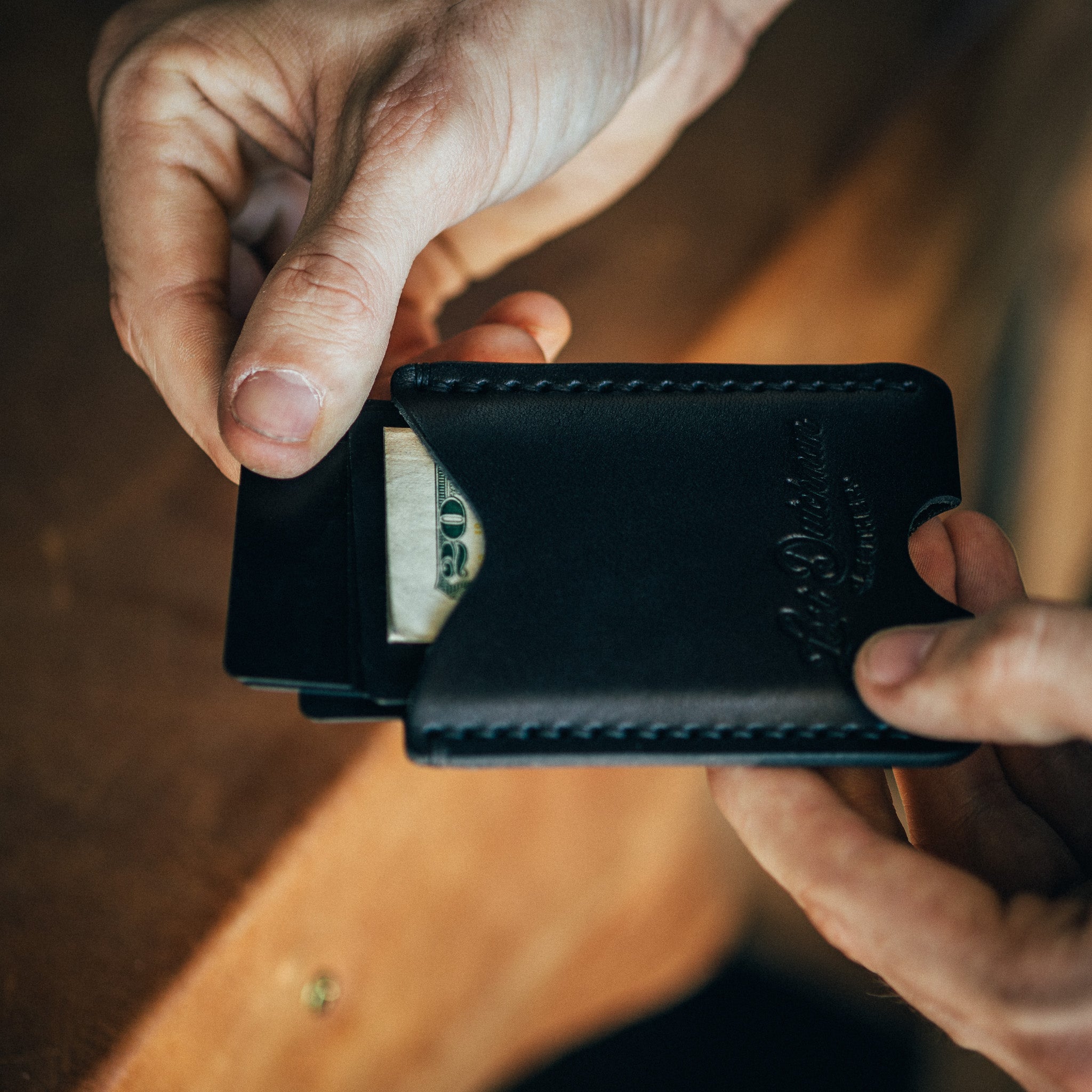
Fumbling through multiple compartments while holding a coffee, phone, and car keys creates unnecessary stress. Effective wallet design prioritizes quick access to frequently used items.
Vertical orientation helps. Cards arranged in a single stack with slightly offset positioning allow visual identification without removing each one. Cash pockets with easy entry points eliminate the struggle of inserting bills into tight slots.
The Vertical Dutchman exemplifies this approach - classic bifold functionality redesigned around modern use patterns rather than century-old conventions.
Durability That Matches Professional Demands
A wallet accompanying someone through years of career advancement needs to withstand corresponding use intensity. Saddle stitching - the traditional hand-sewing technique using two needles and waxed thread - creates seams stronger than the leather itself. If one stitch breaks, the rest hold firm rather than unraveling like machine stitching.
Full-grain leather's dense fiber structure resists scratching and tearing. The natural oils in the hide repel moisture. These properties aren't marketing claims - they're observable characteristics that manifest during years of daily use.
The Minimalist Movement Meets Professional Needs
Minimalism in leather goods isn't about deprivation. It's about eliminating everything that doesn't serve a clear purpose, leaving only what works.
This philosophy aligns perfectly with the needs of professional men seeking leather accessories that simplify rather than complicate daily routines. Extra compartments don't add value if they remain empty or encourage accumulating unnecessary cards and receipts. Decorative elements that catch on pocket linings create frustration. Features that looked clever in the store become annoyances after the hundredth use.
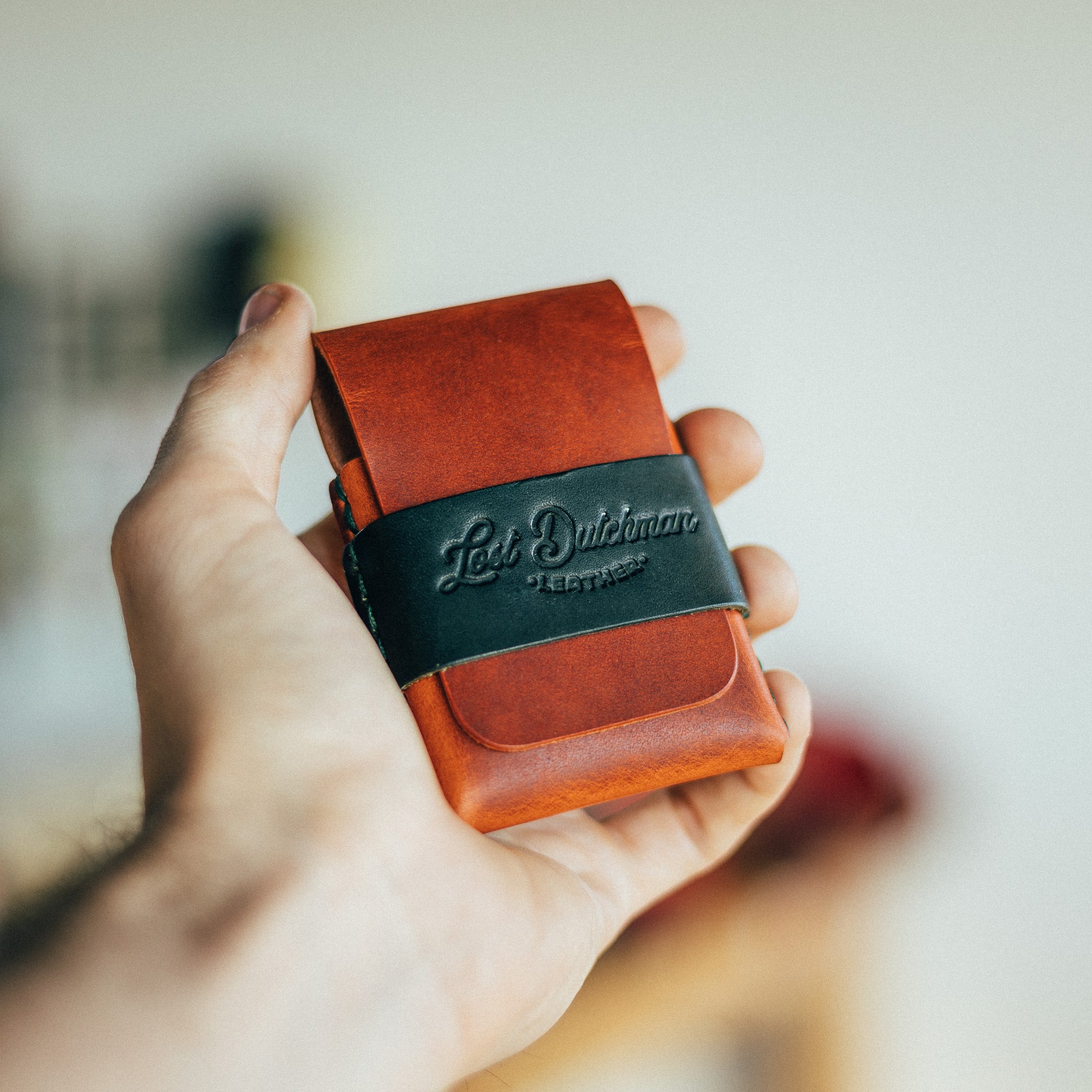
The Franklin Wallet represents minimalist design taken to its logical conclusion. Crafted from a single piece of leather without stitching, this design eliminates every potential failure point. No seams to separate. No threading to unravel. Just one continuous piece of material that ages uniformly.
The Franklin Wallet demonstrates how removing elements can enhance rather than diminish functionality. Less becomes more when every remaining feature serves a specific purpose.
For professionals who need even more streamlined carry, the Mini Franklin condenses the concept further. Front-pocket carry becomes practical without sacrificing the organization needed for daily transactions.
Transitioning From Work to Family Life Without Missing a Beat
The term "work-life balance" suggests these exist as separate spheres requiring different tools. Reality looks different. The same wallet that holds a corporate credit card for client lunches also carries the insurance card needed at a pediatrician appointment.
Professional men need accessories that transition seamlessly because life doesn't pause between roles. A wallet pulled out during a board meeting might reappear 30 minutes later at a youth baseball game or school pickup line. The tool must function equally well in both contexts.
Quality leather goods achieve this versatility through simplicity. A well-designed wallet doesn't look out of place in any setting because it doesn't try to make a statement beyond competence and reliability. The natural patina that develops on full-grain leather tells a story of use without broadcasting specific contexts.
This matters more than most people realize. Accessories communicate messages about priorities, attention to detail, and respect for quality. A worn-out wallet suggests either financial constraints or indifference to professional presentation. An overly trendy piece might work in creative industries but feels out of place in conservative corporate environments.
Classic professional men leather accessories sidestep these concerns entirely. They're appropriate everywhere because they prioritize function and craftsmanship over trend-chasing. The same wallet works for a 30-year-old associate and a 55-year-old executive because quality transcends demographic targeting.
Understanding Leather Quality Before You Buy
The leather goods market deliberately confuses consumers with terminology designed to sound premium while describing inferior materials. Understanding basic distinctions protects against expensive mistakes.
Full-grain leather includes the complete top layer of the hide with the natural grain pattern intact. This layer contains the densest, strongest fibers. It's the most expensive grade because manufacturers can't hide imperfections - only the best hides qualify.
Top-grain leather has been sanded to remove imperfections, then embossed with an artificial grain pattern. It's thinner and more uniform than full-grain but lacks the same durability and aging characteristics.
Genuine leather can mean almost anything. It's technically accurate for any product containing animal hide, including the lowest quality scraps. If "genuine leather" is the primary selling point, that's usually a warning sign.
Bonded leather barely qualifies as leather at all. Manufacturers grind leather scraps into pulp, mix it with polyurethane, and press it into sheets. It looks like leather initially but peels and cracks quickly.
The wallets collection uses exclusively full-grain leather. This isn't a marketing choice - it's a practical requirement for products designed to last decades rather than seasons.
Care Requirements That Fit Busy Schedules
Professional men don't have time for elaborate maintenance routines. Leather accessories need to fit into existing habits rather than creating new obligations.
Full-grain leather requires minimal intervention. The natural oils in the hide provide basic protection. Regular handling actually benefits the material by distributing oils and developing patina.
Basic care consists of three simple practices:
-
Wipe down monthly: A slightly damp cloth removes surface dirt and dust
-
Condition annually: Leather conditioner replaces oils and maintains flexibility
-
Avoid extreme conditions: Don't leave leather in hot cars or submerge in water
That's it. No special tools. No expensive products. No time-consuming procedures.
Compare this to fashion leather goods requiring specific cleaners, protectants, and storage conditions. The maintenance burden often exceeds the product's functional value.
Quality leather ages gracefully without intervention. The patina that develops reflects actual use patterns - darker areas where hands touch most frequently, lighter spots that see less contact. This natural aging process creates character that artificial treatments can't replicate.
Building a Complete Leather Accessory System
A wallet doesn't exist in isolation. Professional men carry multiple leather items that work together as a system. Consistency in quality across these pieces creates both functional benefits and visual cohesion.
Belts represent the most critical component of professional presentation. A cheap belt with peeling finish undermines an otherwise polished appearance. Quality leather belts last decades and actually improve with wear as they conform to body shape.
The Belt collection demonstrates how fundamental accessories deserve the same attention as more visible pieces. A well-crafted belt completes professional attire without drawing attention to itself.
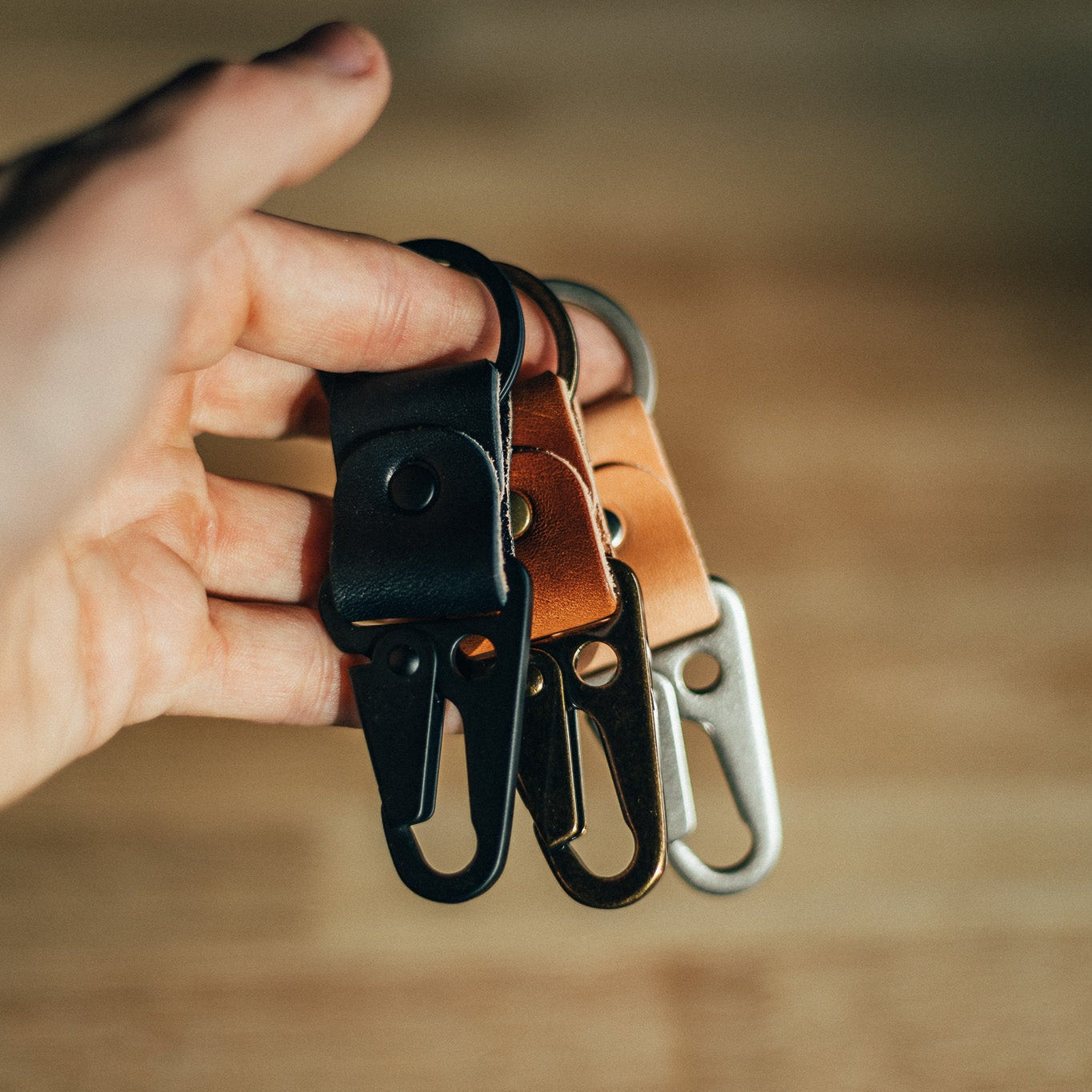
Modern professionals also need solutions for technology integration. AirTag keyrings combine traditional leather craftsmanship with contemporary tracking needs. These small accessories see intense daily use - attached to keys, bags, or other essentials that can't be lost.
The AirTag Keyring shows how classic materials adapt to modern requirements. The leather protects the technology while maintaining aesthetic consistency with other accessories.
For professionals who need to organize small items in bags or on desks, leather catch-alls provide functional storage with visual appeal. The Catch-All creates designated spaces for everyday essentials, reducing the time spent searching through bags or drawers.
The Real Return on Investment for Quality Accessories
Calculating ROI on leather goods requires looking beyond initial purchase price to total cost of ownership. This analysis reveals why premium materials and construction represent value rather than luxury.
Consider a typical scenario:
-
Budget approach: $30 wallet replaced every 18 months over 15 years = $300 total spend, plus time costs for 10 replacement cycles
-
Quality approach: $90 wallet lasting 15+ years = $90 total spend, zero replacement cycles
The quality approach costs 70% less over time while eliminating recurring hassles. These savings compound across multiple accessories - belts, bags, keyrings - creating hundreds of dollars in value.
But financial calculations miss the larger point. Quality accessories remove small sources of daily friction. They work reliably. They look appropriate in any professional setting. They don't require mental energy to maintain or replace.
For professional men managing complex schedules, this psychological benefit exceeds the financial savings. One less thing to think about. One less item on the replacement list. One less decision competing for limited cognitive resources.
Making the Transition to Quality Leather Goods
Switching from disposable accessories to quality leather goods doesn't require replacing everything simultaneously. A phased approach allows experiencing the difference while spreading costs over time.
Start with the item used most frequently - typically a wallet. This creates immediate daily benefits and demonstrates the quality difference in the most tangible way.
When choosing a first quality piece, consider actual use patterns rather than aspirational ones. If current habits involve carrying 10+ cards, a minimalist card holder might create frustration rather than simplification. The bifolds collection offers traditional capacity in refined profiles that eliminate unnecessary bulk without forcing dramatic behavior changes.
As the first quality piece develops patina over months of use, the contrast with remaining disposable accessories becomes obvious. This natural progression creates motivation for subsequent upgrades without requiring upfront commitment to a complete system.
Quality leather goods also make practical gifts. They're appropriate for professional milestones, birthdays, Father's Day, or holidays while avoiding the personal sizing issues that complicate clothing gifts. A well-chosen wallet or belt works for anyone who values quality and durability.
Why American Craftsmanship Matters for Modern Professionals
The origin of leather goods affects more than just marketing claims. Manufacturing location determines labor practices, quality standards, and supply chain transparency.
American-made leather goods typically involve higher labor costs but also higher skill levels. Craftspeople working in domestic workshops develop expertise over years rather than weeks. They understand how design choices affect long-term durability because they see products return for repairs decades after original purchase.
This experience translates into better products. Details that seem minor during manufacturing - stitch tension, edge finishing, leather selection - become significant during years of use. Experienced craftspeople anticipate these factors and adjust accordingly.
Domestic manufacturing also enables direct communication between makers and users. Questions about care, repair options, or custom requirements reach people who actually understand the products rather than customer service representatives reading from scripts.
For professionals who value knowing the source of their goods, domestic manufacturing provides transparency that global supply chains can't match. The leather comes from American tanneries. The hardware comes from American suppliers. The assembly happens in American workshops.
This traceability matters increasingly as consumers recognize the hidden costs of cheap goods - environmental damage, exploitative labor practices, and disposable product culture. American craftsmanship represents a commitment to quality that extends beyond the finished product to encompass ethical manufacturing practices and sustainable business models.
Conclusion
Professional men deserve accessories designed for their actual lives rather than marketing departments' fantasies. Quality leather goods address real needs: durability through intense daily use, organization that supports complex schedules, and presentation that transitions seamlessly across professional and personal contexts.
The shift from disposable fashion pieces to full-grain leather wallets and accessories represents more than upgrading materials. It's choosing tools that improve with use rather than degrade, that solve problems rather than create them, and that respect both financial resources and limited time.
A well-crafted wallet won't transform a career or revolutionize daily routines. But it will work reliably, look appropriate, and last for years without demanding attention or replacement. Sometimes the best solutions are the ones that simply work without fanfare.
For professional men ready to experience the difference quality materials and American craftsmanship make, exploring options designed around function rather than trends reveals what professional men leather accessories can be when makers prioritize actual use over temporary fashion. The investment pays returns in both practical performance and lasting value that compounds over years of daily use.
Ready to transition from disposable accessories to quality leather goods built for professional life? Browse the complete range of handcrafted products designed to work as hard as the professionals who carry them. For questions about specific products or guidance on choosing the right pieces for particular needs, contact us directly.