Multi-Currency Management: Wallet Features for International Travelers
International travel demands more than a passport and plane ticket. Currency management separates smooth trips from frustrating ones, and the multi-currency travel wallet in your pocket plays a bigger role than most travelers realize.
The average international traveler carries three to five different currencies during a typical two-week trip across multiple countries. That's not counting the credit cards, boarding passes, hotel key cards, and receipts that accumulate along the way. Without proper organization, what should be a simple transaction at a café in Rome becomes a fumbling exercise in front of an impatient line.
Full-grain leather wallets designed for international use solve these problems through thoughtful construction. They don't just hold money - they organize it in ways that make foreign transactions faster and more secure.
Why Standard Wallets Fail International Travelers
Most wallets sold today are designed for single-currency users who primarily rely on cards. That works fine in Des Moines or Denver. It fails spectacularly in markets across Southeast Asia or train stations in Eastern Europe.
Common Problems With Standard Designs
Standard bifold wallets create several problems for travelers:
Currency mixing: Bills from different countries end up stacked together, forcing you to sort through everything for each transaction
Size mismatch: Many international currencies are larger than US dollars, causing bills to stick out or fold awkwardly
Limited capacity: Two or three card slots don't accommodate the travel documents, transit cards, and backup payment methods needed abroad
Receipt chaos: No dedicated space for receipts means they get crammed in with currency, creating a disorganized mess
The wallet that works perfectly well at home becomes a liability the moment you land in a foreign country.
Essential Features for Multi-Currency Organization
A proper international travel wallet addresses these challenges through specific design elements. Not every traveler needs every feature, but understanding what's available helps in choosing the right tool for travel style.
Dedicated Currency Compartments
The most critical feature is separate sections for different currencies. This isn't about having multiple bill slots - it's about having distinct, easily accessible compartments that prevent mixing.
Quality multi-currency travel wallets include three to five dedicated currency sections. Each section should be deep enough to accommodate larger international bills without folding them excessively. Euro notes, for example, measure up to 160mm long - significantly larger than US currency.
The bifolds designed for travel typically incorporate these sections without adding excessive bulk. The key is strategic leather folding that creates natural divisions within the wallet's structure.
Strategic Card Placement
International travelers need more card capacity than domestic users. Beyond credit and debit cards, travelers manage:
-
Local transit cards
-
Hotel key cards
-
Museum and attraction passes
-
International driver's permits
-
Insurance cards
-
SIM card holders
A minimum of six card slots handles basic needs. Eight to ten slots accommodate longer trips or multi-country itineraries. The slots should be staggered or offset so the top edge of each card is visible without removing others.
Quick-access positioning matters as much as quantity. The cards used most frequently - primary credit card, transit card - should occupy the easiest-to-reach positions. Secondary cards can sit in interior slots.
Receipt and Document Management
Receipts pile up fast during international travel. Currency exchange receipts, ATM slips, restaurant bills for expense reports, and purchase receipts for customs declarations all need temporary storage.
A dedicated receipt pocket - separate from currency compartments - prevents the paper chaos that plagues most travelers. This pocket should be accessible but not so prominent that receipts fall out when opening the wallet.
Some travelers prefer a slim document sleeve that can hold folded boarding passes or train tickets. This works well for short trips but can create bulk on longer journeys.
Size Considerations for International Bills
Currency dimensions vary dramatically across countries:
-
US Dollar: 156mm × 66mm
-
Euro: 120-160mm × 62-82mm (varies by denomination)
-
British Pound: 135-156mm × 73-85mm
-
Japanese Yen: 150-160mm × 76-80mm
-
Australian Dollar: 130-158mm × 65-74mm
A wallet designed exclusively for US currency won't properly accommodate these larger notes. Bills stick out, fold awkwardly, or require excessive force to insert and remove.
Full-grain leather adapts better than synthetic materials to varying bill sizes. The natural flexibility of quality leather allows slight expansion without compromising structure. A wallet that's been properly broken in can accommodate different currency sizes without feeling overstuffed.
Material Considerations for Travel Durability
The material choice for an international travel wallet isn't just aesthetic - it directly impacts functionality and longevity under demanding conditions.
Why Full-Grain Leather Outperforms Alternatives
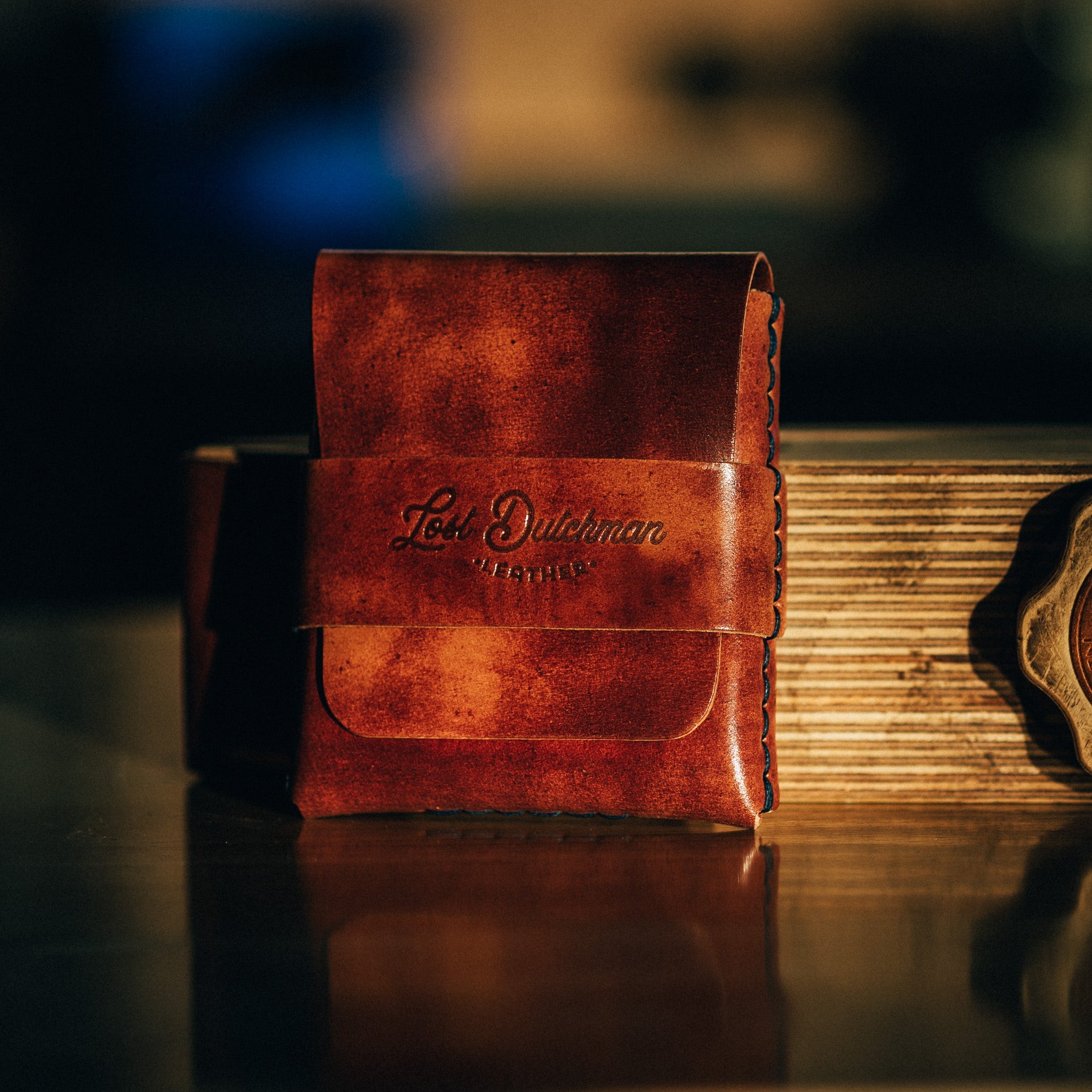
International travel exposes wallets to humidity changes, temperature extremes, frequent handling, and occasional rain. Lost Dutchman Leather uses full-grain leather specifically because it handles these conditions better than other materials.
Full-grain leather maintains structural integrity across climate zones. A wallet that works in Arizona's dry heat will also function in Bangkok's humidity without warping, cracking, or losing shape.
The natural oils in quality leather provide water resistance without coatings that wear off. When a full-grain wallet does get wet - caught in a sudden rain in London or splashed at a beach in Bali - it dries without damage. Synthetic materials and bonded leather don't recover as well.
Stitching That Survives Heavy Use
Travel wallets endure more stress than everyday carry pieces. Constant opening, frequent transactions, and packed compartments test every seam.
Saddle stitching creates the most durable seams for travel wallets. This hand-stitching technique uses two needles working from opposite directions through the same holes. If one thread breaks, the other continues holding the seam together.
Machine stitching uses a single thread looped through the leather. When it breaks at any point, the entire seam can unravel. That's not a risk worth taking three countries away from home.
Wallet Styles That Work for International Use
Different travel styles demand different wallet configurations. What works for a business traveler hitting European capitals won't suit a backpacker moving through Southeast Asia.
Traditional Bifolds Redesigned for Travel
The classic bifold design adapts well to international use when properly modified. These multi-currency travel wallets demonstrate how traditional construction can incorporate travel-specific features without abandoning the familiar format.
A travel-ready bifold includes:
-
Four to six currency compartments instead of the standard two
-
Eight to ten card slots rather than four to six
-
A dedicated receipt pocket
-
Dimensions that accommodate larger international bills
The advantage of a bifold for travel is familiarity. There's no need to relearn how to access money when jet-lagged and trying to pay for a taxi at 2 AM.
Vertical Formats for Front-Pocket Security
Front-pocket carry offers better security in crowded tourist areas, public transportation, and busy markets. Pickpockets target back pockets because they're easier to access unnoticed.
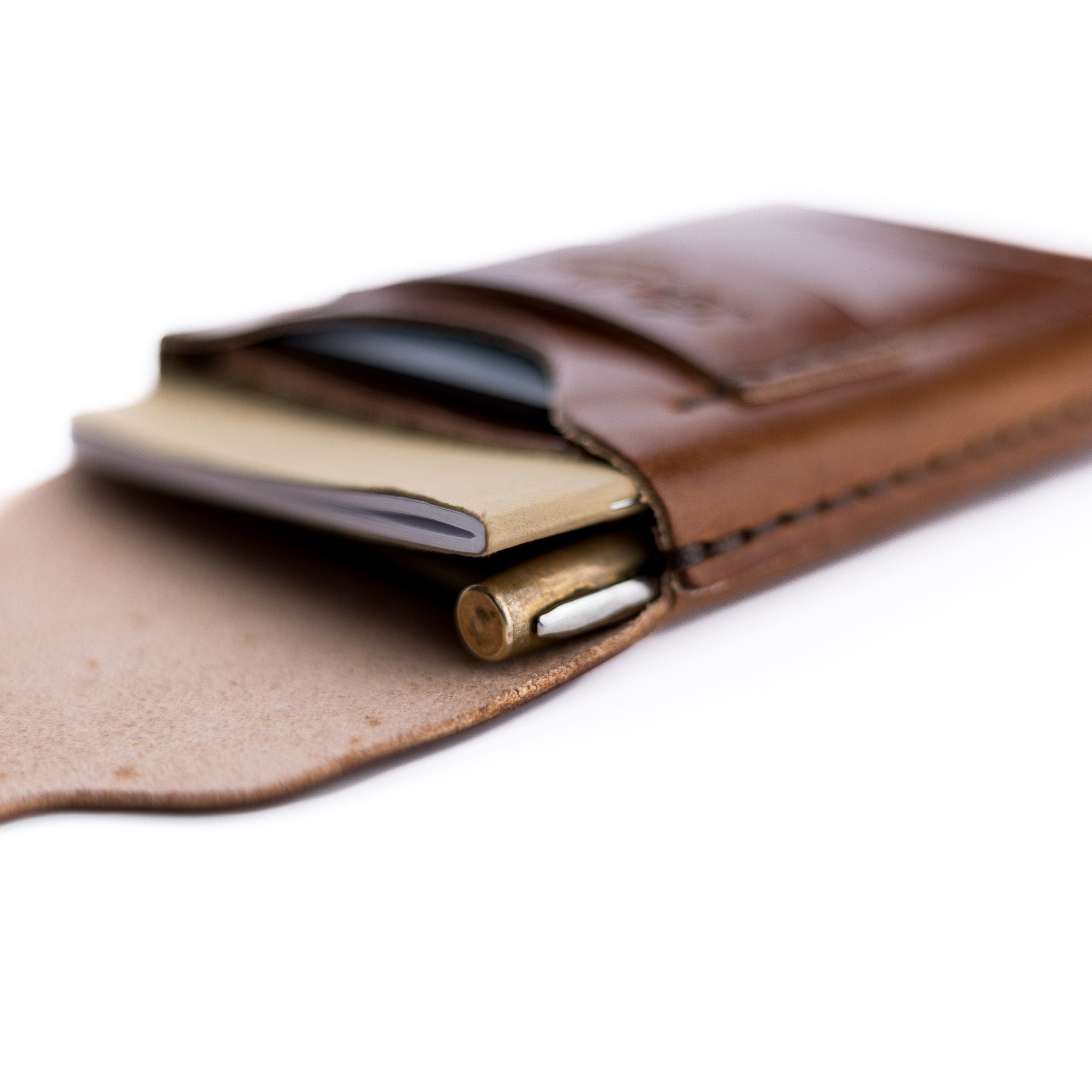
Vertical wallet designs provide a slim profile specifically for front-pocket use. The vertical orientation means cards sit perpendicular to pocket openings, making them harder to dislodge accidentally.
Vertical wallets work best for travelers who:
-
Navigate crowded urban environments
-
Use public transportation extensively
-
Prefer minimalist carry
-
Want quick card access for frequent transactions
The trade-off is typically reduced currency capacity compared to bifolds. That's acceptable for card-heavy travelers but limiting for those who rely more on cash.
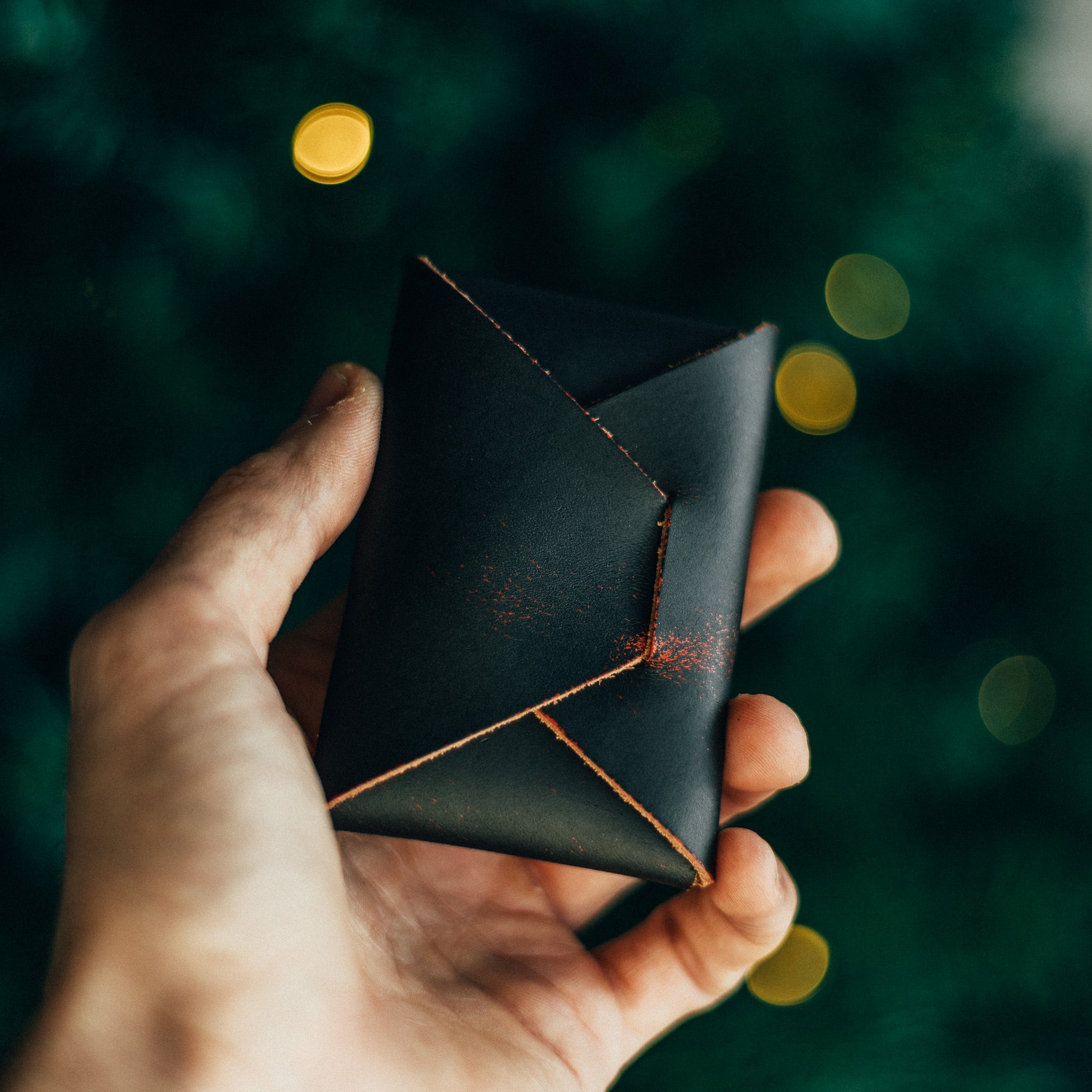
Minimalist Card Holders for Card-Primary Travel
Some international destinations are nearly cashless. In Stockholm or Singapore, travelers can go days using only cards. For these environments, a traditional wallet with extensive currency compartments is overkill.
Card holders offer slim options that prioritize card access while maintaining space for emergency cash and essential receipts. These work well for:
-
Business travel to developed countries
-
Short trips to card-friendly destinations
-
Travelers who use mobile payment as their primary method
-
Minimalists who want to reduce carry weight
The limitation is obvious: limited cash capacity makes these unsuitable for cash-dependent regions or longer trips through multiple countries with varying payment infrastructure.
Security Features That Matter Abroad
Wallet security abroad involves both preventing theft and protecting against electronic skimming. Both threats are more prevalent in tourist-heavy areas.
RFID Protection Reality Check
RFID-blocking materials have become standard marketing claims for travel wallets. The actual threat level is debated, but the protection adds minimal cost or bulk when properly implemented.
Full-grain leather provides some natural RFID interference due to its density. Additional RFID-blocking material - typically a thin metallic fabric layer - can be incorporated between leather layers without affecting appearance or flexibility.
The practical value depends on the destination. RFID skimming is theoretically possible but rarely documented as a widespread problem. Traditional pickpocketing remains a far more common threat.
Design Elements That Deter Pickpockets
Physical security features matter more than electronic protection:
-
Snap closures or straps prevent the wallet from opening if partially removed from a pocket
-
Textured leather is harder to grip and slide out smoothly
-
Appropriate thickness creates friction against pocket fabric
-
Compact dimensions reduce the portion extending above the pocket line
Quality leather wallets incorporate these features naturally. A well-made leather wallet's texture and weight work in favor against opportunistic theft.
Organizing Multiple Currencies Effectively
Having the right international travel wallet is only half the solution. How currencies are organized within it determines whether transactions are smooth or frustrating.
Color-Coding and Positioning Strategy
Assign each currency to a specific compartment and maintain that assignment throughout trips. The brain quickly memorizes positions: "Euros in the left slot, pounds in the right, dollars in the middle."
Visual differentiation helps when currencies look similar. Many countries use similar color schemes for their notes. Consistent positioning prevents grabbing the wrong currency.
Keep primary currency - the one currently being used - in the most accessible position. When crossing a border, reorganize rather than trying to adapt to a new arrangement.
Managing Coins Separately
Coins are the nemesis of organized travel. They're necessary for many transactions but don't fit well in any wallet design.
Don't try to cram coins into leather wallets. The weight stretches pockets, the metal edges damage leather over time, and the bulk defeats the purpose of a slim wallet.
A separate coin purse or small pouch handles coins better. Keep it in a different pocket so there's no need to dig through coins to access bills or cards. Empty it regularly - coins accumulate faster than most realize.
Receipt Organization for Expense Tracking
Business travelers and anyone tracking expenses need a receipt system that doesn't create chaos.
Use the dedicated receipt pocket for current-day receipts only. Each evening, transfer them to a separate envelope or pouch. This prevents the receipt pocket from becoming overstuffed and makes expense reporting easier later.
For receipts that need to remain accessible - like currency exchange slips showing rates - fold them once and place them behind the relevant currency. When spending that currency, the receipt showing the exchange rate paid is right there.
Maintenance During Extended Travel
A leather wallet requires minimal maintenance, but international travel creates conditions that accelerate wear if ignored.
Climate Adaptation
Moving between climate zones stresses leather. The dry cabin air during flights, humid tropical environments, and arid desert regions all affect leather differently.
Leather conditioner isn't usually necessary during trips under three weeks. For longer journeys, a small container of quality conditioner prevents drying and cracking. Apply sparingly - over-conditioning makes leather limp.
Let wet leather dry naturally. Don't use hair dryers or place it near heaters. Rapid drying causes cracking. If a wallet gets soaked, empty it, blot excess water with a cloth, and let it air dry for 24 hours.
Cleaning Between Trips
International travel means wallets contact more surfaces, hands, and environments than normal use. A quick cleaning between trips maintains both appearance and hygiene.
Wipe down with a slightly damp cloth to remove surface dirt. For stubborn spots, use a dedicated leather cleaner. Avoid household cleaners - they often contain chemicals that dry or damage leather.
Check stitching after each major trip. Catch loose threads early before they become actual problems. Quality saddle stitching rarely fails, but inspecting costs nothing.
Choosing the Right Wallet for Travel Style
The ideal multi-currency travel wallet depends on how people travel, where they go, and how they prefer to carry essentials.
Questions to Ask Before Buying
How many countries are typically visited per trip? A two-country European vacation needs less currency capacity than a six-country Southeast Asian journey.
What's the payment preference abroad? Card-heavy travelers need fewer currency compartments but more card slots. Cash-dependent travelers need the opposite.
Will there be a bag or pocket-only carry? Carrying a daypack or messenger bag means wallet size is less constrained. Pocket-only carry demands slimmer profiles.
How long are typical trips? Weekend trips can tolerate less organization than month-long journeys. The longer the travel, the more important proper organization becomes.
When to Choose Specialized Over General
A general-purpose quality wallet handles occasional international travel adequately. Frequent travelers benefit from purpose-built designs.
Traveling internationally more than four times per year justifies investing in a wallet specifically designed for multi-currency management. The organizational benefits compound over multiple trips.
Business travelers who need to track expenses should prioritize receipt management features. Leisure travelers can focus more on currency capacity and card access.
Building a Complete Travel Carry System
A wallet doesn't exist in isolation. It's part of a complete carry system that includes other essential items.
Complementary Carry Items
Leather accessories like keyrings provide location tracking for keys - valuable when managing hotel keys, rental car keys, and apartment keys across multiple locations.
Quality belts matter more during travel than daily life. Airport security, different clothing, and varying weather conditions mean travelers need a reliable belt that works with multiple outfits and adjusts easily.
A small leather pouch handles the miscellaneous items that don't fit in a wallet - coins, SIM cards, small cables, and other pocket debris that accumulates during travel.
Backup and Redundancy
Never travel with only one payment method in a single wallet. Distribute resources across multiple carry locations:
-
Primary wallet in front pocket with main cards and current currency
-
Backup credit card in a separate pocket or bag
-
Emergency cash hidden in luggage
-
Digital copies of cards stored securely online
This redundancy means a lost or stolen wallet is inconvenient rather than trip-ending.
The Long-Term Value Proposition
Quality leather goods cost more upfront but deliver better value over time, especially for travelers who stress their gear regularly.
Cost Per Use for Frequent Travelers
A $200 leather wallet used on 20 international trips over five years costs $10 per trip. A $40 synthetic wallet that lasts 18 months and requires replacement costs more per trip and performs worse.
The calculation shifts dramatically for frequent travelers. Someone taking four international trips per year will use a quality wallet 20 times in just five years. That same wallet will likely last 10-15 years with proper care.
Patina Development and Character
Full-grain leather develops a patina - a natural aging that adds character rather than looking worn out. This matters for professional travelers who need to maintain a polished appearance.
A well-aged leather wallet looks distinguished. A worn synthetic wallet looks shabby. That difference affects how people are perceived in business contexts abroad.
The patina also tells travel stories. The wear patterns, slight color variations, and softened leather reflect the places visited and experiences had.
Conclusion
Multi-currency management isn't about carrying more stuff - it's about organizing what needs to be carried more effectively. The right international travel wallet transforms international transactions from fumbling exercises into smooth, confident exchanges.
Full-grain leather wallets designed specifically for international use incorporate features that standard wallets lack: dedicated currency compartments, increased card capacity, receipt management, and dimensions that accommodate varying bill sizes. These aren't luxury additions - they're functional necessities for anyone who travels internationally more than occasionally.
The material matters as much as the design. Quality leather withstands the climate changes, frequent handling, and occasional rough treatment that international travel demands. Proper construction - particularly saddle stitching - ensures the wallet lasts through years of trips rather than failing when it's needed most.
Choosing the right wallet depends on an honest assessment of travel habits. Business travelers need different features than backpackers. Card-heavy travelers have different requirements than those navigating cash-dependent regions. The best wallet matches actual travel patterns, not idealized versions of how people wish they traveled.
For travelers ready to upgrade from inadequate solutions to purpose-built tools, explore options designed for real-world international use. Whether the traditional format, front-pocket security, or minimalist approach works best, the right tool makes every international transaction simpler.
Travel presents enough challenges without fighting a wallet. Get the organization right, and focus on the experiences that make international travel worthwhile. For questions about which wallet best suits specific travel needs, contact us to discuss options.