American Leather Craftsmanship in 2026: The Arizona Made-in-USA Movement
The American leather industry consolidates around places that still know how to make things right. Arizona has become the clear center of this shift. While coastal fashion hubs chase fleeting trends, a different movement took root here in the desert. We build our gear on full-grain hides and tight saddle stitching. We define American leather craftsmanship 2026 by creating gear that simply refuses to quit.
Why Arizona Became America's Leather Workshop
Geography explains part of our success. The dry climate preserves leather naturally. We do not battle humidity or mold in the shop. Hides age predictably here. But climate alone does not build an industry. Our Arizona Made-in-USA leather movement grew from a deep ranching culture. Lost Dutchman Leather understands that gear either lasted or failed entirely on the trail. That mentality never left our state.
We also avoided the massive manufacturing exodus that gutted other regions. When giant factories moved overseas in the 1980s, Arizona's small leather shops stayed small. Today, that size is a massive advantage. We guarantee American labor and American materials. We champion true American leather craftsmanship 2026 without restructuring entire corporate operations.
What Made in USA Actually Means for Leather Goods
The domestic label gets slapped on plenty of products that barely qualify. A wallet assembled in America from cheap imported leather technically counts. Real American leather craftsmanship means controlling the entire production process locally. It starts with excellent domestic hide processing at historic American tanneries. These facilities use vegetable tanning methods that take weeks instead of days.
The difference shows up in actual durability. Chemically tanned leather breaks down incredibly fast. It cracks and peels. Vegetable-tanned leather develops a rich, gorgeous patina instead. It makes the lost dutchman wallet look much better after five years of hard use. We maintain different standards for our hardware too. We rely heavily on solid brass hardware longevity. Solid brass rivets cost more than plated steel but last indefinitely. We also use strong bonded nylon thread that will not rot or degrade over time.
The Arizona Advantage: Desert Craftsmanship Standards
We work under tough conditions that literally force quality. The desert climate does not forgive sloppy construction. Weak adhesives fail in 110-degree heat. Bad stitching comes apart when leather expands with extreme temperature swings. We learned these painful lessons decades ago.
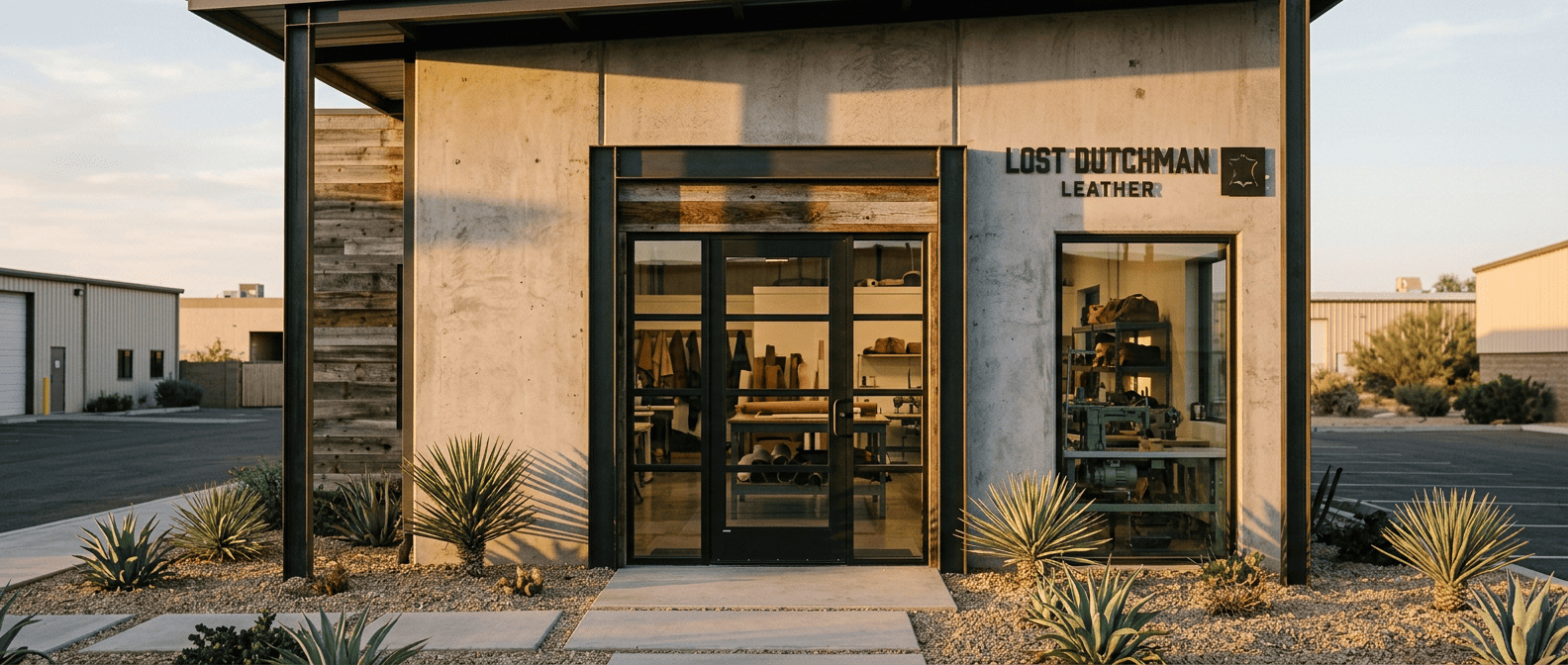
This environment attracts a very specific type of maker. People set up shops in Mesa because they truly care about the work itself. An Arizona-made wallet must survive brutal desert summers. Pretty aesthetics do not matter at all if the product falls apart. We firmly reject the modern disposable product culture completely. We build things meant to stick around.
How Small-Batch Production Changes Quality
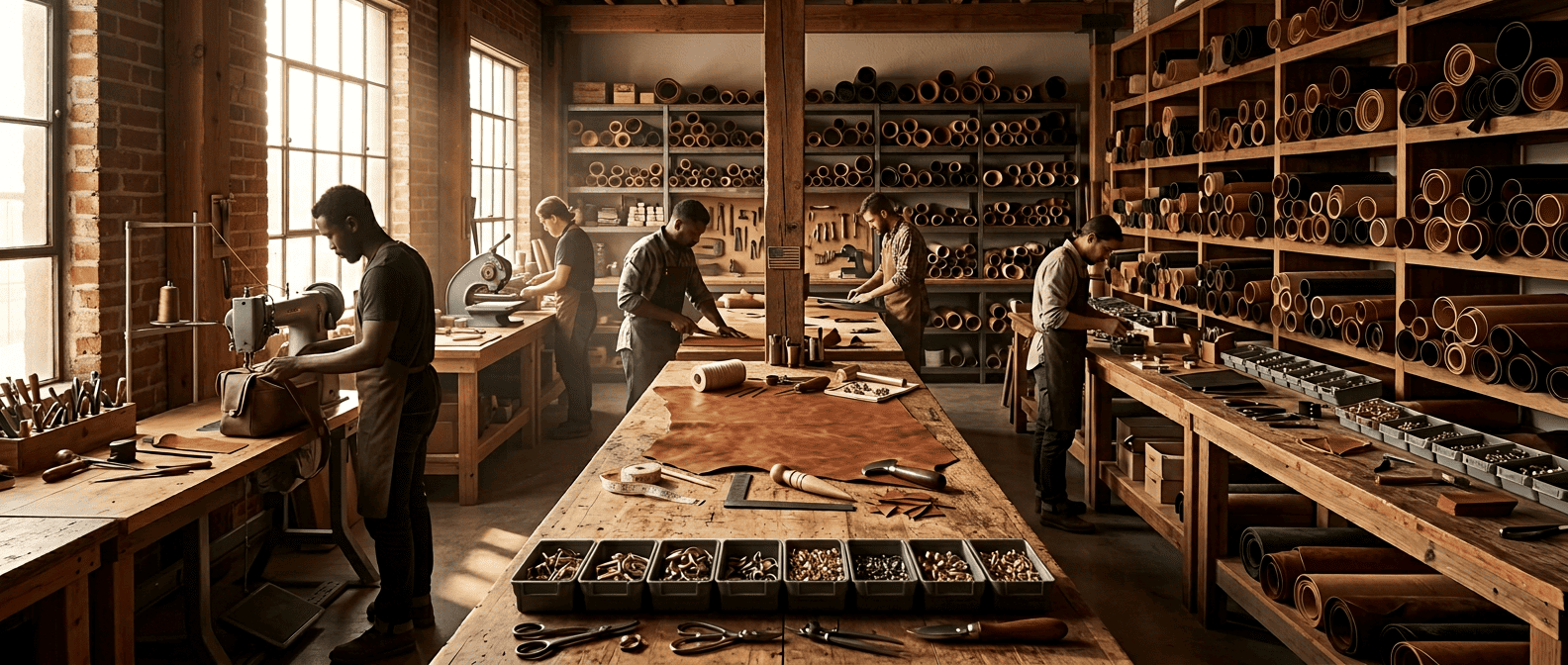
Mass manufacturing optimizes purely for speed. A factory producing 10,000 wallets per day cannot inspect each one. Small-batch production flips this model entirely. Every single piece gets individual attention. The craftsperson cutting the leather sees the exact same hide they will eventually stitch. They notice beautiful grain patterns and slight thickness variations.
This matters because leather is never uniform. Think of working with leather like cutting a piece of fine wood. You have to read the unique grain to cut it properly. A factory treats leather like a roll of cheap fabric. Genuine American leather craftsmanship allows for this incredible level of attention. This meticulous process ensures our vertical wallets maintain their structure perfectly.
The Economics of American Leather Manufacturing
Making leather goods in America absolutely costs more. Labor rates and raw materials are higher here. A factory in Asia can produce a wallet for a few dollars. An American workshop pays significantly more just to open the doors. This comparison misses the critical differences entirely.
Asian factories use terrible corrected-grain leather. They sand it down and emboss a fake grain pattern on top. We use pristine full-grain leather for lost dutchman franklin. Corrected-grain leather lacks the tight fiber structure that makes leather durable. Full-grain leather actually improves with age and friction. The economics make perfect sense when you calculate the true cost per year of use.
Arizona's Leather Supply Chain
Exceptional American leather craftsmanship 2026 depends directly on domestic tanneries. We require excellent domestic hide processing to create lasting goods. Wickett & Craig produces some of the finest vegetable-tanned leather available anywhere. Hermann Oak specializes in incredibly heavy tooling leather.
We also love the rich pull-up effect of SB Foot Chromexcel hides from Minnesota. All three tanneries buy raw hides exclusively from American cattle. The entire supply chain stays domestic from start to finish. We recently had a customer walk into our shop to buy a wallet for his teenage son. He pulled out his own wallet that we made ten years ago. It had darkened beautifully and remained structurally perfect. That is exactly why we source the absolute best materials available.
What Arizona Workshops Actually Make
We do not try to compete with luxury fashion brands. You will not find designer collaborations here. We focus purely on everyday carry items built to last indefinitely. We make a great usa made leather wallet using durable SB Foot Chromexcel leather.
Both minimalist card holders and traditional bifolds get made in volume. The difference shows up clearly in our hand-stitched edges and smooth beveled corners. We carefully design every single piece for a slimmer, more modern profile. The product mix reflects highly practical priorities. We make things people use daily and replace very reluctantly.
The Craftsmanship Standards That Define Us
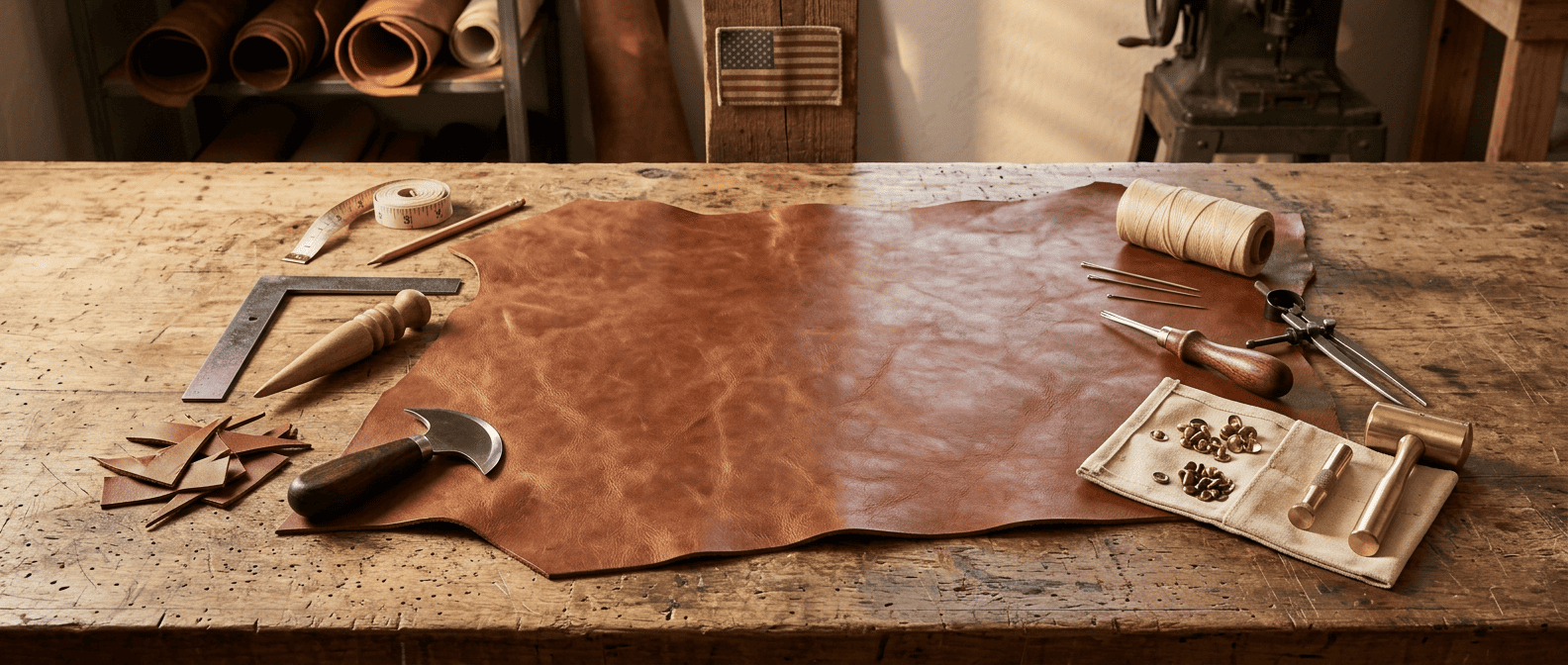
We share certain construction standards that separate our work from factory production. Traditional saddle stitching represents the foundation. This hand-sewing technique uses bonded nylon thread to create a stitch that stays firmly locked. It takes longer and costs slightly more. It also lasts indefinitely.
We exclusively use the strongest full-grain leather. We also trust solid brass hardware longevity to drastically reduce failure points. These strict standards ensure products that outlast their original owners. We want to help end the disposable product culture by building highly reliable gear. You can secure a slim card holder wallet that serves you flawlessly for decades.
Why the Made-in-USA Movement Matters Today
American manufacturing disappeared for rational economic reasons. Labor costs much less overseas. That offshore model created a sad culture where nothing lasts anymore. The Arizona Made-in-USA leather movement actively rejects that framework.
It proves that American workshops can still compete firmly on quality rather than price. This matters deeply because it preserves vital skills. You cannot learn this trade properly from online videos. It requires years of intense practice. The Arizona Made-in-USA leather movement proves that craftsmanship still holds immense value. Money spent on local goods stays in local communities and supports real families.
Conclusion
The shift back to regional manufacturing proves American leather craftsmanship relies entirely on customers choosing quality. You pay a bit more upfront, but you receive gear that actually serves you for decades. We refuse to compromise on full-grain hides and traditional saddle stitching. Have a question about leather? Ask our team to find the perfect addition to your everyday carry.