2026 Wallet Buying Guide: Stitchless vs. Hand-Stitched Leather Construction
Choosing a wallet isn't just about picking something to hold cards. It's about selecting a piece that survives years of daily use. The construction method determines whether it gets replaced in six months or twenty years.
Two distinct methods dominate quality manufacturing today. You will encounter stitchless wallet construction and traditional sewn designs. Each approach offers distinct advantages for daily carry.
Understanding these differences makes you a significantly smarter buyer. This 2026 wallet buying guide breaks down exactly what you need to know.
What Stitchless Wallet Construction Actually Means
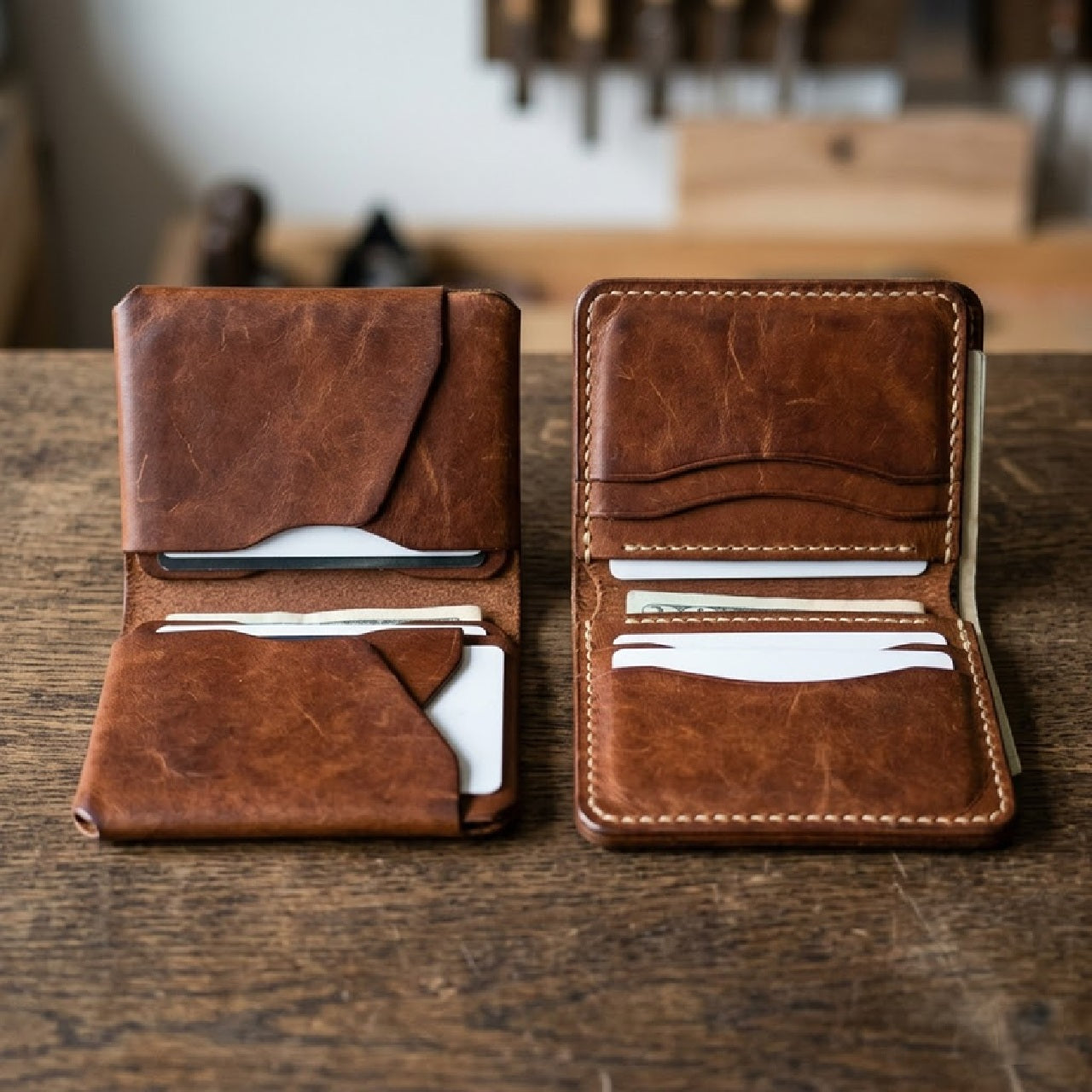
Stitchless wallet construction uses a single piece of leather. We fold and shape the material without using any thread. The leather itself holds everything together through precise cutting and strength.
Lost Dutchman Leather uses this exact approach for our most streamlined designs. A single-piece folded leather item removes traditional weak points entirely. No thread means there is absolutely nothing to unravel over time.
This technique requires exceptional material quality to work properly. Thin or corrected hides simply won't hold their shape without stitching support. Only thick, full-grain hides possess the necessary structural integrity.
Understanding Hand-Stitched Leather Construction
Hand-stitched leather construction uses waxed thread to join separate leather pieces. A craftsperson passes two needles through each hole from opposite directions. This creates a highly durable interlocking pattern.
This traditional saddle stitch technique allows for beautifully complex designs. Bifolds typically require stitching because they incorporate separate panels and internal dividers. If one thread breaks, the interlocking pattern prevents total seam failure.
Quality craftsmanship relies on thick waxed thread that outlasts the leather itself. The waxed thread durability protects against harsh daily abrasion in your pocket. This specific detail matters because exposed thread wears much faster.
Durability Comparison: Which Lasts Longer
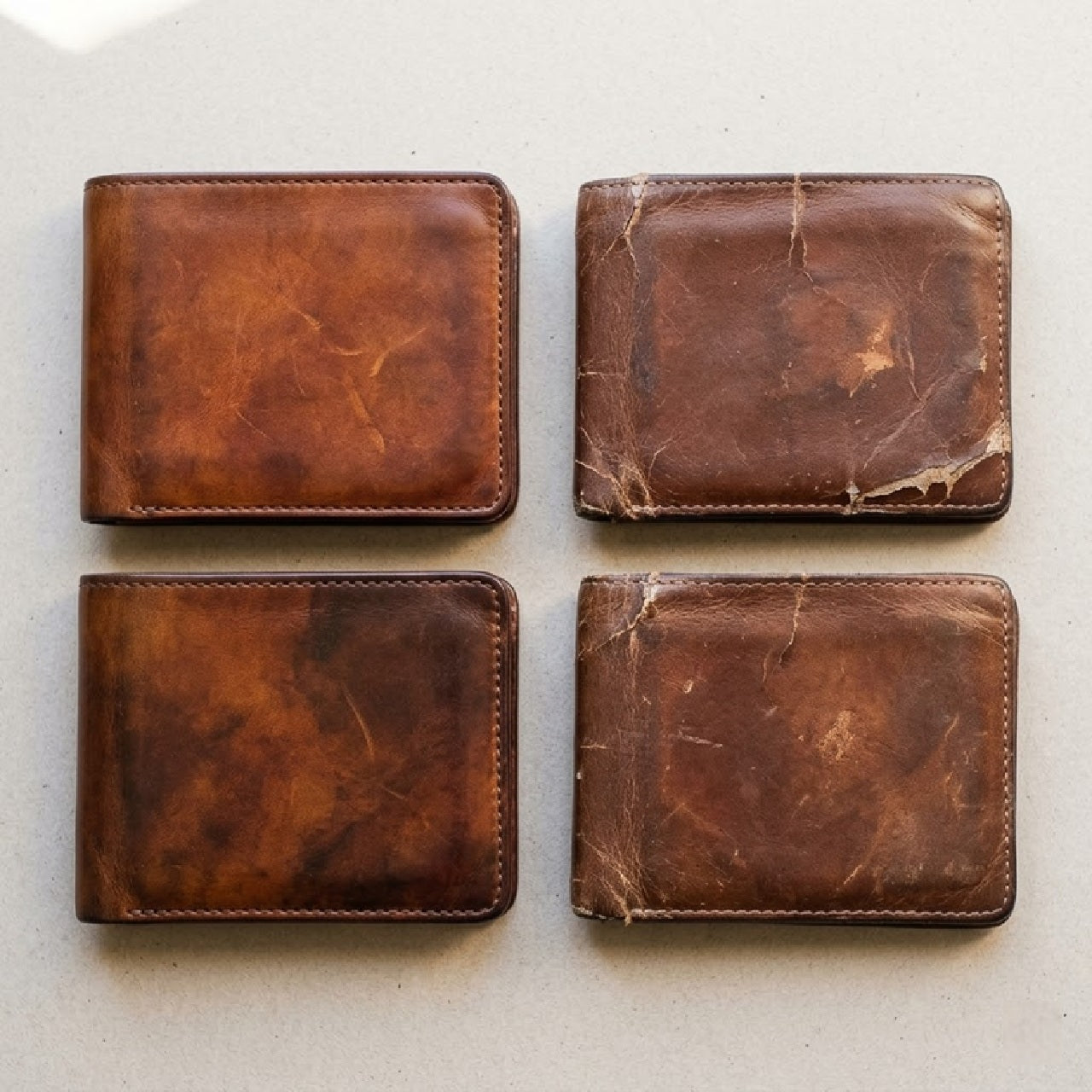
Both methods produce exceptionally durable gear when executed properly. The failure modes just differ significantly over the long term. Folded designs eventually face leather cracking or material thinning after decades.
Sewn options face thread wear or seam separation eventually. A well-made folded piece eliminates the most common failure mode completely. No thread means nothing to rot or break down.
However, quality hand-stitched leather construction easily lasts twenty years. A customer recently brought a ten-year-old stitched piece into our workshop. He works construction and exposes his gear to heavy dust daily. The thread held the panels together perfectly despite the extreme surface wear.
Thickness and Pocket Carry Considerations
Stitchless wallet construction creates significantly slimmer profiles instantly. The body measures roughly two to three millimeters thick. Add your cards, and the total thickness remains very manageable.
Stitching adds thread bulk at every single seam. Each joint adds one to two millimeters of unavoidable thickness. A classic bifold wallet might measure much thicker when fully loaded with cash.
Front-pocket carry strongly demands slim profiles to remain comfortable. Back-pocket carry tolerates much more bulk without issue. Your personal carry preference should absolutely influence your construction choice. Folded designs excel specifically at front-pocket minimalist carry.
Break-In Period Differences
Stitchless pieces break in much faster than sewn alternatives. The single-piece folded leather flexes and molds to your cards within days. No stiff seams resist the natural shaping process.
Stitched items need two to three weeks to fully break in. Think of thick stitched seams like the spine of a new hardcover book. It takes repeated, gentle opening and closing before it finally lays flat.
Neither method is inherently better here. Some people strongly prefer immediate flexibility. Others appreciate how stitched pieces maintain their structured shape much longer. Full-grain material improves with use regardless of the assembly method.
Aesthetic and Design Flexibility
Stitchless wallet construction offers clean, uninterrupted lines. The minimalist aesthetic appeals to people who truly value simplicity. No visible stitching creates a modern look that ages beautifully over time.
Hand-stitched leather construction allows for beautiful decorative elements. Detailed stitching patterns become prominent design features immediately. Multiple compartments enable traditional layouts that many users prefer.
Style preference matters greatly here. Even the franklin wallet shows how a folded design creates a sleek, modern profile. Meanwhile, traditional stitching enables the complex organization found in larger, classic pieces.
Repair and Maintenance Reality
Folded designs resist most daily damage effortlessly. The continuous construction means there are no seams to separate. Damage typically involves the material itself wearing through slowly. Repair options remain somewhat limited since you cannot restitch it.
Stitched items can be restitched easily by any professional. A skilled leather worker can replace worn thread quickly. They reinforce seams before they fail completely. This repairability extends the lifespan significantly.
Our handmade leather wallets prioritize leather quality first regardless of the method. Superior material always compensates for minor construction limitations. Condition the material every few months and keep it dry.
Price Considerations and Value
Folded items typically cost less to produce overall. Fewer labor hours mean lower prices for the final customer. Sewn options require significantly more labor to assemble properly. Each stitch represents careful time and focused skill.
The price difference reflects labor, not necessarily longevity. Both methods deliver decades of use when executed with premium materials. Your budget should align perfectly with your design preferences and carry needs.
Cheap items under thirty dollars typically use neither method properly. Machine-stitched bonded leather fails within months. Quality construction costs money because it requires time and premium materials. Use this 2026 wallet buying guide to spot true value.
Choosing Based on Your Carry Style
Choose a folded design if you carry six to eight cards. It fits people who prefer front-pocket minimalist carry perfectly. It offers the slimmest possible profile and a very modern aesthetic.
Choose stitched construction if you need multiple dedicated compartments. It fits traditional users who carry cash regularly. It provides maximum card capacity and showcases visible craftsmanship.
An american made leather wallet with traditional stitching serves people needing comprehensive organization. Extreme minimalists benefit most from single-piece folded leather designs.
Material Quality Matters More Than Construction
The assembly method means nothing without quality leather. Bonded materials fail regardless of how a maker assembles them. Top-grain hides with artificial finishes crack and peel whether stitched or not.
Full-grain hide is the only grade worth buying for either method. This top layer contains all the natural grain and strongest fibers. It's the only material that develops genuine character over time.
Natural plant-based tanning works best for both construction types. This traditional process creates durable gear that ages beautifully. Our leather card holders demonstrate how material quality elevates both construction methods perfectly.
Conclusion
Wallet construction has evolved beyond simple debates. Modern buyers understand that both methods produce exceptional results. It all comes down to execution and high-quality materials.
This 2026 wallet buying guide proves that execution matters most. The saddle stitch technique guarantees incredible waxed thread durability. Meanwhile, folded designs offer unparalleled slimness for front-pocket minimalist carry.
The item you select today could easily serve you for decades. Choose based on your actual daily needs, not passing trends. Let our workshop help you choose the perfect piece for your pocket.