The Truth About Vegan Leather vs. Full-Grain Leather: A 2026 Comparison
The leather goods market has split into two camps: those championing plant-based alternatives and those defending traditional animal hides. This divide isn't just about materials - it's about durability, environmental impact, and whether "vegan leather" deserves the word "leather" at all.
Lost Dutchman Leather has spent years working exclusively with full-grain leather, watching synthetic alternatives flood the market with promises they rarely keep. The vegan vs leather comparison reveals differences that aren't subtle. One ages into something better than it started; the other deteriorates into landfill fodder within a few years.
What Vegan Leather Actually Is
"Vegan leather" sounds like a material innovation. It's mostly polyurethane (PU) or polyvinyl chloride (PVC) - plastics bonded to fabric backing. Some newer versions incorporate plant fibers like pineapple leaves (Piñatex) or mushroom mycelium, but these still require plastic binders to hold together.
The term itself misleads consumers. Leather, by definition, comes from animal hides that undergo tanning to prevent decomposition. Calling plastic "leather" is like calling margarine "butter" - it mimics appearance but lacks fundamental properties.
The Manufacturing Process
PU leather production involves coating polyester or cotton fabric with a petroleum-based polymer. Manufacturers texture the surface to mimic grain patterns found in animal hides. The result looks convincing in photos but feels noticeably different in hand.
PVC versions use similar methods but with a material that off-gasses chlorine compounds throughout its lifespan. Both processes require chemical plasticizers to maintain flexibility - compounds that leach out over time, causing the material to crack and peel.
Plant-based alternatives like Piñatex start with agricultural waste, which sounds environmentally friendly. However, they still need plastic resins (typically PU) to bind fibers into a usable material. The plant content ranges from 20-80%, with petroleum products filling the gaps.
How Full-Grain Leather Differs Fundamentally
Full-grain leather retains the complete hide surface, including the dense fiber structure just below the hair. This layer contains the tightest collagen weave, making it the strongest and most durable part of the hide.
Tanneries don't sand or buff this surface. Every mark, wrinkle, and natural characteristic remains visible. This isn't a flaw - it's proof the leather hasn't been compromised to hide imperfections.
The Tanning Process That Changes Everything
Vegetable tanning uses tannins from tree bark, roots, and leaves to transform raw hide into stable leather. The process takes 30-60 days as tannins slowly penetrate the hide structure, bonding with collagen fibers.
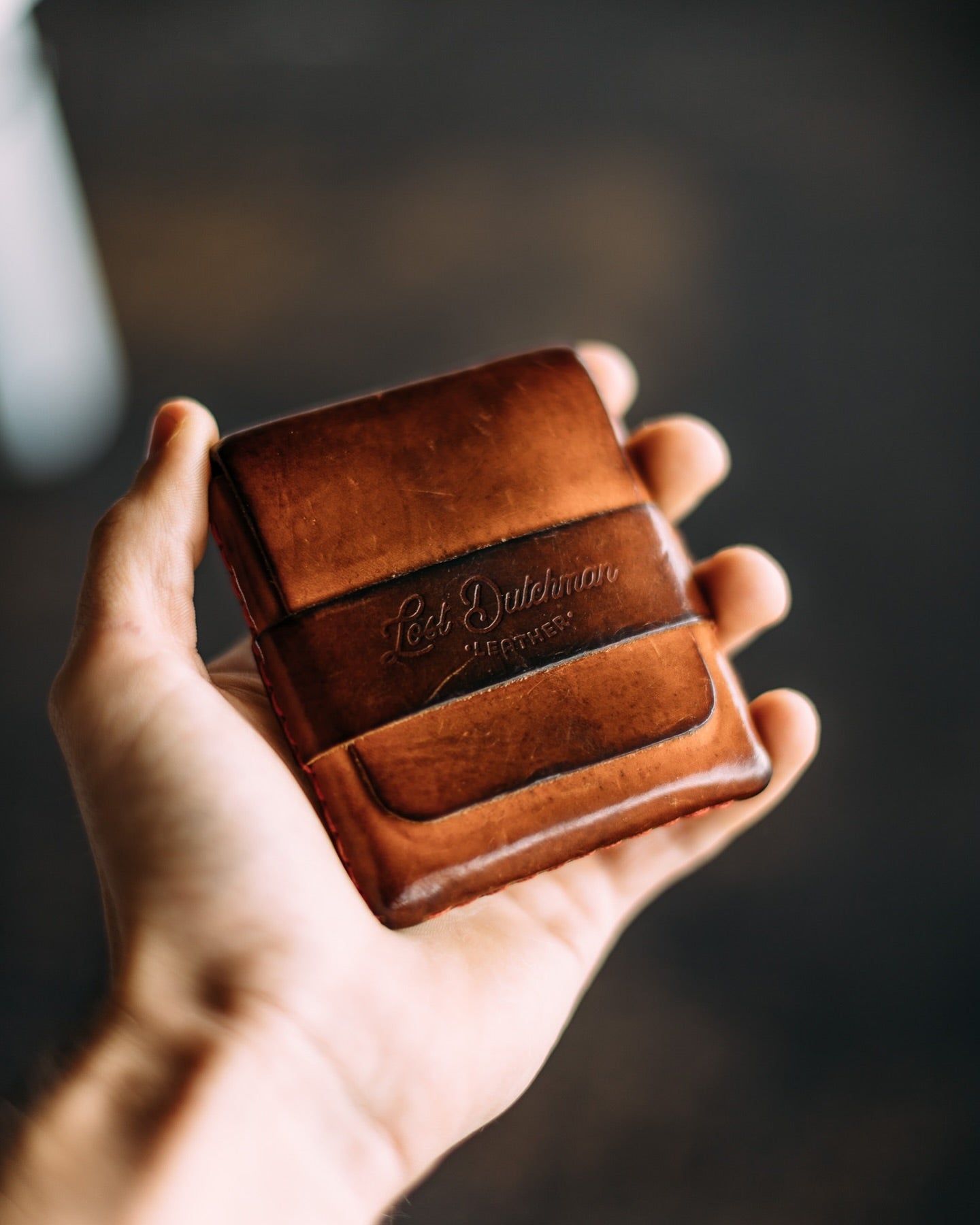
This creates a material that breathes, absorbs moisture without degrading, and develops patina as oils from handling darken and enrich the surface. A vegetable-tanned wallet doesn't just survive daily use - it records it, creating a unique appearance no synthetic can replicate.
Chrome tanning works faster (24-48 hours) using chromium salts. It produces softer, more water-resistant leather but sacrifices some of the character vegetable tanning provides. Both methods, however, create genuine leather that outlasts any plastic alternative by decades.
The Durability Gap Nobody Discusses
A full-grain leather wallet from our collection should last 20-30 years with basic care. Vegan leather alternatives typically show significant wear within 2-5 years. This isn't opinion - it's material science.
Why Synthetics Fail
PU and PVC lack the fiber structure that gives leather its strength. They're essentially plastic sheets that rely on chemical flexibility. As plasticizers migrate out of the material (accelerated by heat, UV exposure, and flexing), the surface becomes brittle.
Cracks appear along stress points - wallet folds, bag corners, belt holes. Once cracking starts, it spreads rapidly because there's no fiber structure to arrest the damage. The coating peels away from the fabric backing, exposing the cheap foundation underneath.
Plant-based versions face the same problem. The plastic binder degrades on the same timeline as conventional PU, regardless of how sustainable the plant fibers were. A pineapple leaf doesn't prevent polyurethane from breaking down.
How Leather Handles Stress
Full-grain leather flexes because its collagen fiber network moves without breaking. Bend a quality leather wallet thousands of times, and the fibers compress and spring back. There's no coating to crack, no laminated layers to delaminate.
Surface scratches on full-grain leather rarely penetrate deep enough to cause structural damage. Often, rubbing with a finger (which deposits oils) makes minor scratches virtually disappear. Try that with scratched PU leather - the damage is permanent because you've torn through a thin plastic coating.
The Environmental Calculation Gets Complicated
Vegan leather markets itself as the eco-friendly choice. The reality requires more nuanced analysis than marketing materials suggest.
The Plastic Problem
Most vegan leather is plastic. PU production requires petroleum extraction, refining, and polymerization - energy-intensive processes that generate significant CO2 emissions. A 2020 study by Higg Materials Sustainability Index found PU leather's environmental impact rivals or exceeds chrome-tanned leather in several categories.
PVC is worse. Its production releases dioxins, and the material continues off-gassing throughout its life. When PVC leather products reach landfills, they don't biodegrade - they fragment into microplastics that persist for centuries.
Plant-based alternatives reduce petroleum content but don't eliminate it. The plastic binders and coatings still come from fossil fuels. A product that's 50% pineapple leaf and 50% polyurethane is still 50% plastic.
Leather's Environmental Reality
Cattle raising for beef production generates methane and requires significant land use. This is the leather industry's biggest environmental burden - but it's important to note that leather is a byproduct. Cattle aren't raised for their hides; they're raised for meat. If every tannery closed tomorrow, the same number of cattle would still be raised.
This doesn't absolve the tanning process, which uses water and chemicals. Chrome tanning in particular requires careful wastewater management to prevent chromium pollution. However, modern tanneries in developed nations operate under strict environmental regulations that have dramatically reduced their impact.
Vegetable tanning uses plant-based tannins and produces biodegradable leather. At end-of-life, properly tanned leather decomposes, returning to the soil. Vegan leather doesn't - it adds to the 400 million tons of plastic waste generated globally each year.
The Lifespan Factor
A full-grain leather bifold lasting 25 years means one product manufactured, one shipping event, one eventual disposal. A vegan leather wallet replaced every 3 years means 8-9 products manufactured, shipped, and disposed of over the same period.
The environmental cost isn't just in the material - it's in the multiplication of manufacturing cycles, transportation emissions, and waste generation. Vegan leather durability comparison matters more than material origin when calculating true environmental impact.
The Price Deception
Vegan leather products often cost 30-50% less than quality full-grain alternatives. This looks like savings until you calculate cost per year of use.
A $40 vegan leather wallet lasting 3 years costs $13.33 per year. The Dutchman at $89 lasting 25 years costs $3.56 per year. The "expensive" option is actually 73% cheaper over its lifespan.
This calculation ignores the inconvenience and time cost of shopping for replacements every few years. It also doesn't account for the diminishing appearance of synthetic materials - they look worst right before failure, meaning users carry shabby-looking wallets for months before replacing them.
When Vegan Leather Makes Sense
There are legitimate use cases for synthetic alternatives. Fashion items meant to last a single season don't require decade-spanning durability. Experimental styles and trend-driven purchases make more sense in disposable materials.
Some consumers have ethical objections to using any animal products, regardless of environmental calculations or durability data. For these buyers, vegan leather aligns with personal values in ways that matter beyond material performance.
Budget constraints also play a role. Someone needing a wallet immediately but lacking funds for quality leather might reasonably choose a $30 synthetic that works for now, with plans to upgrade later.
What to Look For in Full-Grain Leather
Not all "genuine leather" products use full-grain material. The term "genuine leather" is actually a grade indicator - it means the product contains some amount of animal hide, but says nothing about quality.
Identifying Real Full-Grain
Full-grain leather shows natural variation in texture and color. Look for pores, wrinkles, and subtle grain patterns that differ across the surface. Perfectly uniform texture indicates corrected grain (sanded and embossed) or synthetic material.
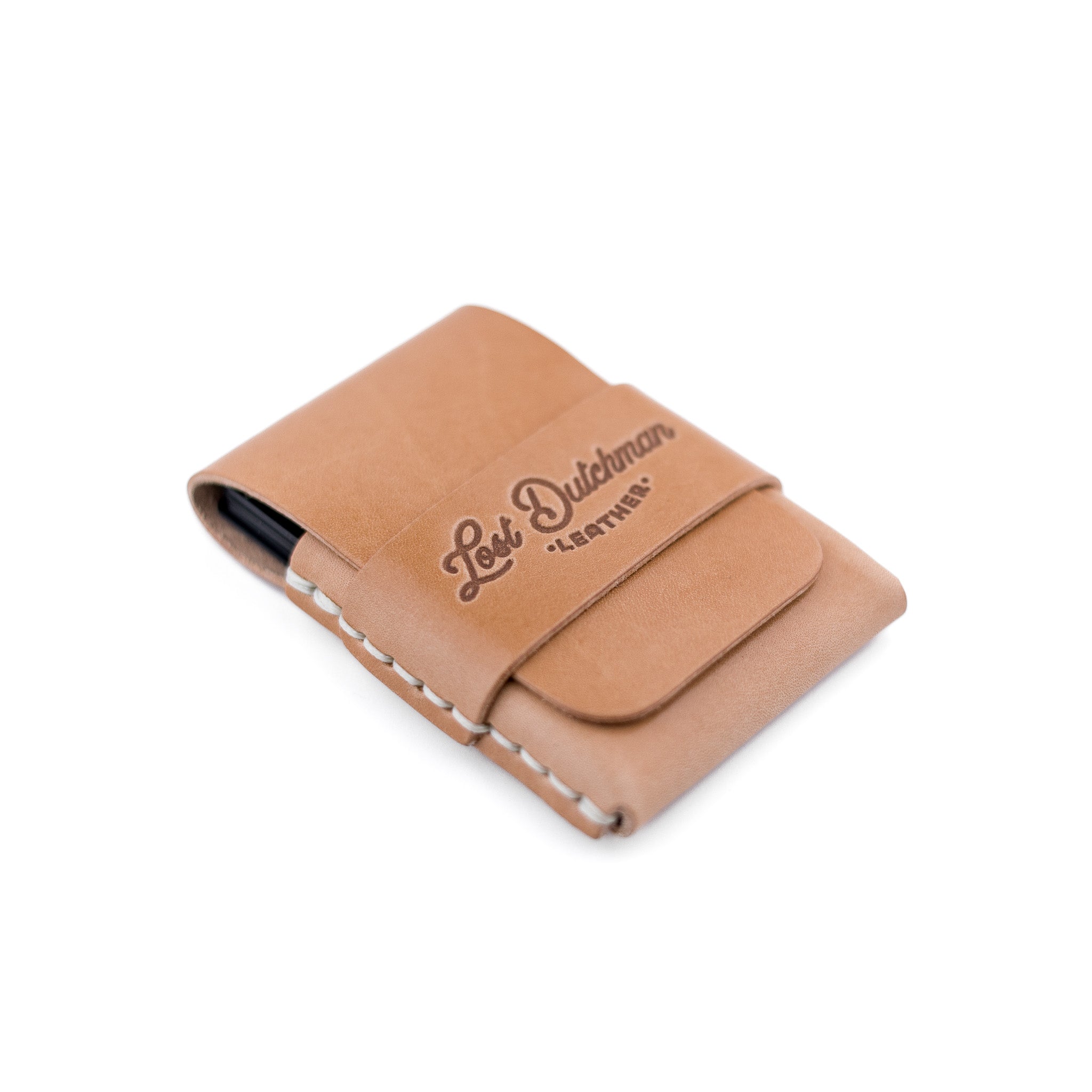
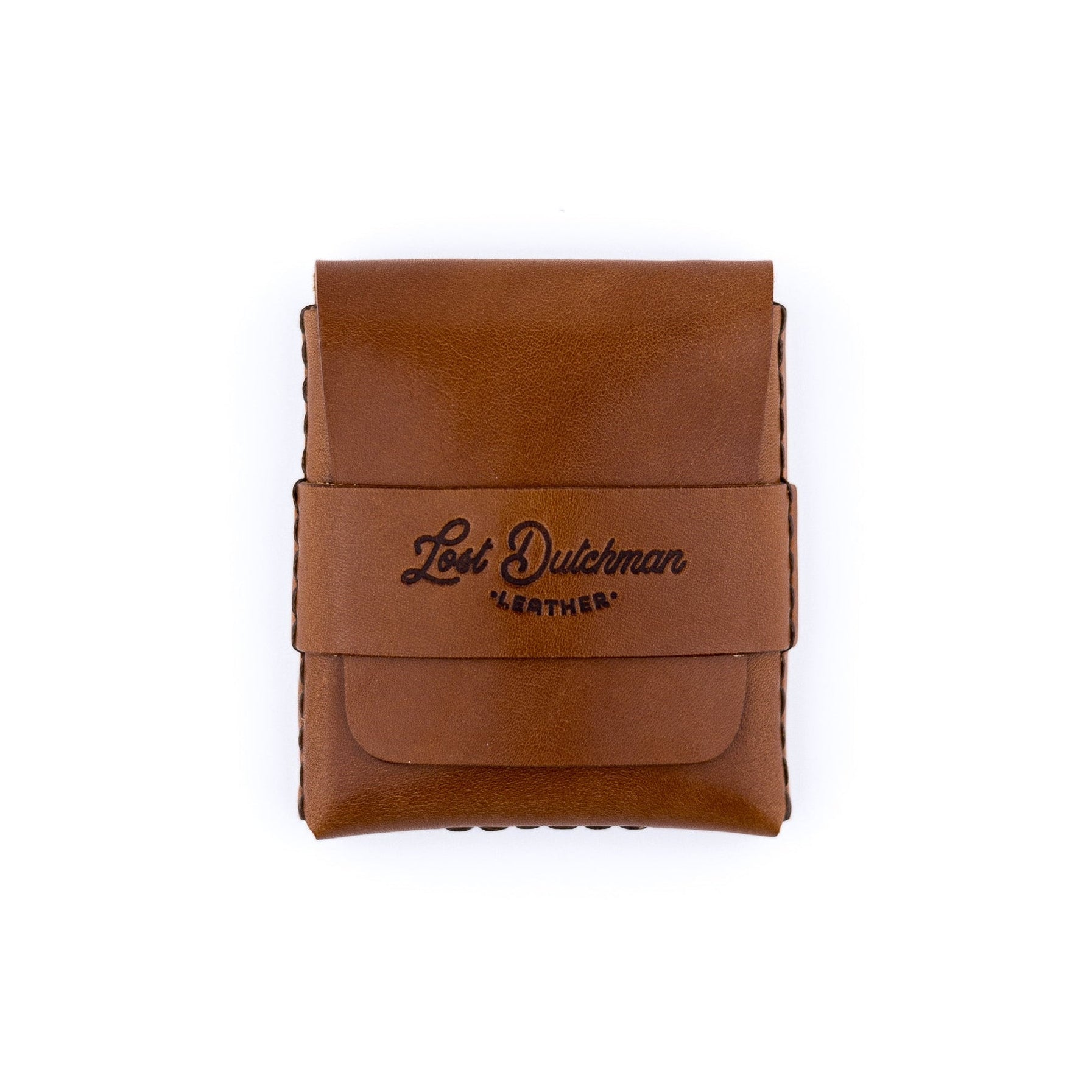
The edges tell the truth. Full-grain leather edges show dense fiber layers when cut. Synthetic edges reveal fabric backing with a thin coating layer. Card holders with exposed edges make this verification easy.
Smell matters. Leather has a distinct, earthy aroma from the tanning process. PU leather smells like plastic because it is plastic. This test works even in stores - if you can't smell anything distinctly leather-like, you're probably holding synthetic material.
Understanding Patina
Patina development separates full-grain leather from everything else. As oils from handling absorb into the surface, high-contact areas darken while protected sections retain their original color. This creates depth and character impossible to fake.
Vegan leather doesn't patina - it degrades. What looks like aging is actually the coating wearing away, exposing cheaper materials underneath. There's no richness developing, just deterioration accelerating.
The Care Requirements Differ Dramatically
Full-grain leather needs occasional conditioning - maybe 2-3 times per year for a daily-carry wallet. Apply leather conditioner, let it absorb, buff off excess. This 5-minute process every few months maintains suppleness and appearance for decades.
Vegan leather can't be conditioned because there's nothing to condition. The plastic coating doesn't absorb oils or treatments. Users can wipe it clean with a damp cloth, but that's maintenance, not care - there's no way to extend the material's lifespan beyond what its chemical composition allows.
Water exposure illustrates this difference clearly. Full-grain leather handles moisture well - let it dry naturally, apply conditioner if it seems dry, and it's fine. PU leather's coating can delaminate from water exposure, and once the bond between coating and backing fails, the product is finished.
The 2026 Market Reality
Vegan leather marketing has become more sophisticated, with brands emphasizing sustainability while downplaying vegan leather durability comparison limitations. Consumers increasingly question these claims as their synthetic purchases fail prematurely.
The plant-based leather segment is growing, with companies like Mylo (mushroom leather) and Natural Fiber Welding attracting significant investment. These materials show promise but remain expensive and unproven for long-term durability. Most aren't available in consumer products yet beyond limited test runs.
Traditional leather craftsmanship is experiencing a renaissance as buyers tired of disposable goods seek products that last. The "buy it for life" movement has grown from niche philosophy to mainstream consumer behavior, particularly among EDC enthusiasts who demand gear that won't fail.
Making the Choice That Matches Your Values
The vegan vs leather comparison decision isn't purely practical - it involves personal ethics, environmental priorities, and financial considerations that vary by individual.
Someone prioritizing animal welfare above all other factors will choose vegan alternatives despite durability and environmental tradeoffs. That's a valid, values-based decision that material performance data doesn't override.
For buyers prioritizing longevity, environmental impact through reduced consumption, and products that improve with age, full-grain leather remains unmatched. The initial cost premium pays back through decades of use and appearance that gets better rather than worse.
The Bottom Line
"Vegan leather" is plastic marketed with a name that implies equivalence to a material it can't match. It serves specific use cases - temporary fashion, budget constraints, ethical objections to animal products - but it's not a performance equivalent to full-grain leather.
Full-grain leather costs more upfront because it's a superior material that requires skilled craftsmanship to work properly. Our belts, wallets, and accessories represent investments in products designed to outlast their synthetic competitors by decades.
The choice ultimately depends on what matters most: initial price or long-term value, disposable convenience or lasting quality, marketing claims or material reality. Understanding the actual differences between these materials - not the advertised ones - lets consumers make informed decisions aligned with their true priorities.
Conclusion
The leather goods market will continue offering both options. Vegan alternatives will improve as technology advances, though overcoming fundamental limitations of plastic-based materials remains an unsolved challenge. Full-grain leather will continue doing what it's done for centuries: aging beautifully, lasting indefinitely, and proving that some materials simply can't be improved upon.
For those ready to invest in goods built to last, explore our collection of full-grain leather products designed for decades of daily use. The difference between synthetic substitutes and genuine craftsmanship becomes clear the moment you hold them.
Ready to make the switch to quality leather that lasts? Contact us to learn more about our full-grain leather wallets and accessories.