Marine Environments: Salt Water, Humidity, and Leather Survival
Leather and ocean environments don't naturally belong together. Salt crystals draw moisture from organic materials. Humidity accelerates mold growth. UV rays break down tannins. Yet sailors have carried leather goods for centuries, and coastal residents refuse to abandon quality wallets just because they live near the water.
The question isn't whether leather can survive marine conditions - it's which saltwater-resistant leather survives, and what determines the difference between a wallet that lasts three years versus thirty.
The Triple Threat: How Marine Conditions Attack Leather
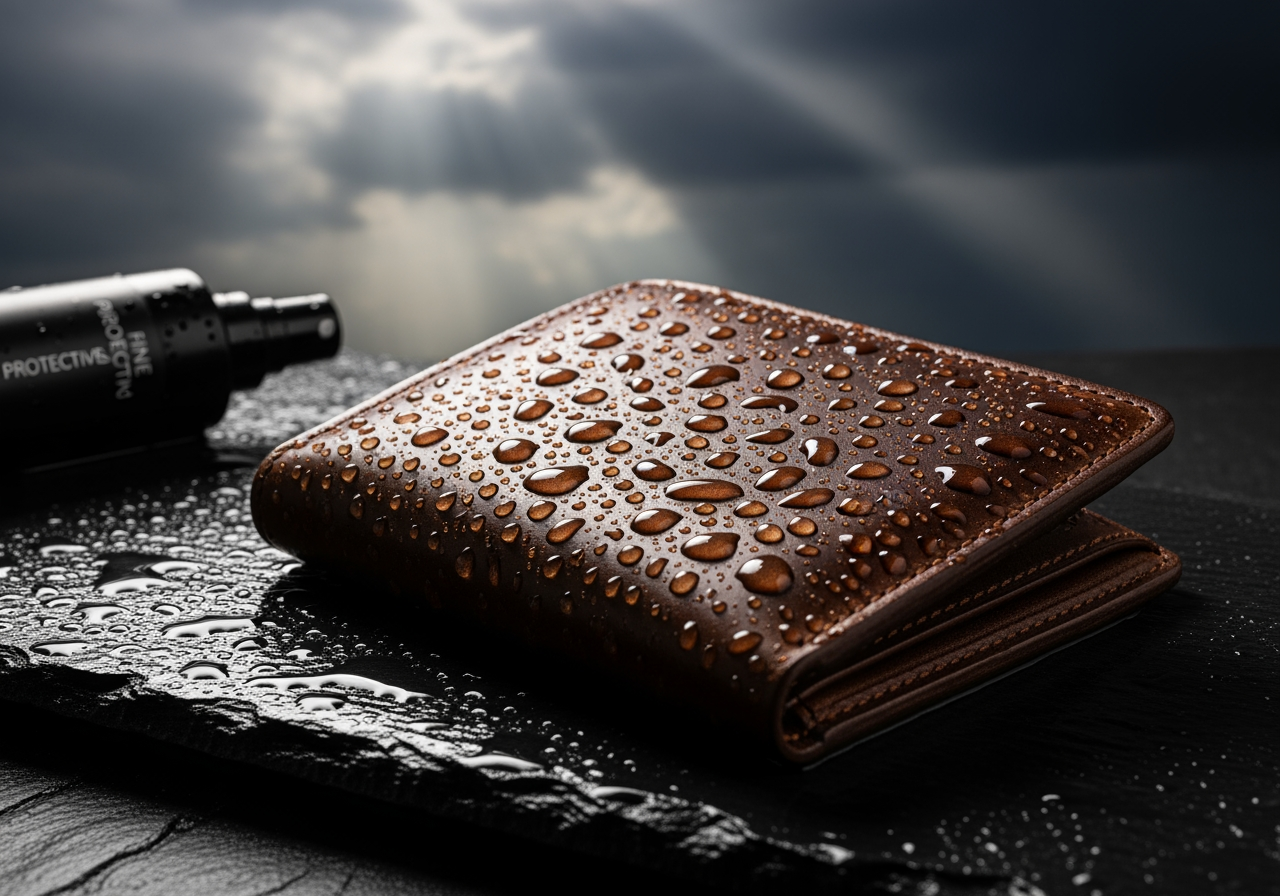
Saltwater doesn't just make leather wet. The sodium chloride crystals penetrate the fiber structure, drawing out natural oils through osmotic pressure. This process - called deliquescence - pulls moisture from inside the leather to the surface, where it evaporates and leaves salt deposits behind.
Humidity's Role in Leather Degradation
Humidity creates a different problem. Leather maintains equilibrium with its environment, absorbing moisture when humidity rises above 60%. This moisture supports mold spores, which feed on the proteins and fats still present in the material.
UV Radiation Damage
Direct sun exposure completes the assault. UV radiation breaks down the molecular bonds in tannins, causing the characteristic fading and brittleness seen in neglected leather goods. Near reflective water surfaces, this damage accelerates.
Why Full-Grain Leather Survives What Others Can't
The leather grade matters more in marine environments than anywhere else. Full-grain leather - the unaltered top layer of the hide - retains the dense fiber structure that evolved to protect animals from environmental stress.
The Problem With Lower-Grade Leather
Split-grain and corrected-grain leathers have this protective layer removed. Manufacturers sand away the natural surface to eliminate imperfections, then apply synthetic coatings. These coatings crack under salt exposure, allowing moisture to penetrate the looser fiber structure beneath.
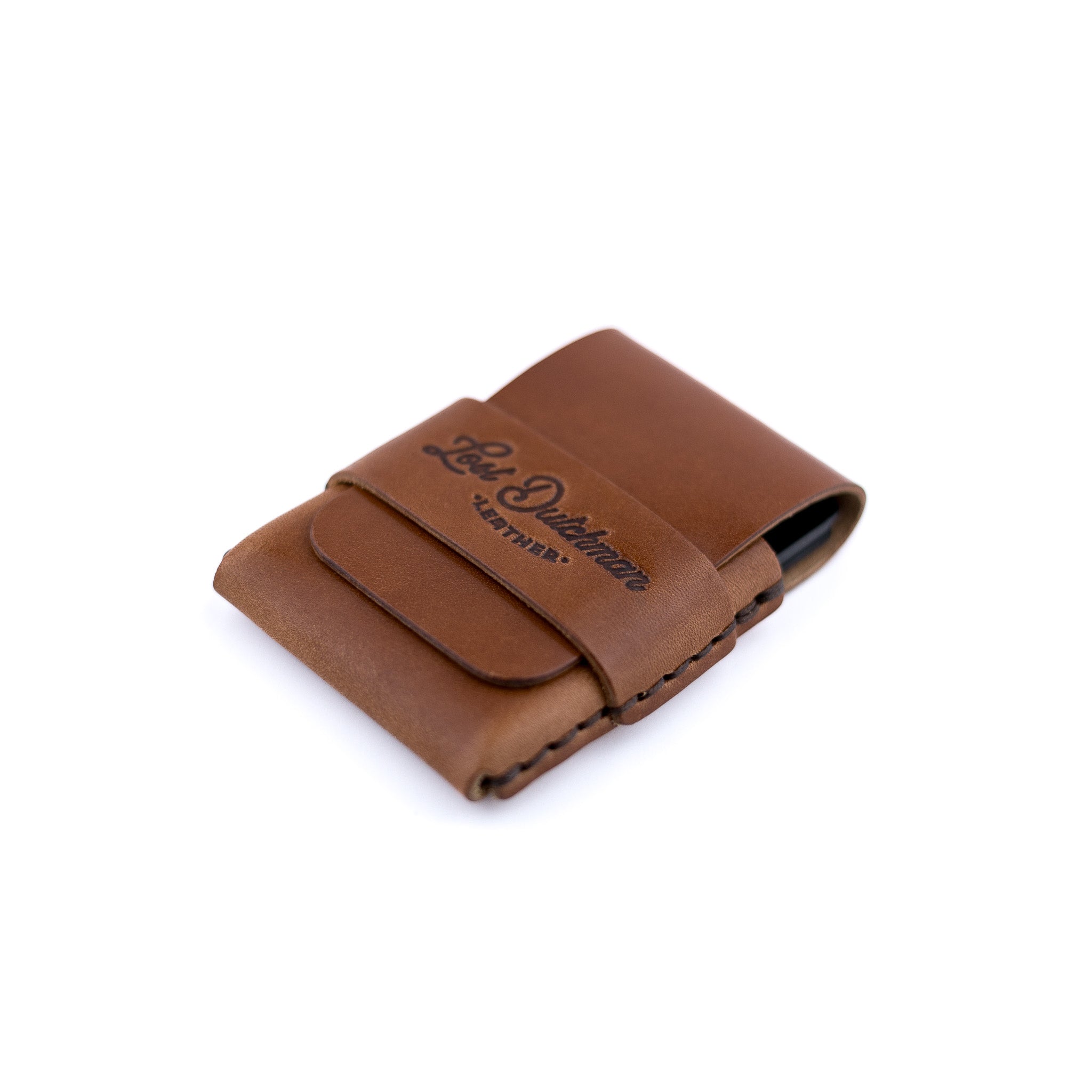
Lost Dutchman Leather uses exclusively full-grain leather because the intact surface layer provides natural water resistance. The tight fiber density prevents salt crystals from penetrating deep into the material. When moisture does enter, it distributes evenly rather than pooling in weak spots.
Vegetable-Tanned Advantages
Vegetable-tanned leather offers additional advantages in humid conditions. The tannins derived from tree bark create a more stable molecular structure than chrome tanning. This stability means the leather maintains its shape and integrity even as humidity fluctuates between 40% and 80% - the typical range in coastal areas.
The Salt Crystal Problem and How Quality Construction Addresses It
Salt doesn't just sit on leather's surface. The hygroscopic nature of sodium chloride means it actively pulls moisture from the air and from within the leather itself. As this moisture evaporates, it deposits more salt, creating a destructive cycle.
Why Cheap Wallets Fail
Cheap wallets fail in this environment because their construction creates moisture traps. Glued seams separate under salt exposure, creating pockets where crystals accumulate. Synthetic edge coatings crack and peel, exposing absorbent raw edges.
Superior Construction Methods
Saddle-stitched construction - where two needles pass through each hole from opposite directions - creates a mechanical lock that salt can't compromise. The waxed thread itself resists moisture absorption and provides a secondary barrier against salt penetration.
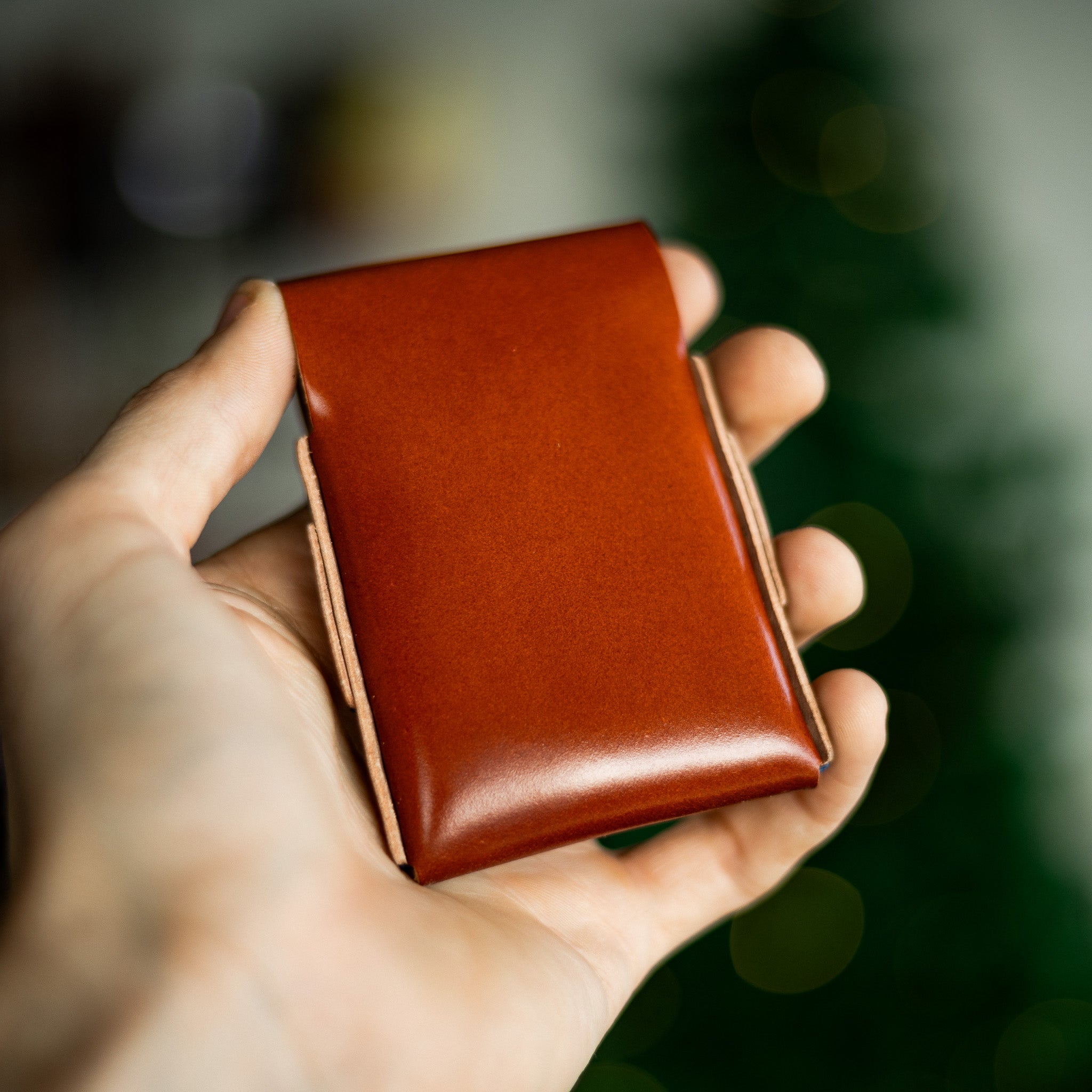
Single-piece construction eliminates seams entirely. No seams means no weak points for salt to exploit. This makes certain designs particularly effective as saltwater resistant leather solutions.
UV Resistance: Why Leather Color and Finish Matter
Not all leather responds to sun exposure the same way. Aniline-dyed leather - where dye penetrates the entire thickness - maintains color integrity far better than surface-pigmented alternatives. When UV breaks down surface pigments, the damage appears as obvious fading and discoloration.
Natural Patina Protection
Natural leather that develops patina actually becomes more UV-resistant over time. The darkening that occurs from handling and sun exposure represents a concentration of oxidized oils and tannins at the surface. This layer provides modest protection against further UV damage.
Thickness Considerations
The thickness matters too. A wallet cut from 3-4 oz leather (roughly 1.2-1.6mm) provides insufficient mass to resist UV penetration. Quality goods use 5-7 oz leather (2.0-2.8mm), which absorbs UV radiation in the outer fibers while protecting the structural layers beneath.
Humidity and Mold: The Storage Factor
Mold requires three conditions: organic material, moisture, and stagnant air. Leather provides the first. Marine environments supply the second. Poor storage habits guarantee the third.
Critical Humidity Levels
A leather wallet stored in a closed center console or glove box near the coast faces humidity levels between 70-90%. At these levels, mold spores germinate within 24-48 hours. The first visible signs - small white spots - appear within a week.
Prevention Through Air Circulation
Prevention requires air circulation. Leather needs to breathe, releasing absorbed moisture as ambient humidity drops. A water resistant wallet carried in a pocket maintains this circulation naturally. Body heat and movement prevent moisture accumulation.
For items not carried daily, storage location determines survival. A leather belt hung in a closet with airflow will outlast one coiled in a drawer. The difference isn't subtle - it's the gap between decades of service and replacement within months.
The Fresh Water Rinse: Counterintuitive Protection
Here's what most leather owners don't know: fresh water protects against salt damage. When a wallet gets splashed with ocean spray, the instinct is to let it dry naturally. This leaves salt crystals embedded in the fiber structure.
Proper Salt Removal Technique
The correct response contradicts intuition. Rinse the item thoroughly with fresh water to dissolve and flush out the salt. Then dry it slowly, away from direct heat. This prevents crystal formation and the fiber damage that follows.
This principle explains why surfers who rinse their leather watch straps after sessions maintain them for years, while beachgoers who let saltwater dry naturally replace theirs seasonally. The difference is dissolved salt versus crystallized salt.
Post-Exposure Conditioning
Conditioning after exposure restores the oils that salt and sun remove. A thin application of appropriate leather conditioner - one without petroleum distillates - replaces lost lipids and maintains fiber flexibility. This isn't cosmetic maintenance; it's structural preservation.
Hardware Matters: The Corrosion Connection
Saltwater resistant leather might survive marine conditions, but cheap hardware won't. Zinc alloy snaps and brass-plated rivets corrode rapidly in salt air. The corrosion spreads to surrounding leather, creating dark stains and weakening the material.
Marine-Grade Hardware
Solid brass hardware resists corrosion through its copper content, which forms a protective patina. Stainless steel offers even better performance but requires careful selection - only 316-grade stainless provides adequate salt resistance.
Hardware-Free Designs
The best approach eliminates hardware entirely. Card holders that rely on friction and leather tension rather than metal components sidestep the corrosion problem completely. When hardware is necessary, quality manufacturers use marine-grade materials and test them in accelerated salt-spray chambers.
Real-World Performance: What Actually Happens
Theory matters less than results. A vegetable-tanned, full-grain leather wallet carried daily in a coastal environment shows predictable aging patterns. The corners darken first from handling. The exterior develops a rich patina within six months. Small scratches blend into the surface character.
Quality vs. Inferior Materials
Compare this to bonded or genuine leather (industry terms for scraps glued together with polyurethane). These materials show surface cracking within weeks of coastal exposure. The synthetic binders break down under UV. Salt accelerates delamination. Within a year, the wallet looks ten years old.
Bifold Performance in Marine Environments
Bifold wallets face particular stress at the fold line. Quality construction uses leather thick enough to handle repeated flexing while wet. Cheap alternatives use thin splits that crack at the fold once salt compromises the fiber structure.
The performance gap widens over time. At the two-year mark, quality full-grain leather looks better than it did new - the patina adds depth and character. Lower-grade materials look ready for disposal.
The EDC Factor: Daily Carry vs. Occasional Use
Everyday carry creates an unexpected advantage in marine environments. A water resistant wallet that lives in a pocket maintains relatively stable temperature and humidity. Body heat drives out excess moisture. Regular handling distributes oils across the surface.
Temperature and Humidity Swings
Compare this to a leather item that sits in a boat's cabin or a beach bag. Temperature swings from 60°F at night to 110°F in afternoon sun. Humidity oscillates from 40% to 95%. No handling means no oil distribution. These conditions age leather rapidly.
Daily Use Benefits
The lesson contradicts conventional wisdom: leather goods survive marine environments better when used constantly rather than "preserved" through minimal handling. The exception is direct immersion - no amount of daily carry prepares leather for submersion in saltwater.
Maintenance Protocols That Actually Work
Complex care routines fail because people don't follow them. Effective maintenance for marine environments requires three simple habits:
Weekly Inspection
Check for salt residue (white crystals or dusty appearance). Wipe with a barely-damp cloth if present. This 30-second habit prevents 90% of salt damage.
Monthly Conditioning
Apply a thin layer of appropriate conditioner. Quality products contain natural oils - lanolin, neatsfoot oil, or beeswax - that penetrate the fiber structure. Wipe off excess after 15 minutes. This maintains flexibility and water resistance.
Annual Deep Cleaning
Use saddle soap to remove accumulated grime and salt. Rinse thoroughly with fresh water. Dry slowly. Apply conditioning treatment. This resets the leather's condition and extends service life by years.
Products that promise to "waterproof" leather usually contain silicone or acrylic polymers. These seal the surface but prevent the material from breathing. Trapped moisture causes more damage than the waterproofing prevents.
When Leather Fails: Recognizing Irreversible Damage
Not all leather survives marine exposure. Certain damage patterns indicate the material has reached end-of-life:
Mold Colonization
White mold that returns after cleaning means spores have colonized the fiber structure. Surface cleaning removes visible growth but not the mycelia network inside. The leather will continue supporting mold growth regardless of treatment.
Structural Cracking
Cracking at stress points that extends into the leather's thickness indicates fiber breakdown. Surface cracks can be conditioned and stabilized. Deep structural cracks cannot be reversed.
Salt Staining
Persistent salt staining that doesn't respond to fresh water rinsing means salt has bonded with the tannins. This creates permanent discoloration and continued moisture absorption.
Delamination
Delamination where layers separate indicates the tanning process failed or the leather grade was inadequate. No amount of conditioning repairs this structural failure.
The Investment Calculation: Cost Per Year of Service
A $15 wallet that lasts 18 months in a coastal environment costs $10 per year. A $120 water resistant wallet that lasts 15 years costs $8 per year - and looks better in year ten than the cheap alternative did when new.
Hidden Costs of Cheap Leather
This calculation ignores the replacement hassle: transferring cards, breaking in new leather, dealing with the inferior feel of low-grade materials. Factor in these costs and the premium option becomes obviously economical.
Leather belts demonstrate this principle clearly. A full-grain, vegetable-tanned belt costs more initially but survives decades of coastal wear. The leather thickens and darkens into something more valuable than when purchased. Cheap belts crack at the buckle holes within two years.
The Patina Advantage: Why Age Improves Quality Leather
Lower-grade leather looks worst at end-of-life. Quality saltwater resistant leather looks best. This counterintuitive reality stems from how the materials respond to use and environmental exposure.
Surface Coatings vs. Natural Patina
Bonded and corrected leather rely on surface coatings for appearance. As these coatings break down, the material beneath - often low-grade splits or leather scraps - becomes visible. The wallet looks progressively worse.
Full-grain leather develops patina - a complex surface character resulting from oxidation, oil absorption, and wear patterns. This patina represents stable chemical changes rather than degradation. The leather darkens, develops depth, and shows handling patterns that tell a story.
Marine Environment Patina
In marine environments, this patina includes subtle salt-induced darkening and sun-driven color shifts. On quality leather, these changes create visual interest. On cheap leather, they create ugliness.
Conclusion
Leather survives marine environments when three factors align: material quality, construction integrity, and basic maintenance. Full-grain, vegetable-tanned leather provides the structural foundation. Saddle-stitched or stitch-less construction eliminates weak points. Simple care habits prevent salt accumulation and maintain fiber flexibility.
The performance gap between quality and commodity leather widens dramatically in coastal conditions. What passes for acceptable in dry climates fails within months near the ocean. Salt exposure, humidity swings, and UV radiation reveal every shortcut in materials and construction.
For anyone living near water or spending time on boats, the choice isn't whether to use leather - it's whether to invest in saltwater resistant leather that survives or replace cheap alternatives repeatedly. The cost difference disappears within two years. The quality difference never does.
A well-made leather wallet carried daily in a marine environment will outlast its owner's need for it. The leather darkens, softens, and develops character that reflects years of service. This isn't marketing language - it's the documented reality of how properly tanned and constructed leather responds to decades of use in challenging conditions.
The ocean doesn't care about your wallet. But the right leather doesn't care about the ocean. For questions about choosing saltwater resistant leather goods for coastal living or marine activities, contact us to discuss options designed for harsh environments.